
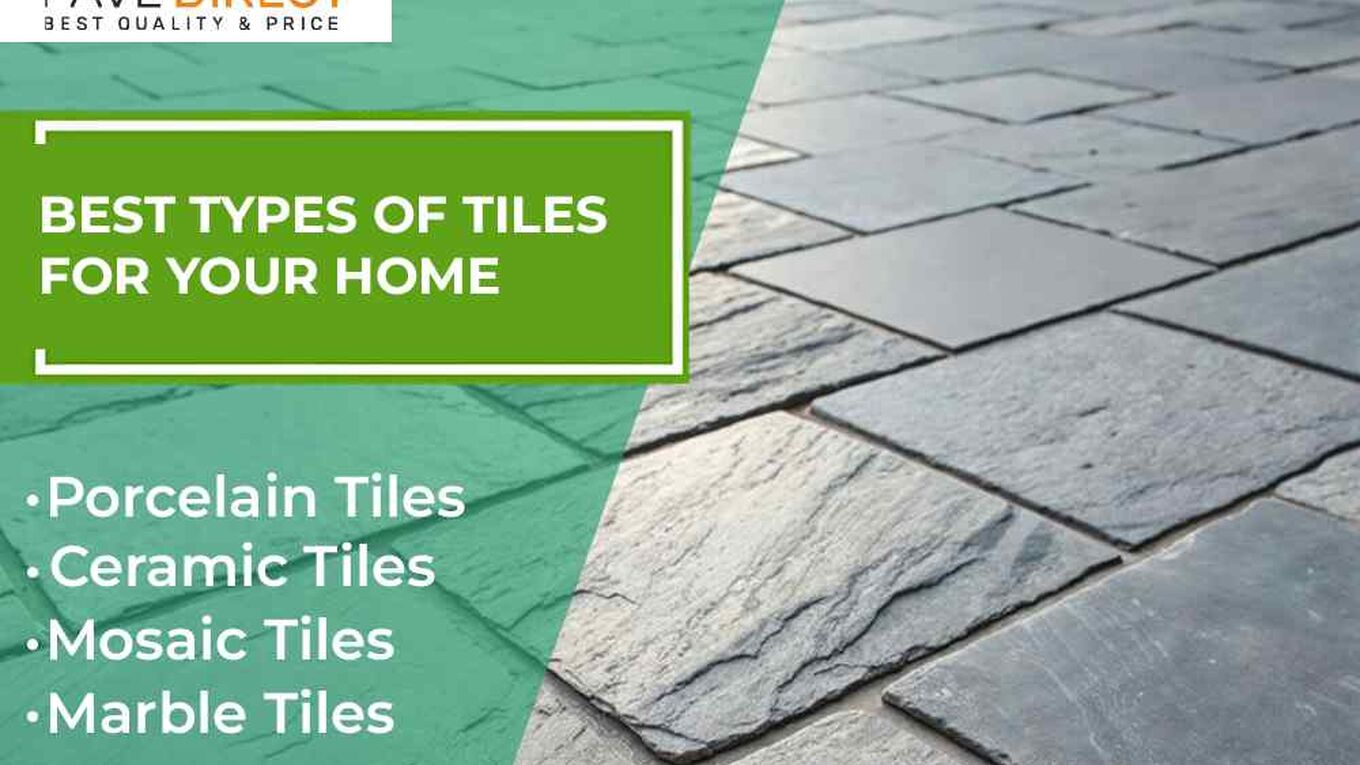
If you are not accustomed to handling any tiling project by yourself, you might get confused by the number of available options. We have already jotted down the 8 best types of tiles for your homes and everything you need to know about them.
We Pave Direct are trusted seller of porcelain tiles and natural stones in UK. We are not only seller but have depth knowladge of tiles, material, surface ect.
In this blog, you will find extensive information about the best outdoor porcelain paving and other tiles as well:
- Ceramic Tiles
- Marble Tiles
- Porcelain Tiles
- Stone Tiles
- Travertine Tiles
- Glass Tiles
- Granite Tiles
- Mosaic Tile
You must consider the material of your types of tiles, finishes, colours, textures, and certifications according to the space you are about to tackle so that you choose the best tile options and know every pro and con of different tile materials.
So, what are the different types of tiles? Which type of tile is best for flooring? Ready to explore your options? Let’s dive in.
Types of Tiles
Ceramic Tiles:

Ceramic tiles are one of the most popular and common tiles used worldwide, including in UK homes. The most prominent quality of Ceramic floor tiles and Ceramic wall tiles is that they can be used in residential as well as commercial setups. So you can consider it as one of the best tiles for home flooring and walls.
However, you should remember that ceramic tiles require significant maintenance and are not as durable or forgiving as other tile varieties.
In the specifications below you will know: what are ceramic tiles made of, their finishes, their usage, and what certifications they have to know their suitability.
Tile Specifications
Material
Natural red or brown clay, sand, water fired at high temperatures (950℃)
Finishes
- Glossy
- Matte
- Textured
- Glazed
- Satin
Usage
- Indoor flooring (Kitchen, Bathrooms, Living Area, Bedrooms)
- Feature walls (Decorative)
- Bathroom walls and shower areas
- Commercial applications (not for high-traffic areas)
- Kitchen Countertops
- Backsplashes (Kitchen and Living rooms)
Features
- Durable
- Highly Versatile
- Affordable compared to other tiling options
- Wide variety of colours, designs, and patterns
- Low water absorption
- Frost resistant
Certifications
- CE Marking: European Quality and Safety Standards
- BS EN 14411: British Standards for Porcelain Tiles
- ISO 9001: Quality Management Certification
- Slip-Resistant: R9 to R11 Anti-Slip
Marble Tiles

With Marble tiles, you can give instant elegance and refinement to your space. Marble veinings and patterns add depth and texture to your home design. You will not find a single piece of the same pattern or vein.
We recommend you consider your budget while opting for natural marble flooring because they are heavy on the pocket. Is marble tile good for flooring? Well, they require a lot of maintenance as they stain and scratch pretty quickly and become dull if not taken care of properly. So they need a lot of upkeep if you use them for flooring.
Specifications:
Material: Natural Marble stones
Finishes
- Polished
- Honed
- Leathered
- Tumbled
- Brushed
Usage
- Indoor Flooring
- Outdoor Paving (Depending on the type and finish)
- Kitchen Countertops
- Bathrooms
- Commercial Interiors
- Residential Interiors
Features
- Luxurious Look
- Highly Durable
- Natural Heat Resistant
- Water Resistant
- Available in an extensive range of colours and patterns
Certifications:
CE Marking: European Quality and Safety Standards
BS EN 12057: British Natural Stone Standards
BS EN 1469: British Natural Stone Usage in Wall Cladding
ISO 9001: Quality Management Certification
Porcelain Tiles

You can get an elegant look without worrying too much about its maintenance and wearing out. Porcelain tiles are all-purpose used for all indoor and outdoor projects making them one of the best tile options for bathrooms and kitchens. It has the ability to imitate any natural stone, brick, or wood without compromising on its maintenance.
Nevertheless, they are heavy and need professional assistance for installation. They are not so budget-friendly so choose them if you have enough balance to fund the project.
Tile Specifications
Material
Kaolin clay, sand, and feldspar fired at high temperatures (1200℃) resulting in dense and strong Porcelain.
Finishes
- Polished
- Matt
- Textured
- Glazed
- Semi-Polished
- Satin Smooth
Usage
- Indoor Flooring (Kitchen, Living Area, Bedroom, Bathroom)
- Outdoor Paving (Patio, Driveway, Pathways)
- Wall Cladding
- Backsplashes
- High-traffic areas (Commercial and Residential)
Features
- Highly durable
- Stain resistant
- Scratch resistant
- Anti-slip (R-11 rating)
- Anti-frost
- Huge variety of colours, textures, and designs
- Fire resistant
Certifications:
CE Marking: European Quality and Safety standards
BS EN 14411: British Standards for Porcelain Tiles
ISO 9001: Quality Management Certification
ISO 13006: InternationalStandards for Porcelain Tile Classification
Slip Resistance: R10 to R12 Anti-Slip Properties
Stone Tiles

Stone tiles are popular for their natural appearance and neutral color rustic palette. They bring nature into your homes when used as natural stone flooring. They are suitable for all your indoor and outdoor tiling projects.
They fade if exposed to the sun for too long. If you want to retain its colour and protect it from UV rays, seal it before grouting and every now and then after installing.
Specifications:
Material: Marble, Granite, Limestone, Travertine, Slate and Sandstone.
Finishes
- Polished
- Honed
- Tumbled
- Brushed
- Flamed
- Split-face
Usage
- Flooring (Indoor or outdoor)
- Feature wall
- Wall Cladding
- Poolside and garden pathways
- High-traffic areas (residential and commercial)
Features
- Durable
- Unique textures and colours
- Anti-slip (textured ones)
- Look great wet or dry
- Frost Resistant
- Heat resistant
- Water-resistant (most of them need sealing)
Certifications
CE Marking: European Quality and Safety Standards
BS EN 12057: British Natural Stone Standards
BS EN 1469: British Natural Stone Usage in Wall Cladding Standards
ISO 9001: Quality Management Certification
Slip resistant: R-9 to R11 Anti Slip (textured ones)
Travertine Tiles

Travertine stone tiles are unique pieces of art with subtle neutral tones and soft colour palettes. They are a suitable choice for low-foot-traffic areas in your home.
Travertine tiles are high-maintenance, and easily stained by water, stains, and scratches. You must know all the minutiae about the type of sealant and cleaning products to use.
Specifications:
Finishes
- Polished
- Honed
- Brushed
- Tumbled (weathered effect)
- Filled (sealed pores for smooth surface)
- Unfilled (retained natural textures)
- Chiseled (rough, irregular)
Usage
- Indoor/outdoor flooring and paving
- Wall cladding
- Feature Walls
- Pool surroundings
- Interiors (Commercial and Residential)
Features
- Porous in nature (can be sealed to lower porosity)
- Slip-resistant (textured ones)
- Heat resistant
- Natural yet elegant appearance
- Long-lasting (if maintained properly)
- Frost Resistant
Certifications
CE Marking: European Quality and Safety Standards
BS EN 12057: British Natural Stone Standards
BS EN 1469: British Natural Stone Usage in Wall Cladding Standards
ISO 9001: Quality Management Certification
Slip Resistant: R-9 to R11 Anti Slip (textured ones)
Glass Tiles

Glass tiles or recycled glass tiles can be used beautifully to achieve a clean and minimalistic look. They are not only a fantastic alternative to natural stone but also have excellent capability of stain resistance.
Decorative glass tiles should be used in low-traffic areas, as they chip easily in high-traffic areas like kitchens and bathrooms.
Specifications:
Material
Virgin or recycled glass.
Finishes
- Glossy
- Matte
- Textured
- Iridescent
- Back Painted
Usage
- Backsplash
- Bathroom walls
- Feature walls
- Swimming pools
- Light duty areas
Features
- Non porous
- Highly water-resistant
- Reflective
- Easy to clean
- Stain-resistant
- Resistant to mold
- Slippery (Not ideal for flooring)
Certifications
CE Marking: European Quality and Safety Standards
BS EN 14411: British Standards for Glass and Porcelain Tiles
ISO 9001: Quality Management Certification
Granite Tiles

Granite tiles are a great alternative to marble due to the similarity of their natural flecks. However, they are more affordable than Marble tiles.
Granite wall tiles and Granite flooring may look cheap in certain setups. They are recommended for hard-wearing, secondary spaces like the outdoors. They can also be used as residential tiles for stairs and bathroom floors
Specifications:
Material
Igneous rocks composed of Quartz, Feldspar, and Mica.
Finishes
- Polished
- Honed
- Flamed
- Brushed
- Leathered
- Bush-hammered
Usage
- Indoor/Outdoor flooring and paving
- Countertops and bathroom vanities
- Wall cladding
- Feature walls
- Staircases
- High-traffic areas
Features
- Highly Durable
- Scratch-resistant
- Non-porous
- Heat-resistant
- Moisture-resistant
- Frost Resistant
- Slip-resistant (Textured and flamed ones)
- Low maintenance
Certifications
CE Marking: European Quality and Safety Standards
BS EN 12057: British Natural Stone Standards
BS EN 1469: British Natural Stone Usage in Wall Cladding Standards
ISO 9001: Quality Management Certification
Slip-Resistance: R-9 to R13 Anti-Slip (textured ones)
Mosaic Tiles

Mosaic tiles are perfect for creating feature walls and spaces that catch attention. You can flex your creativity with its variation in sizes, materials, designs, and colours.
Pro Tip: Using Glass Mosaic tiles in sunny areas gives the best colorful shine to light up your space.
Mostly, Ceramic Mosaic tiles and outdoor Mosaic tiles look dated as time passes and need quite the maintenance. You must keep this in mind while deciding the area where you will be installing them in your home.
Specifications:
Material
Glass, Ceramic, Porcelain, Natural Stone, and Metal.
Finishes
- Glossy
- Matte
- Textured
- Tumbled
- Iridescent (Luminous, changing colour when seen from another direction)
Usage
- Backsplash
- Feature walls
- Swimming pools
- Accent borders
- Bathrooms and shower areas
- Light duty floors (Consider the material for flooring)
Features
- Wide range of colours, materials, textures, and sizes
- Easy to install
- Water-resistant (Porcelain, Glass, Granite)
- Stands out in any space
- Highly durable
- Low maintenance
- Natural stone ones need sealing
Certifications
CE Marking: European Quality and Safety Standards
BS EN 12057: British Natural Stone Standards
BS EN 14411: British Standards for Glass, Mosaic and Porcelain Tiles
BS EN 1469: Natural Stone Usage in Wall Cladding
ISO 9001: Quality Management Certification
Slip-Resistance: R-9 to R13 Anti-Slip (textured ones)
Conclusion
These are the 8 best types of tiles for your home but there are other options in the market like metal tiles, cement tiles, and more. It is really important that you consider the different kinds of tiles you want to apply in your space.
None of these tiles are the wrong ones because different tile materials are suited for different settings and spaces. You only need to consider their functionality and longevity along with the physical appearance they offer.
Frequently Asked Questions!
What are stone tiles made of?
Stone tiles are made of rocks quarried and cut into the form of tiles. They are very hard and durable, aging like fine wine. These natural stone tiles are suitable for high-traffic areas like kitchens, bathrooms, and outdoor spaces.
Some of the most popular types of stone tiles are:
- Granite
- Marble
- Travertine
- Limestone
- Sandstone
- Slate
Are glass tiles durable?
It depends on where you intend to use them. They are a great alternative and prove pretty sturdy for feature walls, backsplashes, and swimming pools. However, they are not a very good option for flooring because they are easy to chip or crack, are slippery when wet, difficult to install, and costly.
Glass tile vs ceramic tile: which is better?
Both glass tiles and ceramic tiles have their strengths and weaknesses depending on the application.
Ceramic tiles excel in durability, low maintenance, slip resistance, DIY friendliness, and affordability.
Glass tiles are known for their water-proof nature, luxurious appearance, and sustainability, but they come at a higher price.
Where can I find high-quality porcelain tiles for sale?
You can buy porcelain tiles online from some of the best vendors in the UK:
- Pave Direct
- Stonesuperstore
- Porcelain Tiles
- Topps Tiles
- Tile Giant
Porcelain vs ceramic tiles: which one is better?
Both kinds of tiles are made of clay and pressed at high temperatures, have certain features and benefits, making them fit for different applications.
Porcelain Tiles are more durable, water-resistant, scratch-resistant, and more suitable for high-traffic areas. On the other hand, Ceramic tiles are known as an inexpensive tile, easy to install, and suitable for low to medium-traffic areas and backsplashes.
You can find a detailed spotlight on Porcelain vs Ceramic tiles here for better decision-making for your home.
Which type of tile is best for flooring?
The best low-maintenance tile option for kitchens and other high-traffic areas is Porcelain. Porcelain tiles are highly durable and have great variations in colour, design, texture, and more. They are scratch-resistant, water-resistant, anti-slip, and easy to clean and maintain.
Other than Porcelain, Ceramic tiles, stone tiles, and cement tiles are also good options to consider.
Work out your exact order in seconds
Our coverage calculator turns your patio size into the precise number of slabs and packs — 10% waste allowance included.
Free delivery, £0.98 samples, breakage guarantee
Every order ships free with no minimum spend. Order a £0.98 sample first, choose your delivery date, and if a slab arrives broken we replace it — no quibbling.