
Paving buyer guides
Straight answers to the questions people ask before they buy — what it costs, how much you need, how to lay it, and how to keep it looking new. No fluff, no upsell.
-
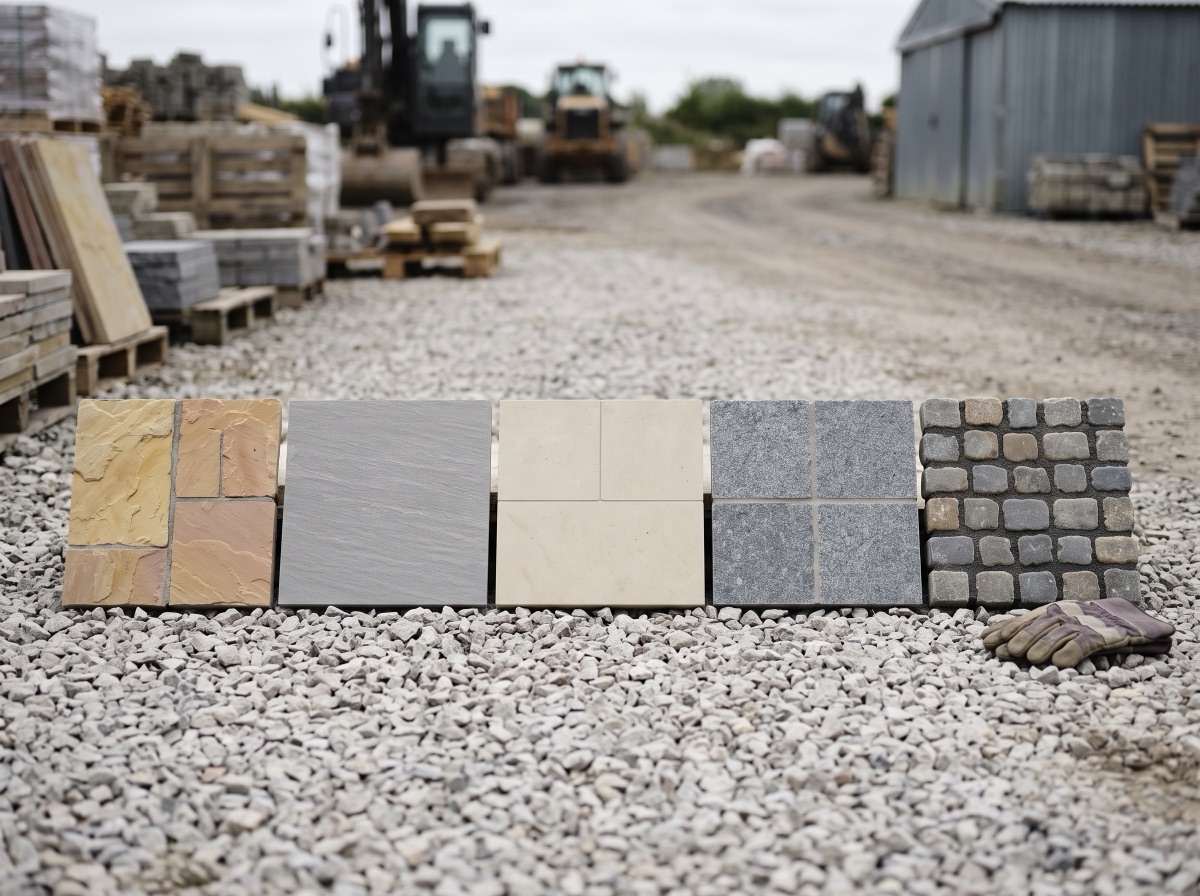
Types of Paving Slabs and Their Pros and Cons
The main paving slab types are porcelain, natural stone (sandstone, limestone, slate, granite) and concrete. Porcelain wins on maintenance and consistency; natural stone on character and heritage; concrete on upfront price. Here are the honest pros and cons of each.
Read guide -
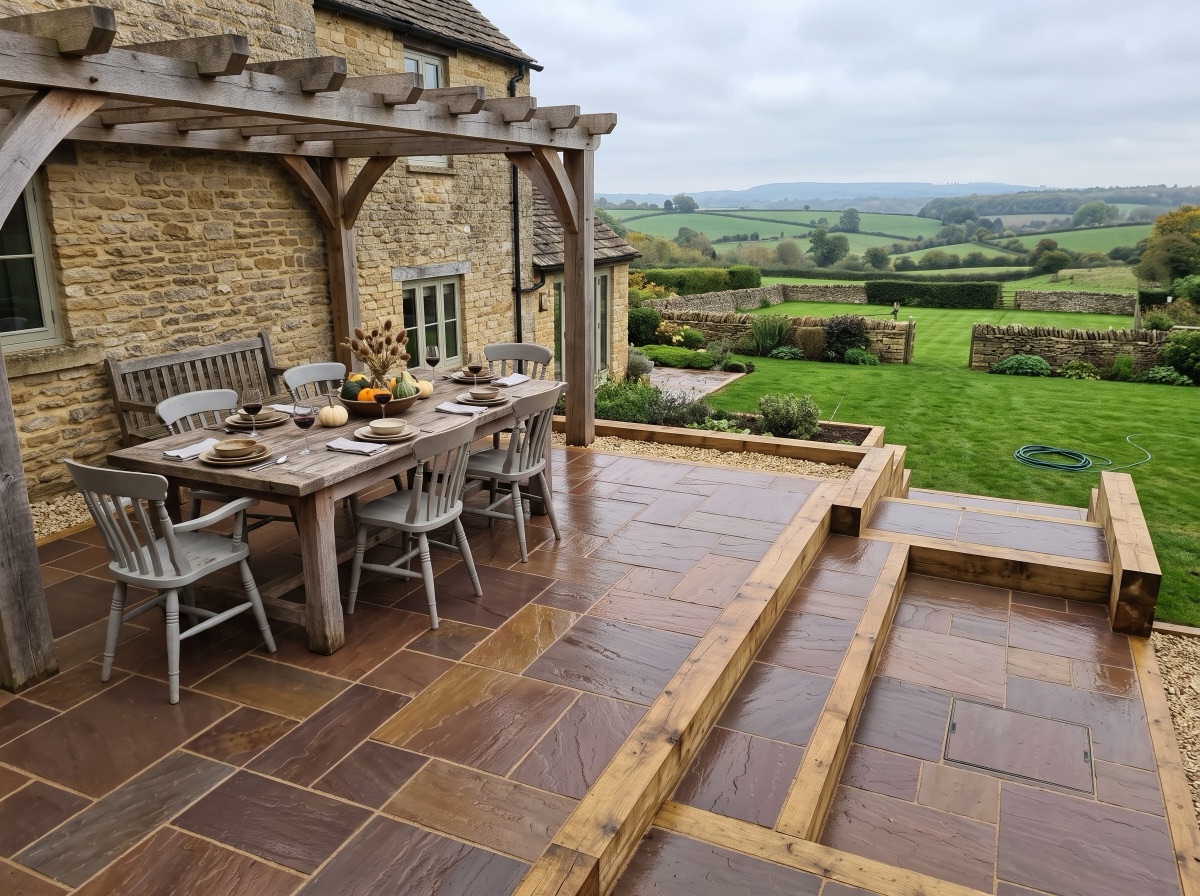 Design ideas
Terrace Design Ideas for Your Home
The best terrace designs start with zoning (dining, lounging, cooking), one consistent floor surface to tie it together, and layered lighting. Large-format porcelain in a light tone makes small terraces feel bigger; greenery and privacy screening do the rest.
Read guide -
 Cleaning & care
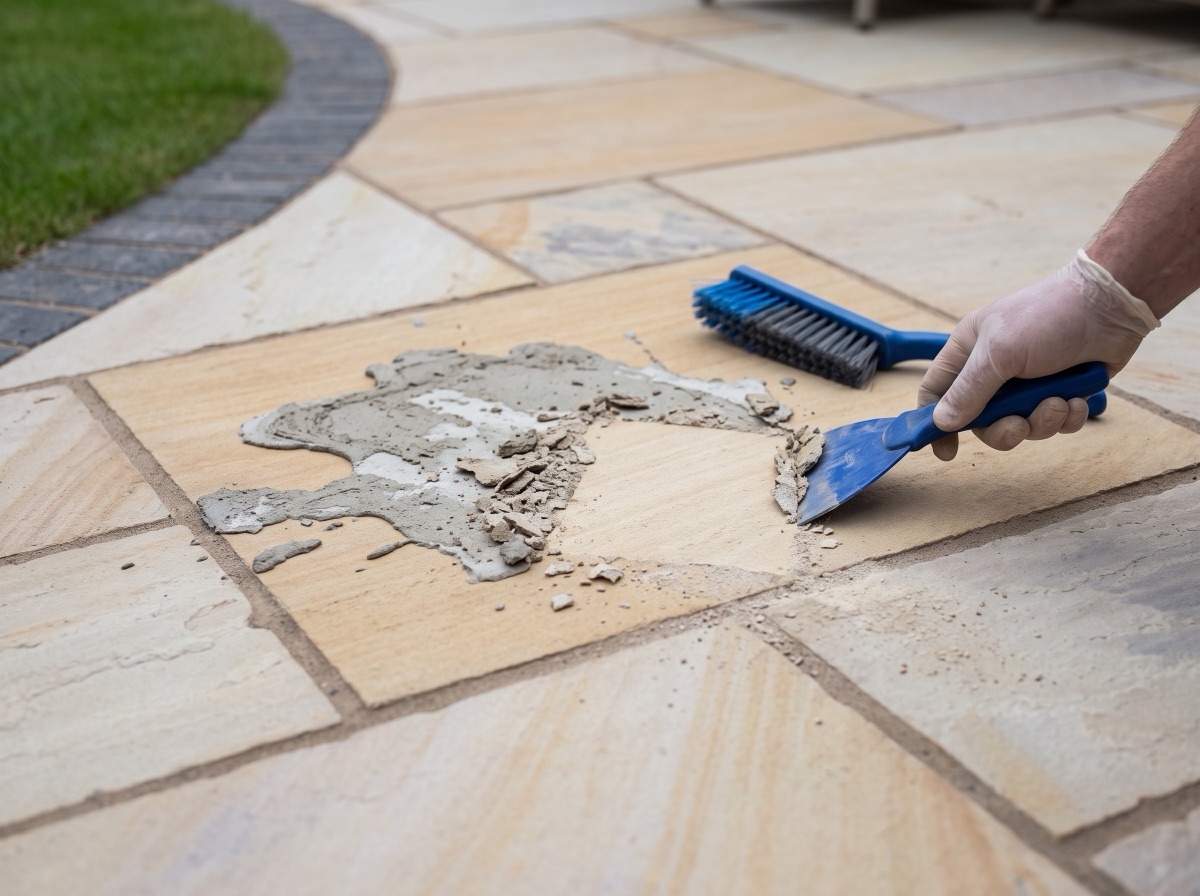
How to Remove Dried Cement from Paving Slabs
Scrape off the bulk mechanically with a wooden or plastic scraper, then dissolve the residue with a purpose-made cement remover — always test a hidden patch first. Acid-based products work fast on porcelain but can etch or stain natural stone, so match the chemical to the slab.
Read guide -
 Cleaning & care
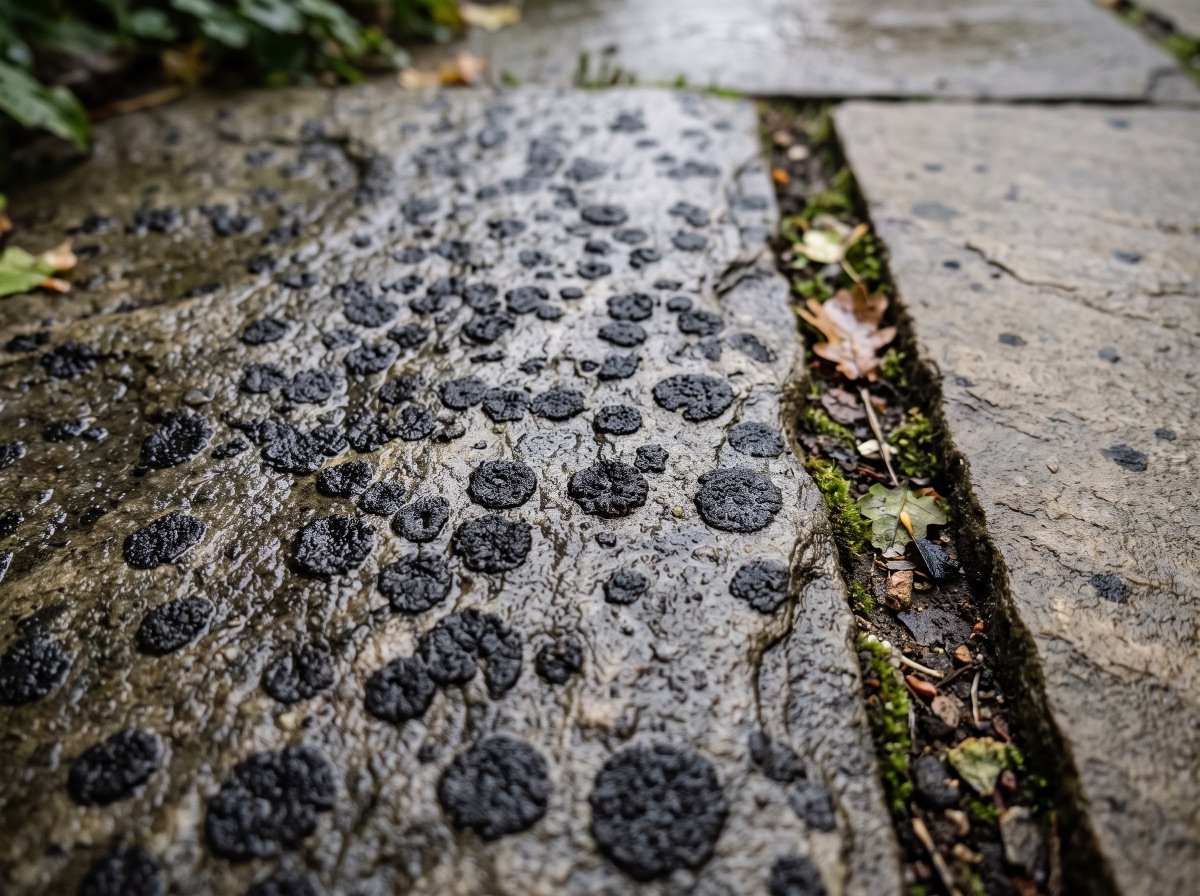
How to Remove Black Spot from Paving
Black spot is a lichen that grows into the stone rather than sitting on it, which is why pressure washing and household bleach do not shift it. Removing it takes a dedicated black spot treatment, left to dwell and usually applied more than once, followed by sealing to slow its return.
Read guide -
 Cleaning & care
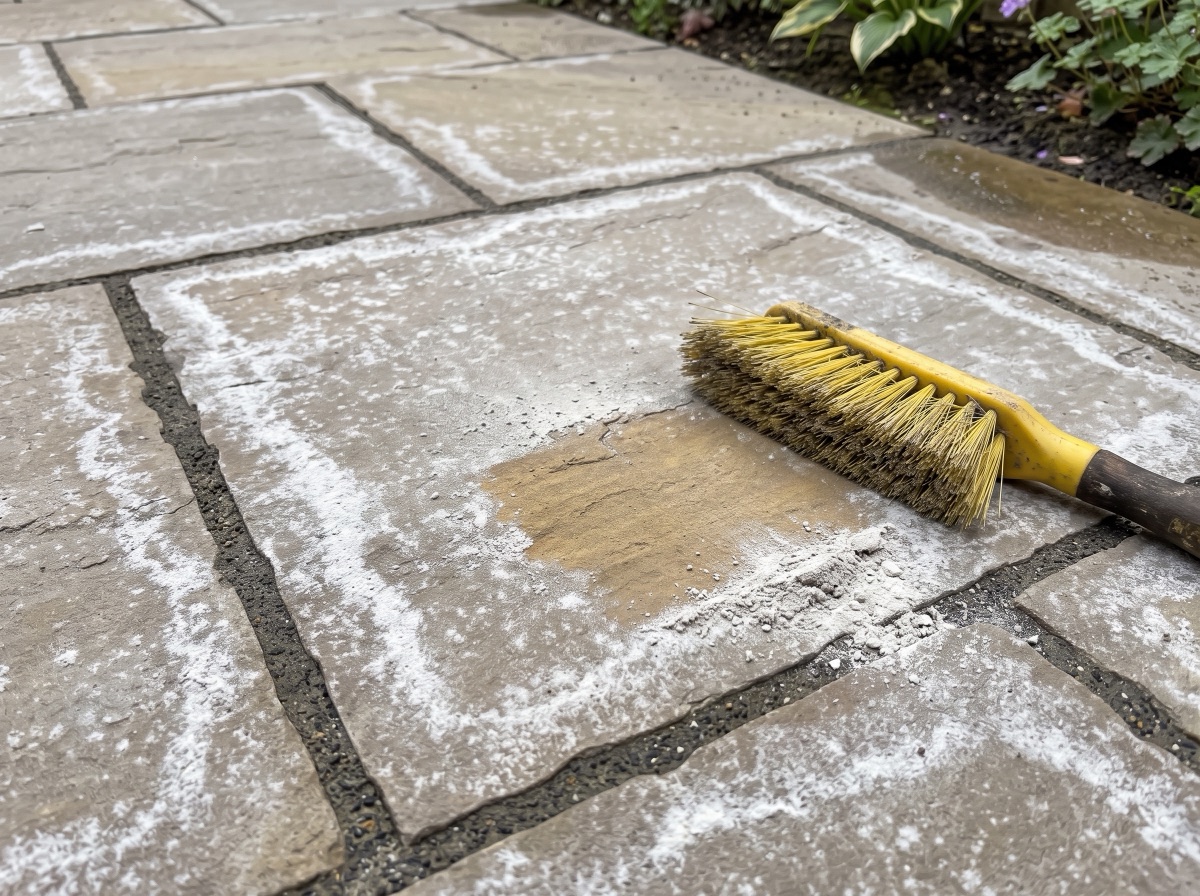
How to Remove Efflorescence from Paving
The white bloom on new paving is efflorescence — mineral salts carried to the surface as the slab and bedding dry out. It is not a fault and not a stain, and it usually weathers away within the first year. Brush it off dry; washing it with water makes it worse.
Read guide -
 Cleaning & care
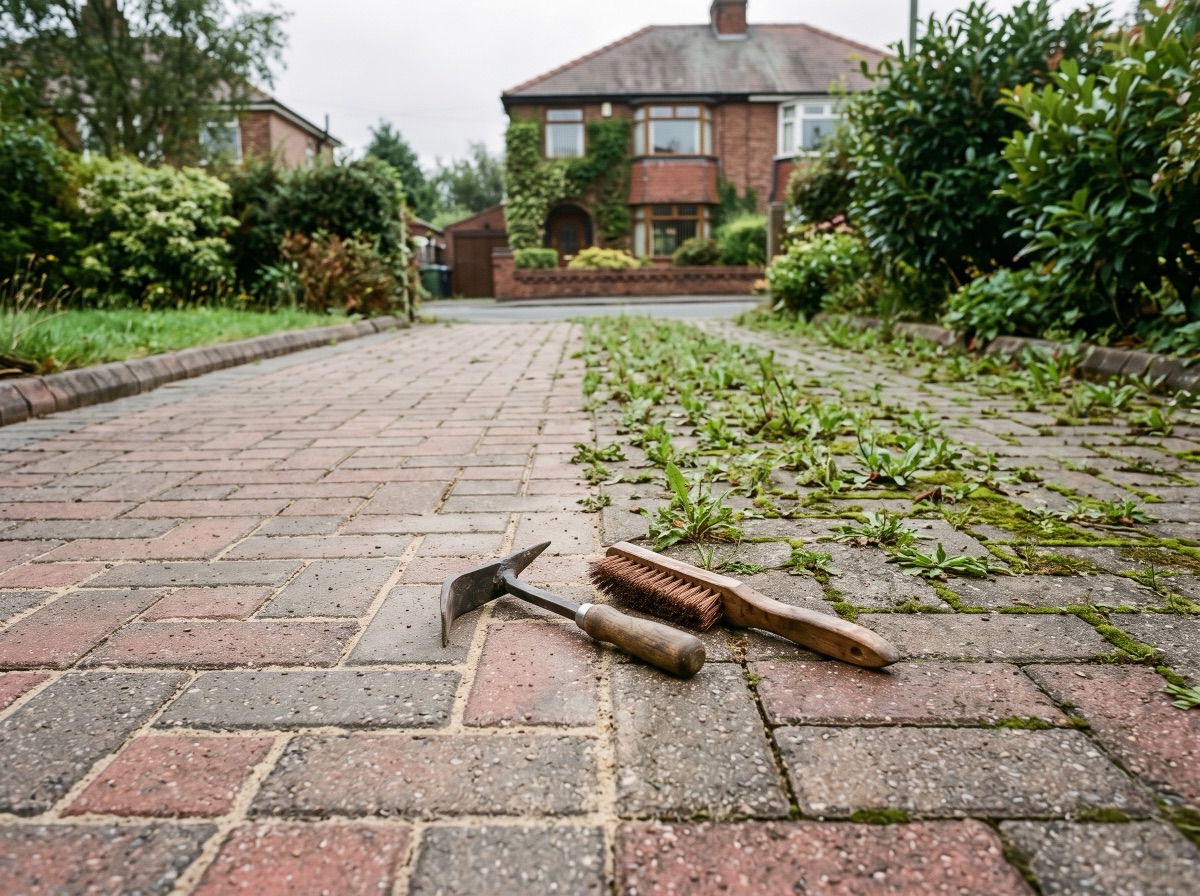
How to Stop Weeds in Block Paving
Weeds in block paving grow from seeds landing in the joints, not up from below — so the fix is joint care: remove growth including roots, clean out the joint debris they root into, refill with kiln-dried sand and stabilise with a sealer. Membranes under the paving won't stop surface-seeded weeds.
Read guide -
 Design ideas
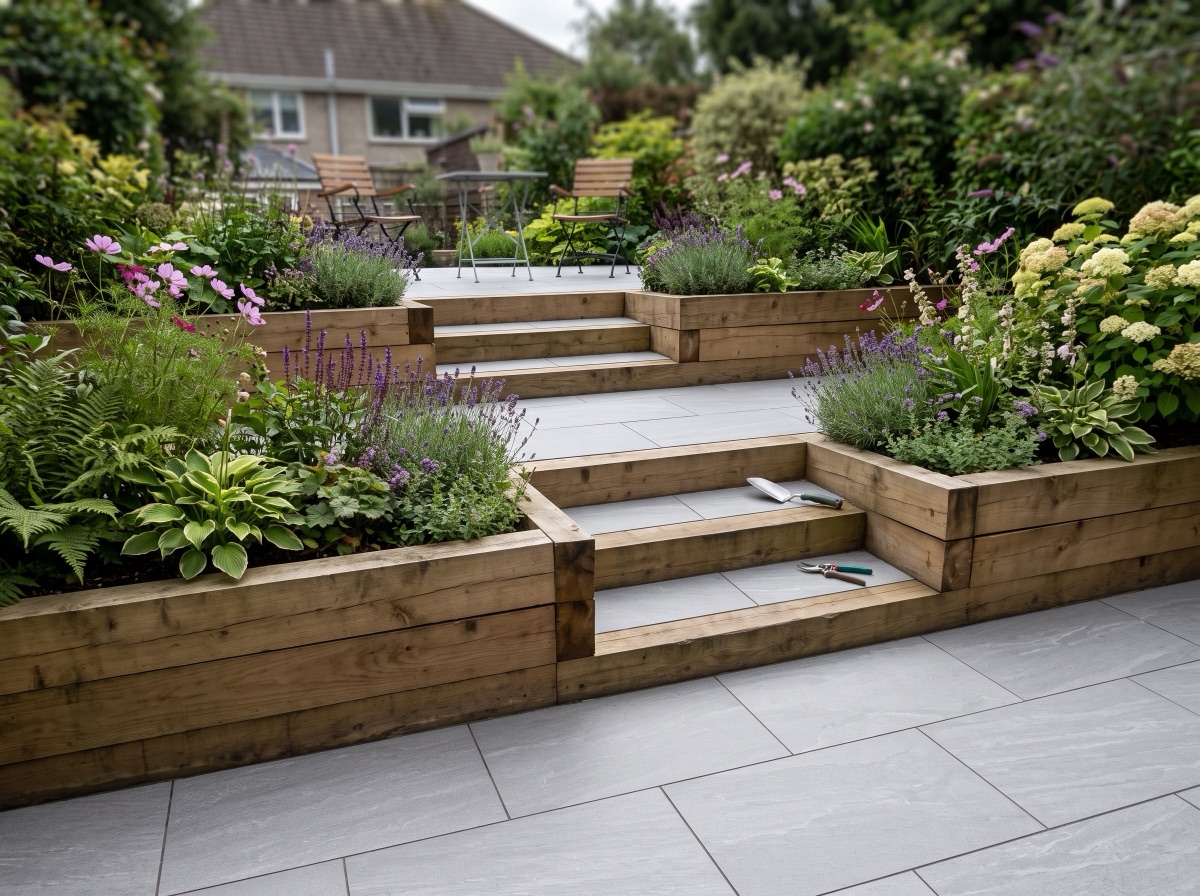
How to Terrace a Sloping Garden, Step by Step
Terracing turns a slope into a series of level, usable platforms: survey the fall, design levels around a comfortable step height, build retaining structures with drainage behind them, then pave each level like a normal patio. Walls retaining much over 600mm need engineering input — plan that early.
Read guide -
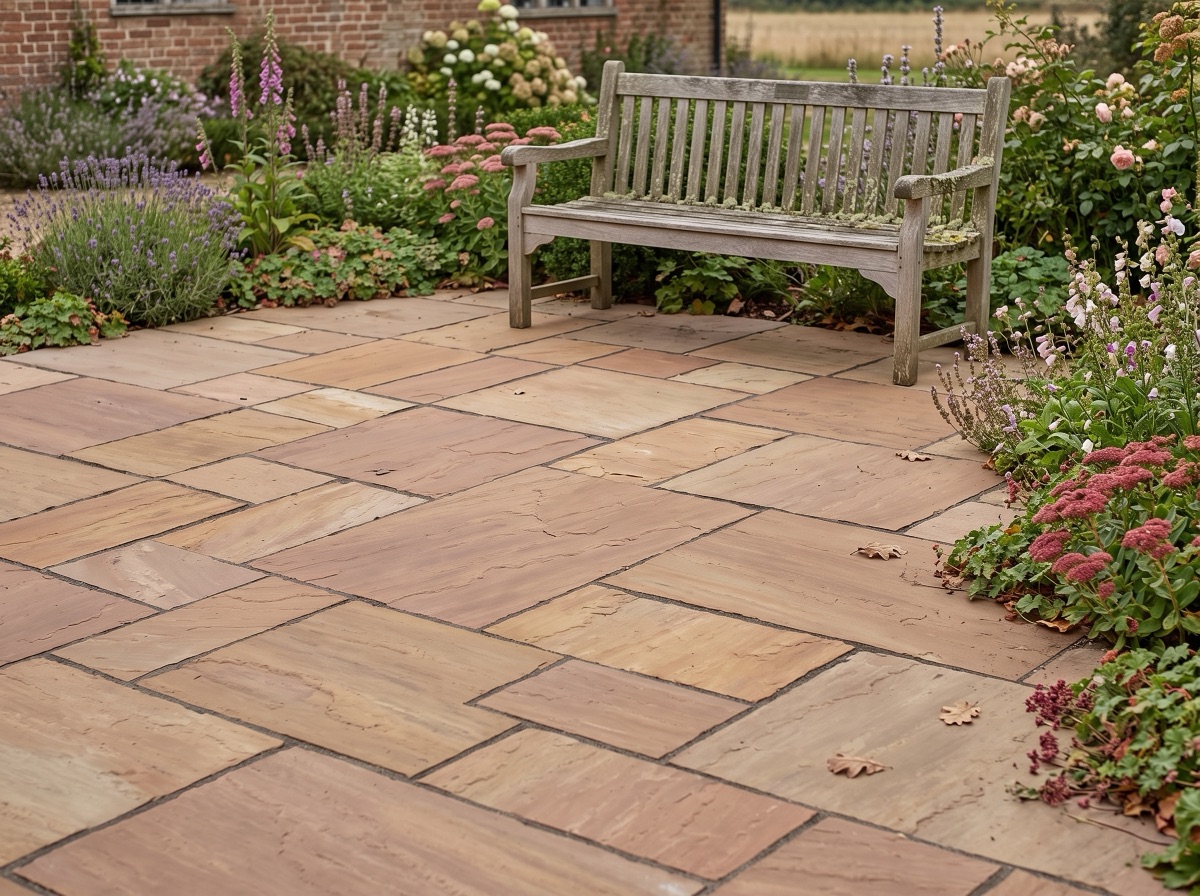
The Complete Guide to Indian Sandstone Paving
Indian sandstone is the UK's most popular natural paving: quarried stone in colourways like Kandla Grey, Raj Green, Fossil Mint and Autumn Brown, in finishes from riven to honed & sawn, usually as 22mm calibrated packs. This guide covers colours, finishes, laying essentials and long-term care.
Read guide -
Kandla Grey Paving: The Complete Buyer's Guide
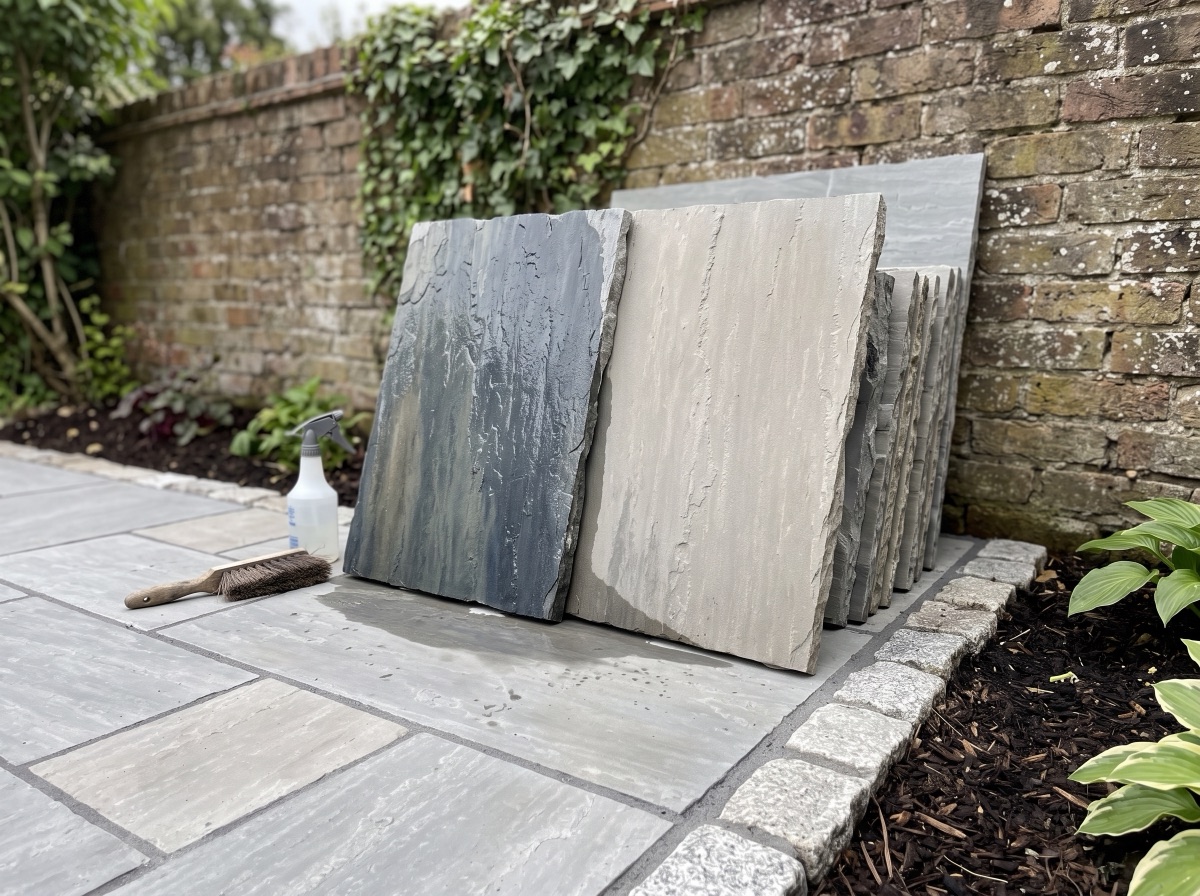
Kandla Grey exists as both a natural Indian sandstone and a porcelain that echoes the same silvery-grey look. Porcelain gives batch consistency and no sealing; sandstone gives genuine tonal variation. This guide covers the differences, finishes and how to size your packs.
Read guide -
 Laying & how-to
Patio Falls and Drainage
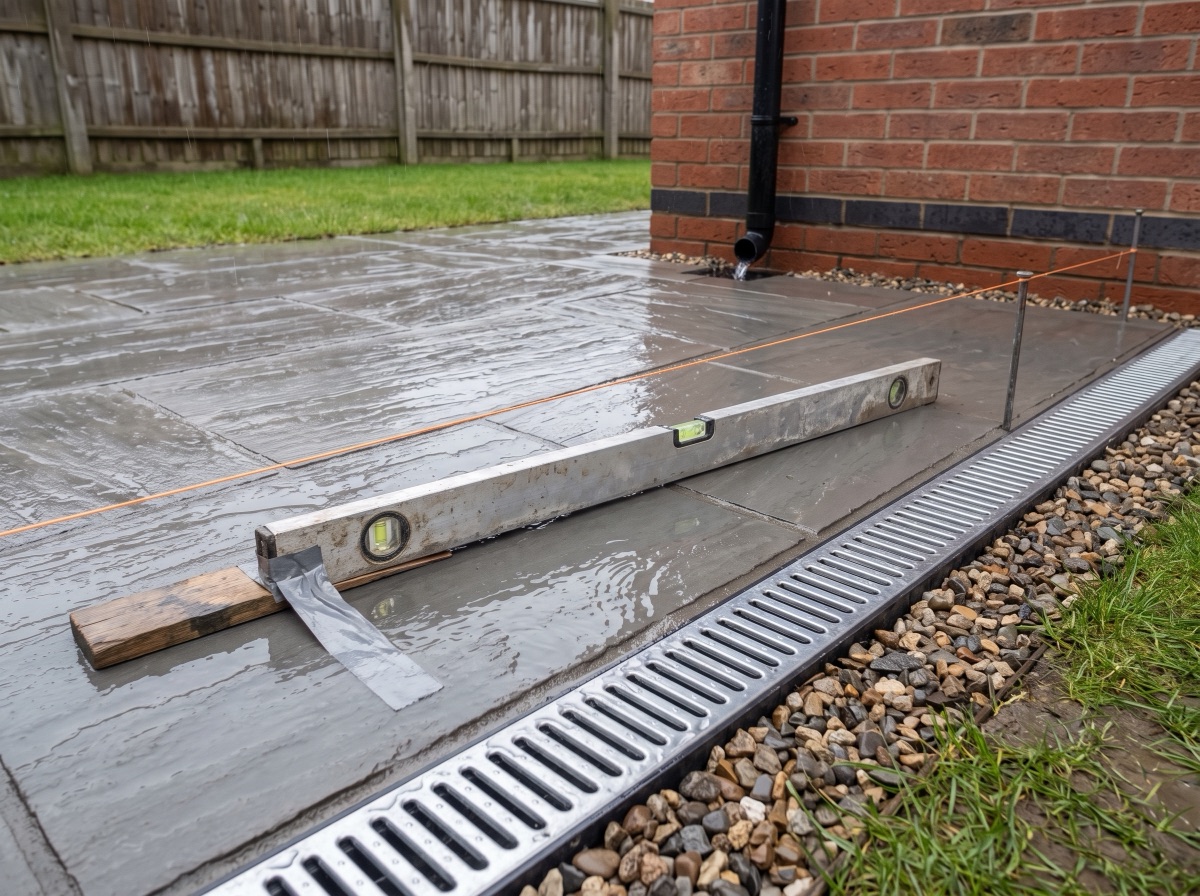
A patio needs a minimum fall of about 1:80 — 12.5mm per metre — running away from the building, and many installers work to 1:60. Set the fall in the sub-base rather than the mortar, and make sure the water has somewhere legitimate to go once it reaches the edge.
Read guide -
 Laying & how-to
Laying Paving Slabs on Concrete
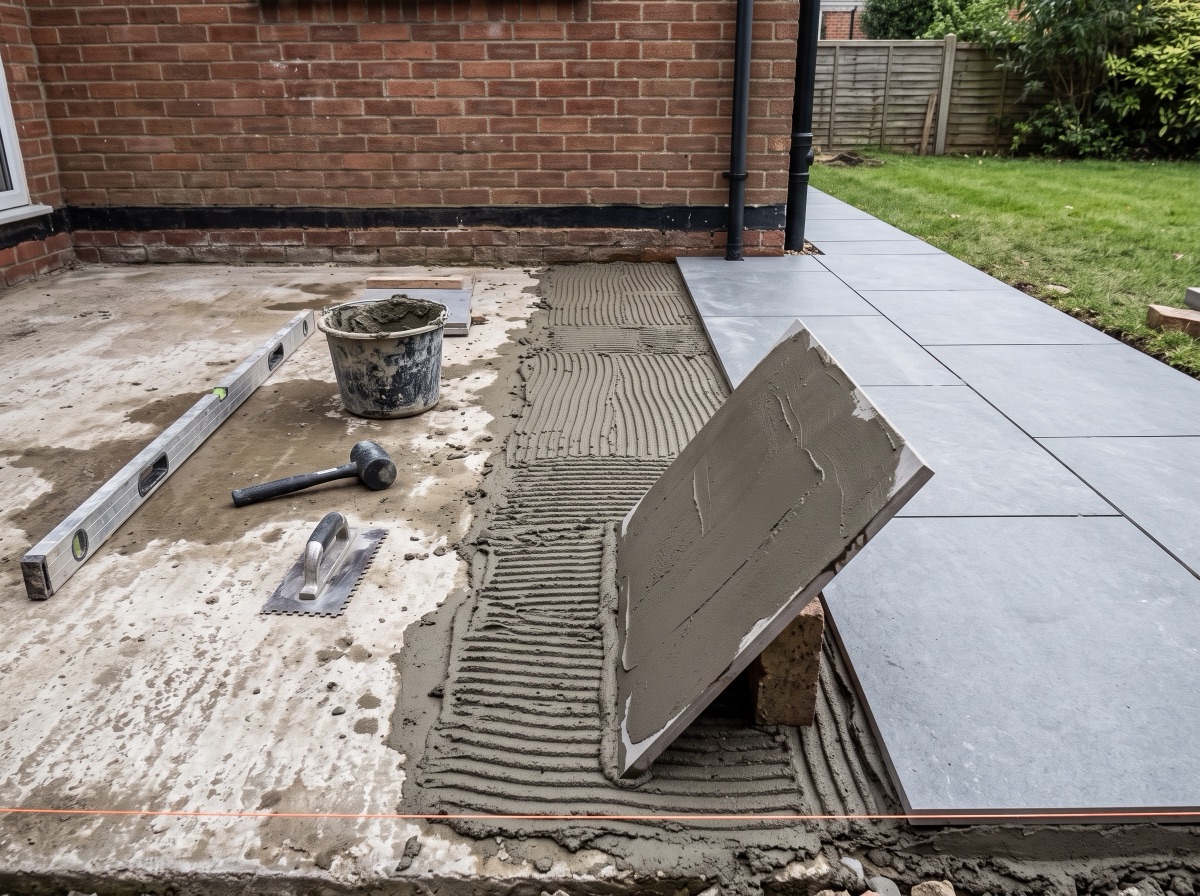
You can lay slabs over an existing concrete base if it is sound, falls away from the building and still leaves 150mm below the damp-proof course once the new surface is on. Bond them with a full mortar bed or a C2 S1 exterior adhesive — never on five dabs.
Read guide -
 Laying & how-to
Laying Paving Slabs on Soil: Best Practice, Step by Step
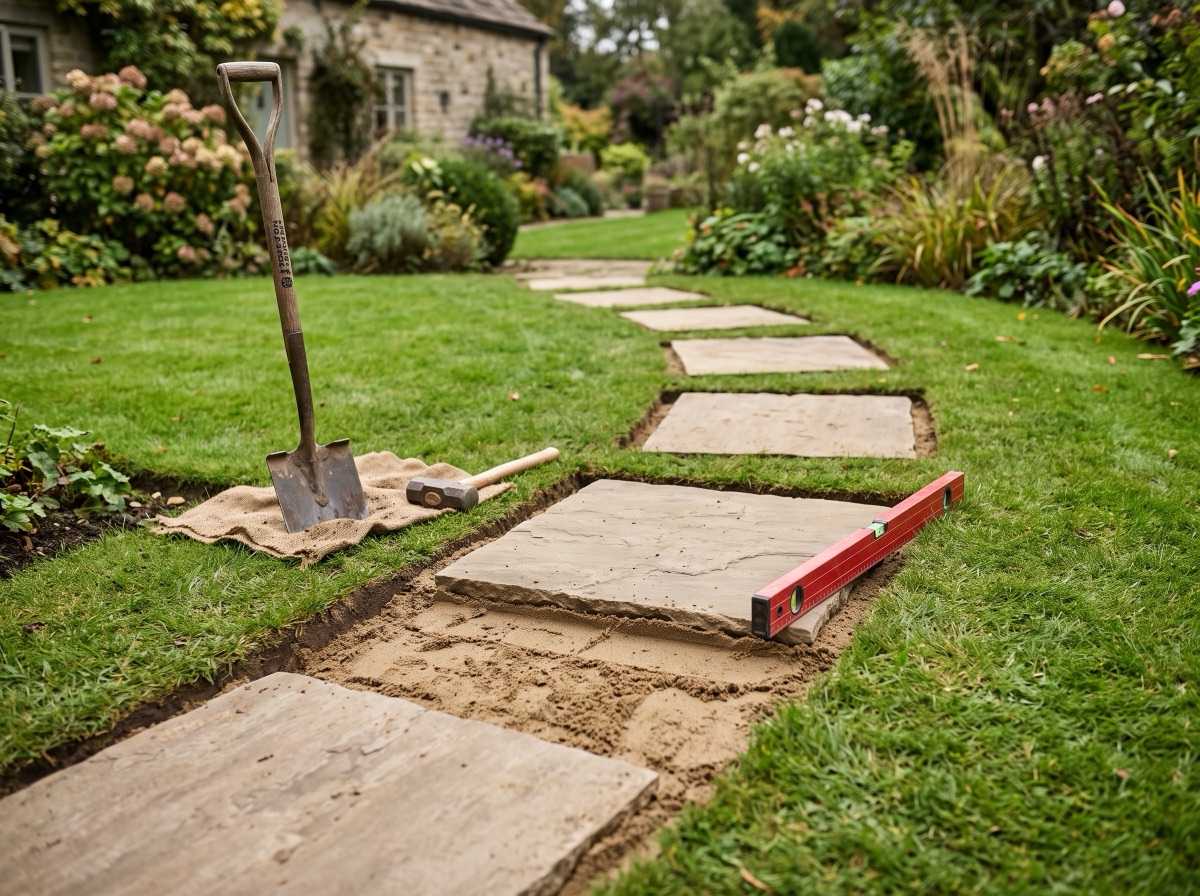
You should never lay paving slabs directly onto bare soil — it settles, holds water and moves with frost. Instead, excavate ~150mm, compact the ground, add 100mm of compacted MOT Type 1 and bed the slabs on a full mortar bed. Here is the complete method, plus the no-cement alternative.
Read guide -
 Design ideas
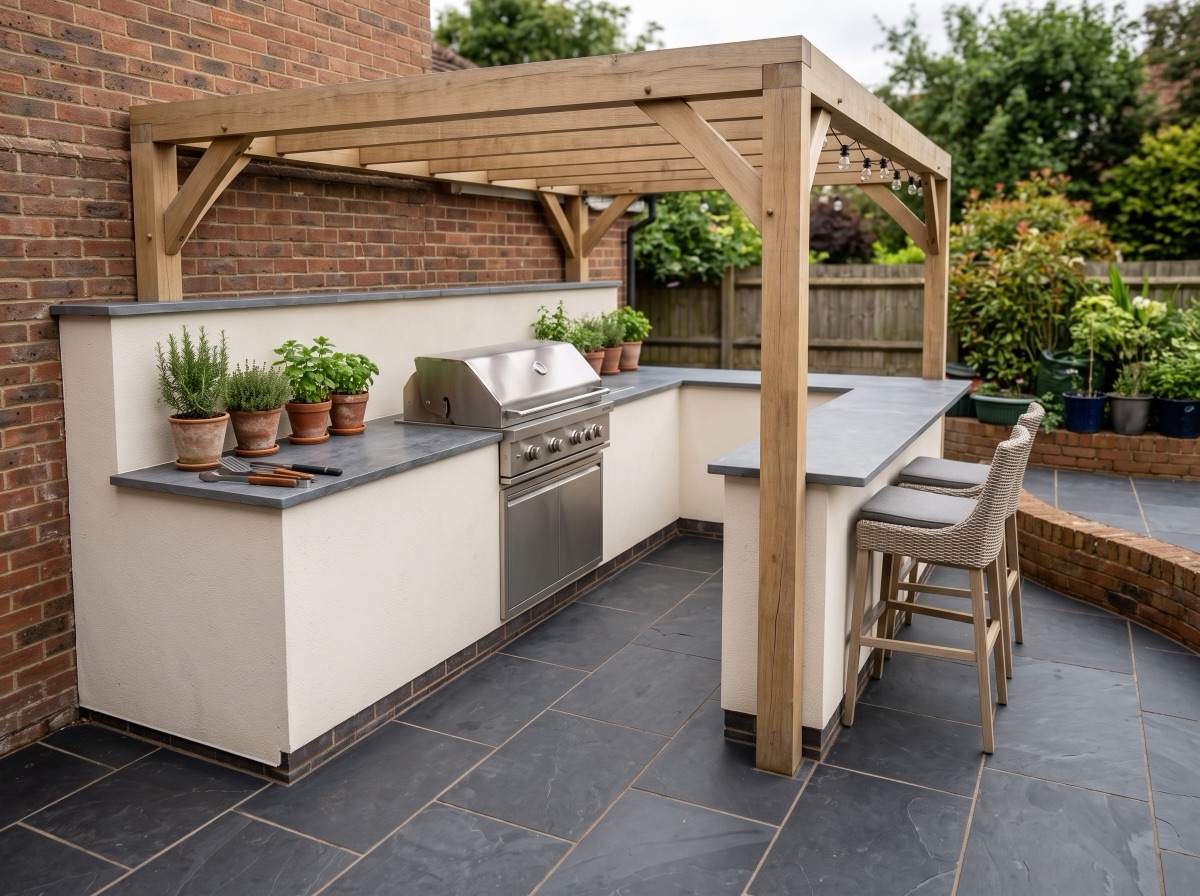
Outdoor Kitchen Ideas for UK Gardens: Layouts, Surfaces & Zoning
The best outdoor kitchens are planned as three zones — cook, prep, gather — on one level, weatherproof floor. Choose a straight-run, L-shaped or island layout to suit the space, put porcelain underfoot, and decide early which utilities you genuinely need. Here are the ideas that work in a UK climate.
Read guide -
 Design ideas
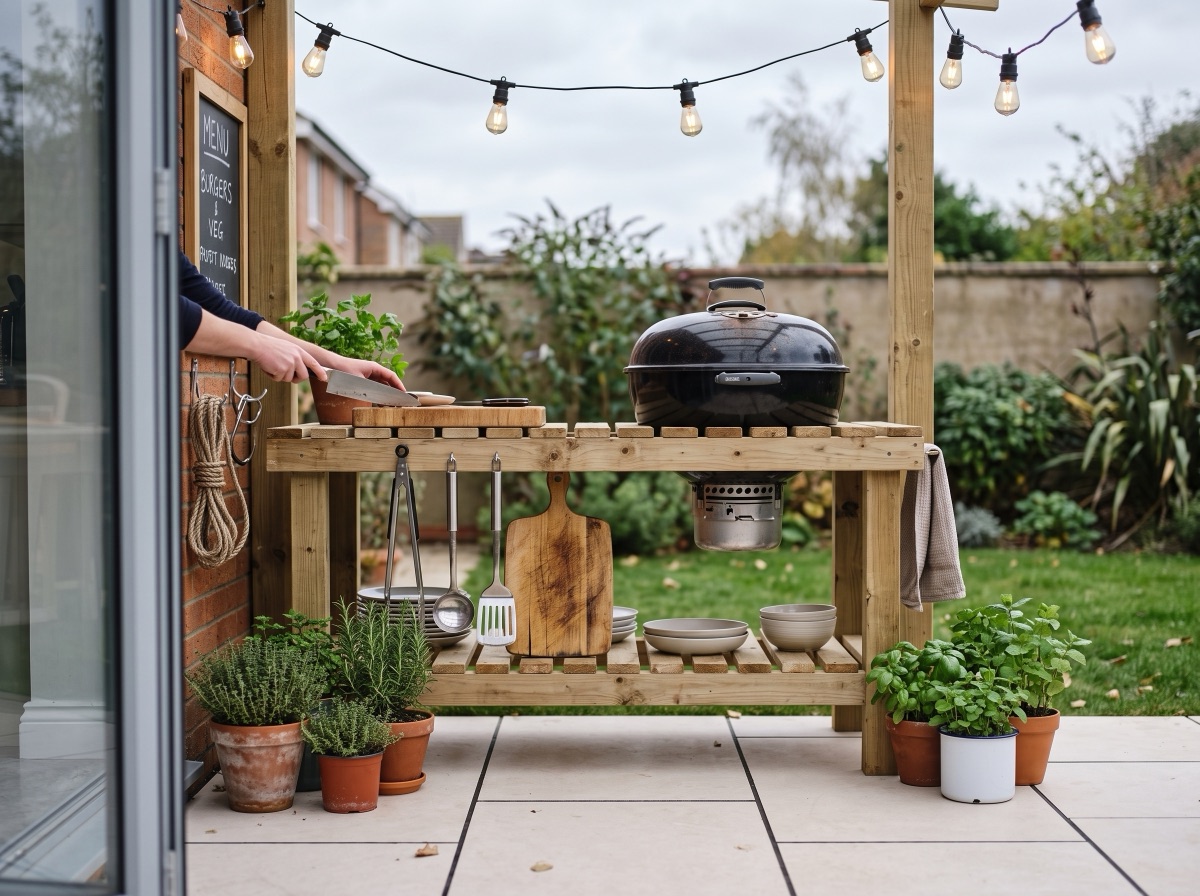
Budget-Friendly Outdoor Kitchen Ideas That Look Expensive
An expensive-looking outdoor kitchen comes from three cheap decisions: a clean porcelain-paved base, a simple straight-run layout built from blockwork or modular units, and one splurge item (usually the grill). Spend on the surfaces people touch; save on the structure they never see.
Read guide -
 Laying & how-to
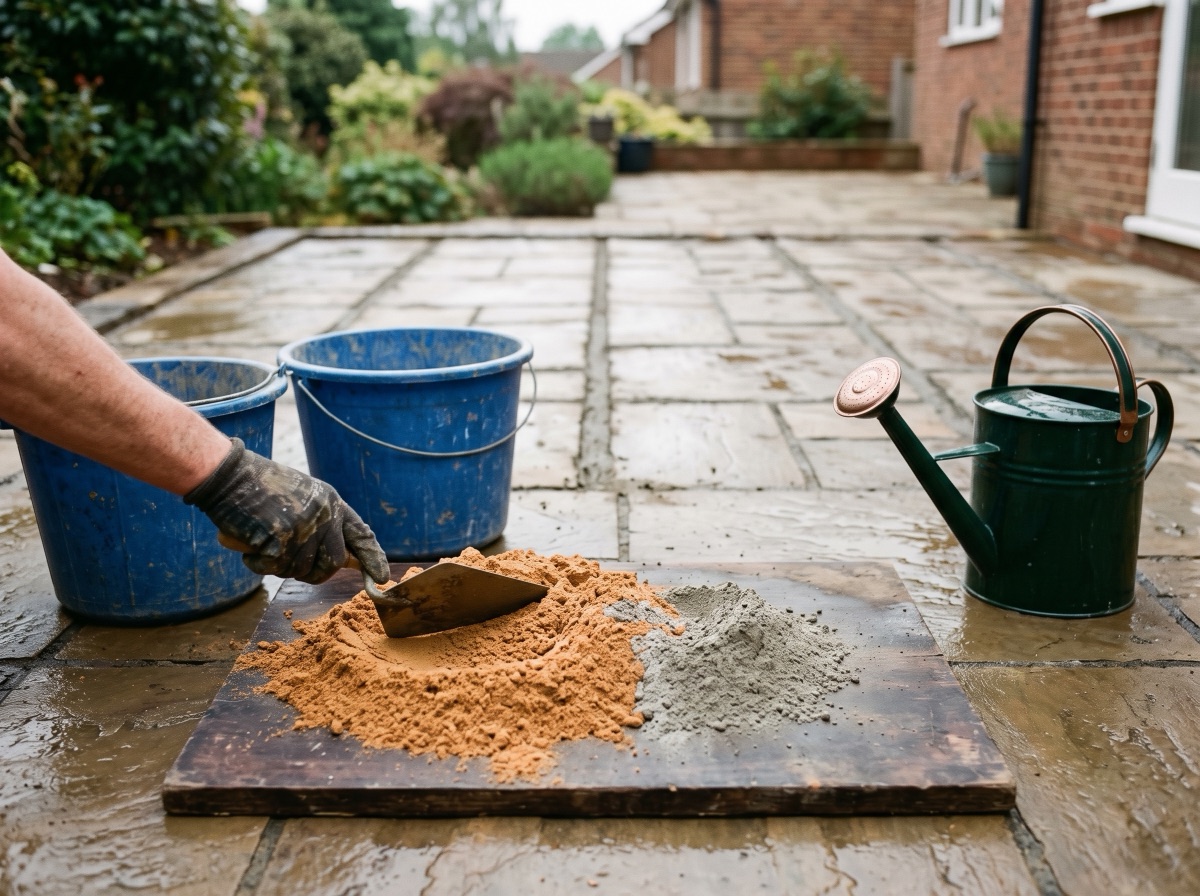
Patio Grout Mix Ratio: Sand & Cement Pointing Explained
The standard patio pointing mix is 4:1 sharp sand to cement, mixed semi-dry for traditional pointing or wetter for a slurry. A 3:1 mix gives a stronger, denser joint for driveways and heavy wear. Here are the ratios, consistencies and methods — and when a brush-in compound beats mixing your own.
Read guide -
 Design ideas
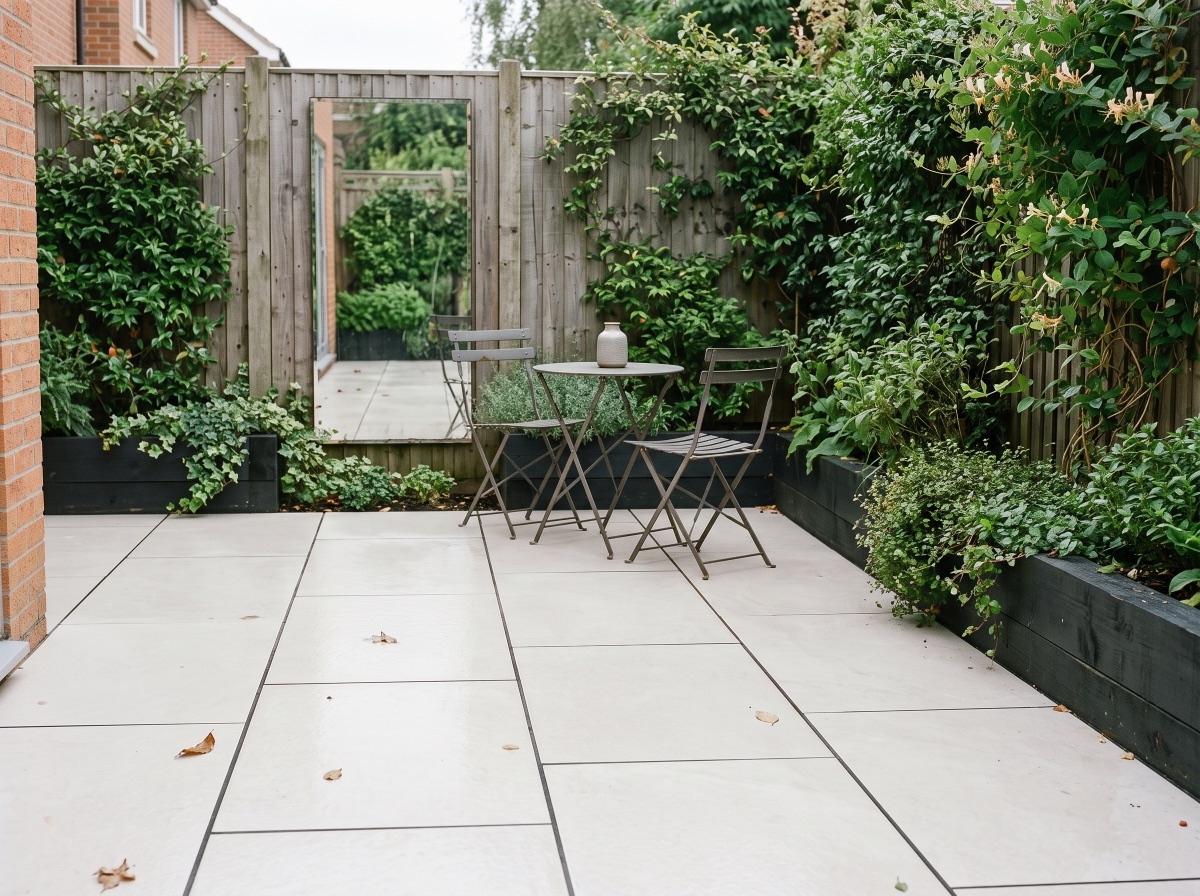
Paving Ideas for Small Gardens: Make the Space Work Harder
Small gardens reward big moves: fewer, larger slabs, light reflective colours, one continuous surface run to the boundary, and joints aligned with the sight line. Here are the paving ideas that make a compact garden feel bigger — and the busy-pattern habits that shrink it.
Read guide -
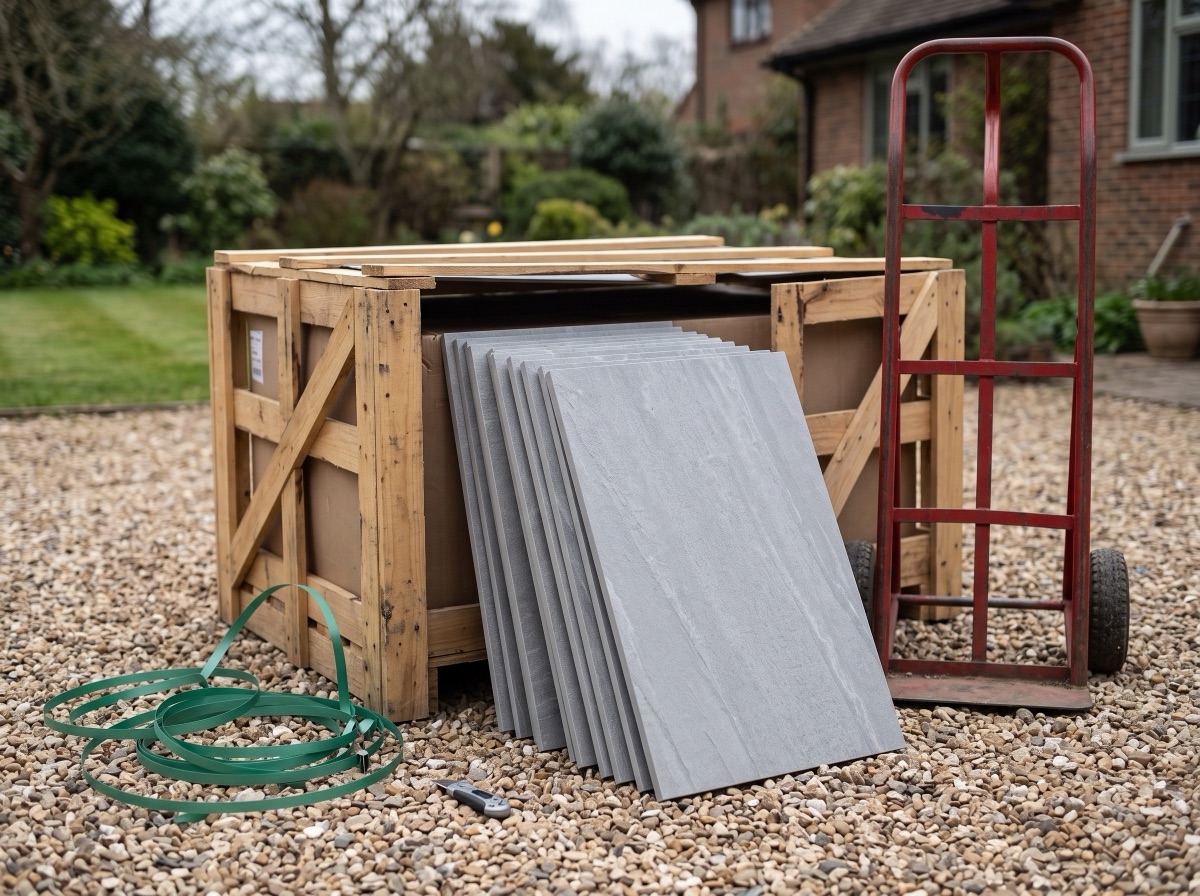
How Much Does Porcelain Paving Cost? Real UK Pack Prices
Porcelain paving in our catalogue runs from about £19 to £47 per m² (July 2026 prices), with most 900×600 anti-slip lines between £19 and £25 per m². Here is what actually drives the price, real pack examples, and how to budget a whole patio without guesswork.
Read guide -
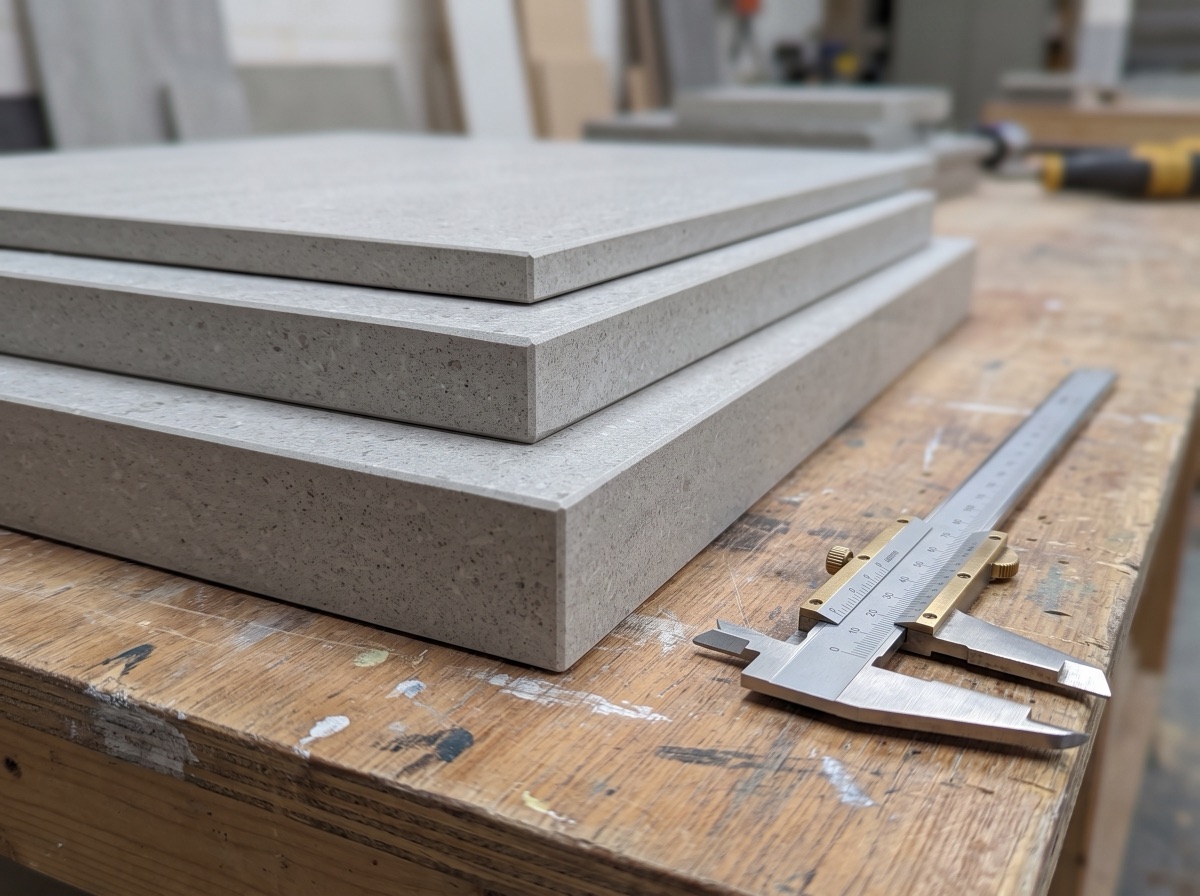
Porcelain Paving Thickness Guide: 16mm vs 20mm vs 30mm
20mm is the UK standard for outdoor porcelain paving — right for patios, paths and pool surrounds on a full mortar bed. 16mm is a lighter, cheaper option for sheltered pedestrian areas on a perfect bed; 30mm is the heavy-duty spec for driveways. Thickness is about the base as much as the slab.
Read guide -
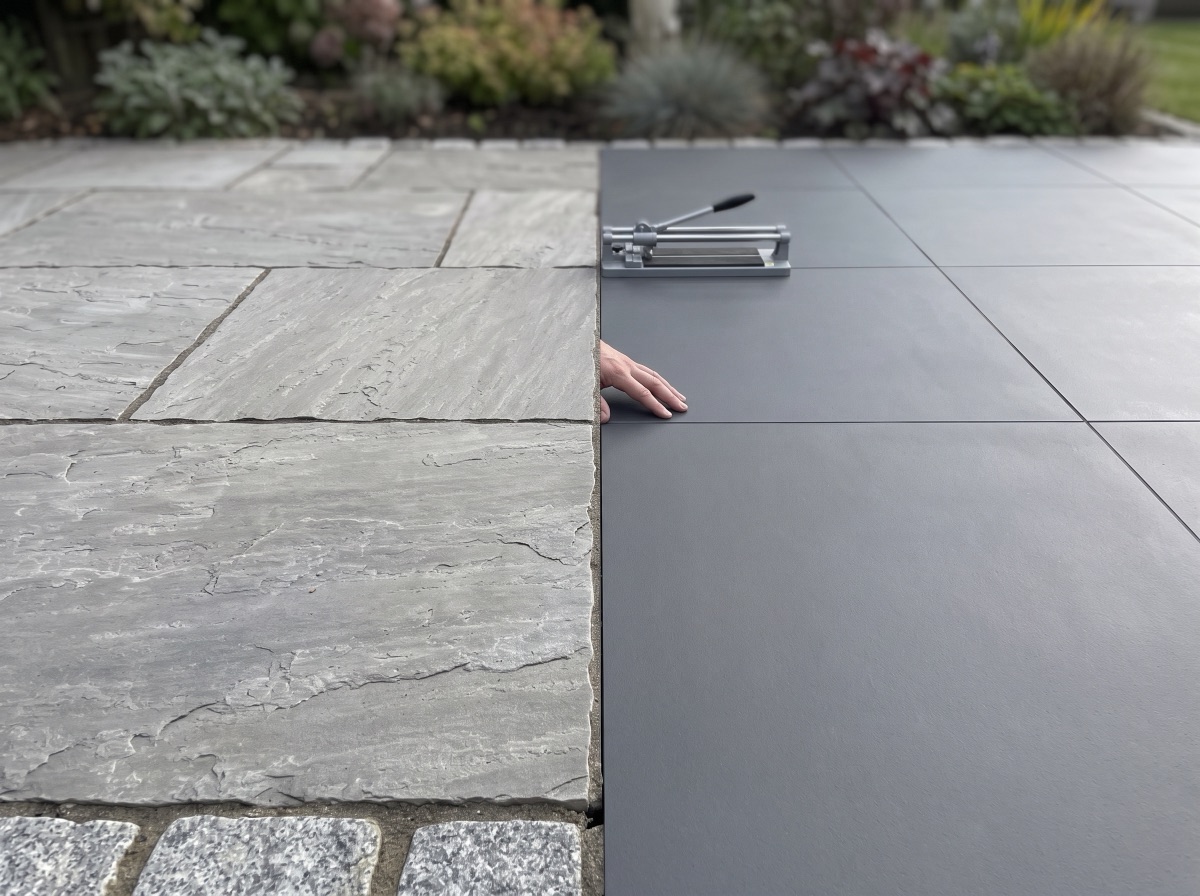
Sandstone vs Porcelain Paving: Which Should You Choose?
Sandstone is a natural stone with genuine character and colour variation; porcelain is a manufactured slab engineered for consistency and near-zero maintenance. Neither is objectively better — this guide compares appearance, durability, upkeep, thickness and cost so you can choose for your project.
Read guide -
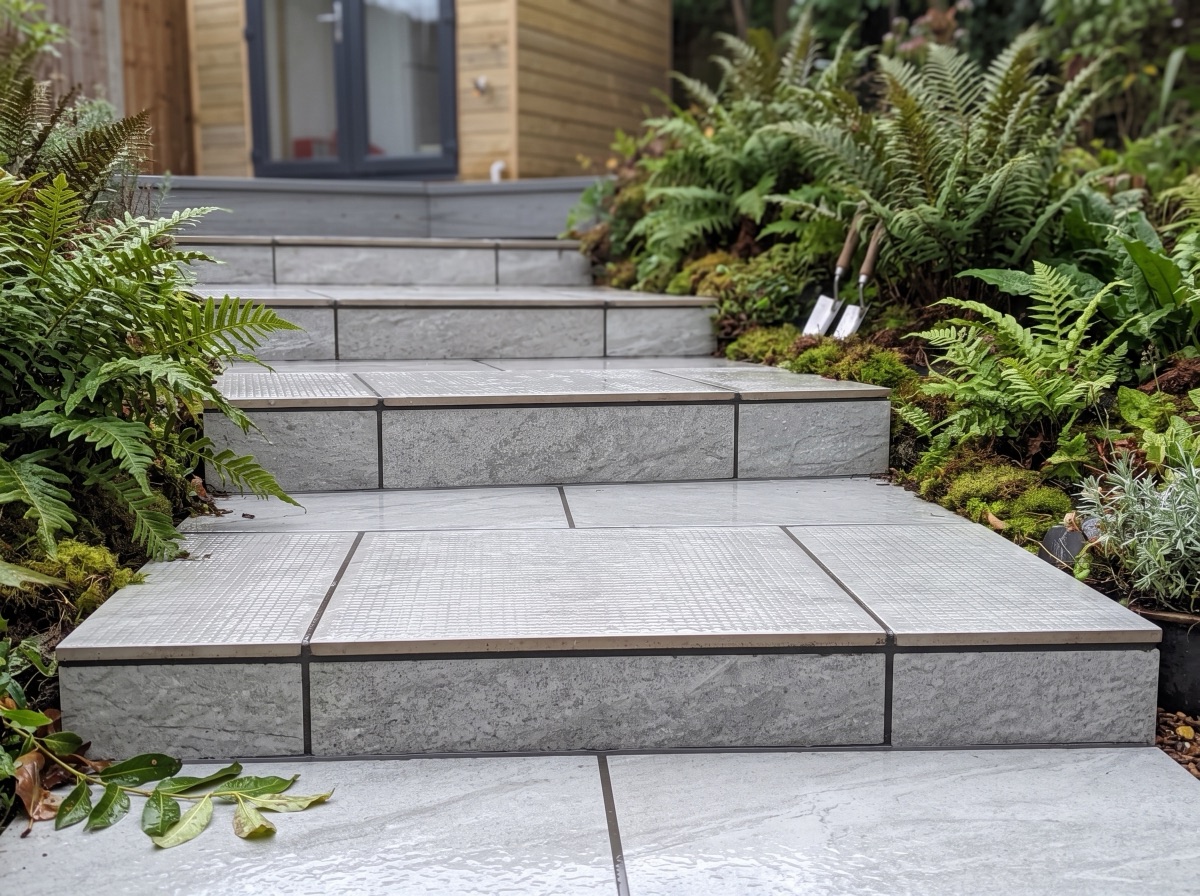
How to Choose Affordable Non-Slip Tiles for Outdoor Steps
For outdoor steps, choose a textured anti-slip porcelain (check the R-rating on the product page — R11 is the usual outdoor benchmark), in a format that cuts efficiently into treads, with a visible nosing detail. Affordable does not mean compromised: value-tier anti-slip porcelain uses the same finishes.
Read guide -
 Laying & how-to
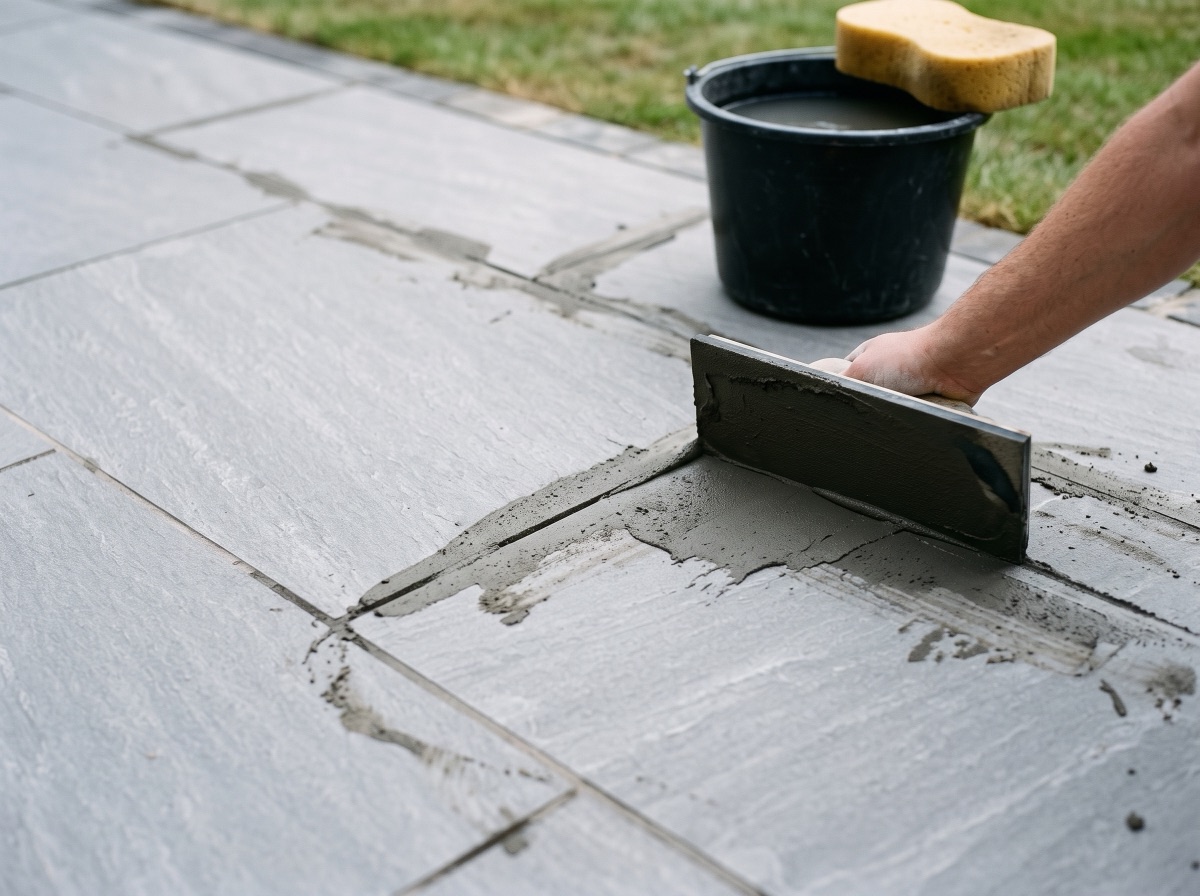
Choosing the Best Grout for Outdoor Porcelain Tiles
For outdoor porcelain, the best joint fillers are flowable cement-based grouts (fast, ideal for narrow joints), brush-in jointing compounds (easiest DIY) and two-part epoxy mortars (maximum durability and stain resistance). Standard indoor tile grout is not suitable — it fails in frost.
Read guide -
 Cleaning & care
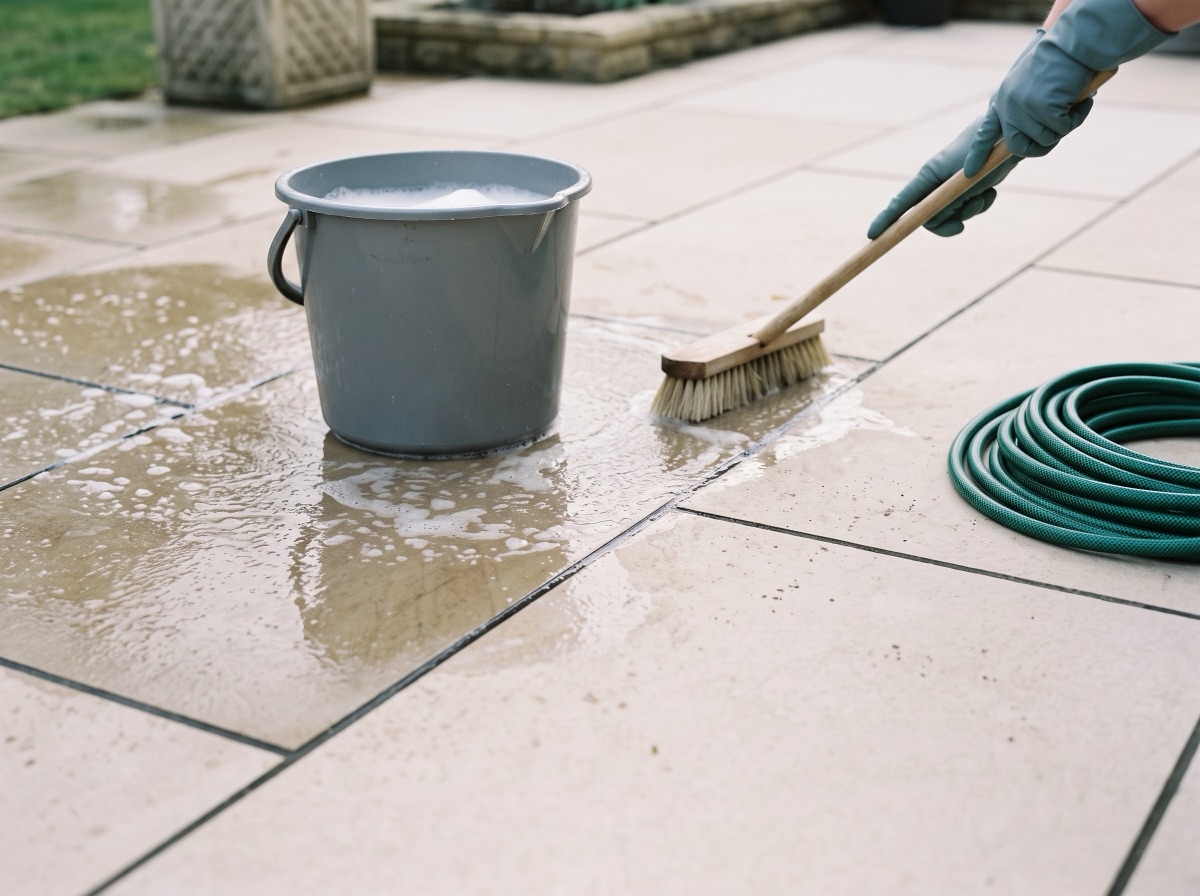
Can You Use Bleach on Porcelain Paving? What's Safe and What Isn't
Dilute household bleach will not damage a porcelain slab itself — porcelain is chemically inert — but it can bleach jointing, corrode metal, kill plants and leave a slippery residue. Here is what sodium hypochlorite, biocidal patio cleaners and plain soapy water each actually do, and when to use which.
Read guide -
 Cleaning & care
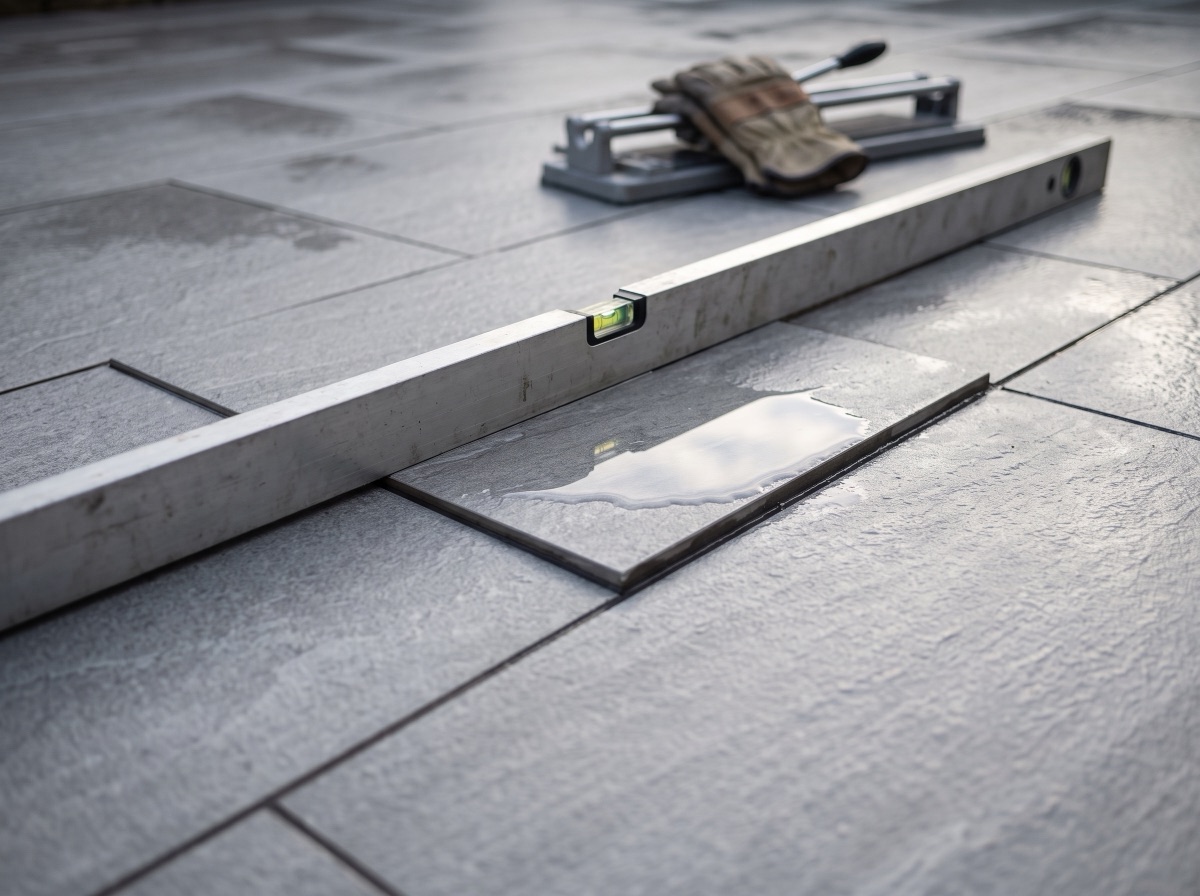
Common Problems with Porcelain Paving (and How to Avoid Them)
Most porcelain paving problems are installation problems: slabs laid without priming slurry debond, spot-bonded slabs crack and drum, dry cuts chip, and grout haze gets left to cure. The material itself is extremely durable — here is every common failure, what causes it, and how to avoid each one.
Read guide -
 Laying & how-to
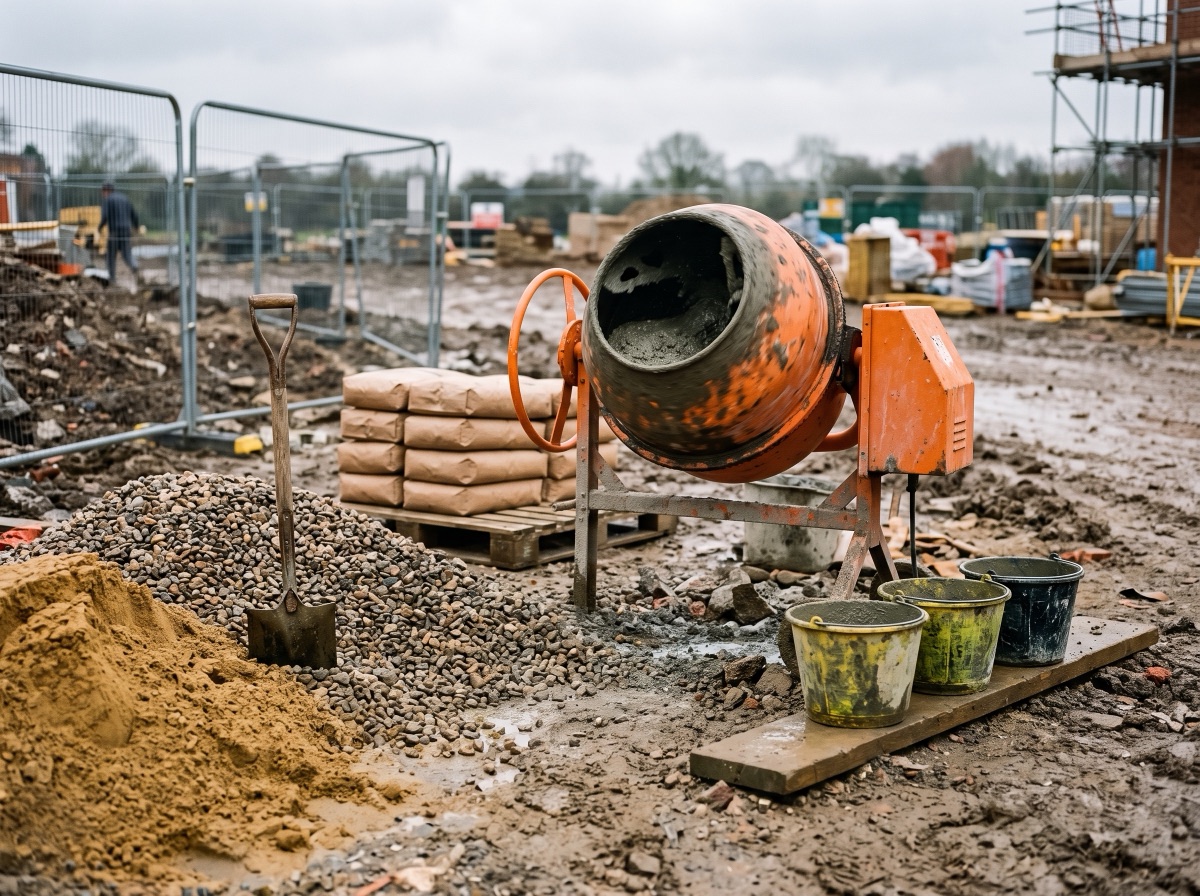
Concrete Mixing Ratios Explained
Concrete ratios are cement : sand : aggregate by volume. The UK workhorses: 1:2:4 for general structural work (pads, footings), 1:3:6 for mass fill and blinding, 1:1.5:3 where extra strength is needed. Keep water minimal — a sloppy mix is a weak mix. Mortar (no coarse aggregate) is a different material.
Read guide -
 Laying & how-to
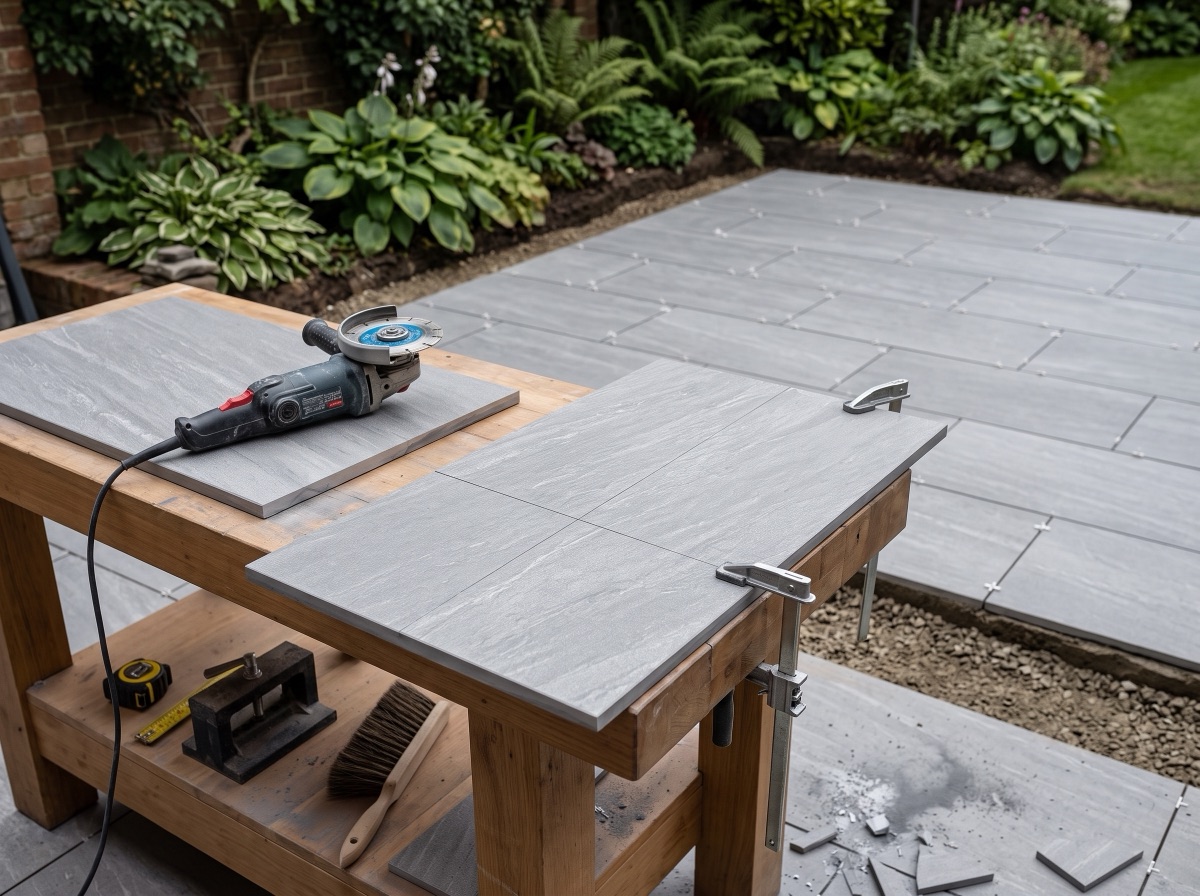
Cutting Porcelain & Stone Paving: Patterns, Layouts and How Much Extra to Order
Your laying pattern sets your wastage: allow roughly 5–10% extra for stack or stretcher bond, ~15% for herringbone 45°, ~10% for herringbone 90°, basket weave and mixed-size packs, and next to nothing for stepping stones. Cut porcelain wet with a continuous-rim diamond blade; sandstone is more forgiving.
Read guide -
 Design ideas
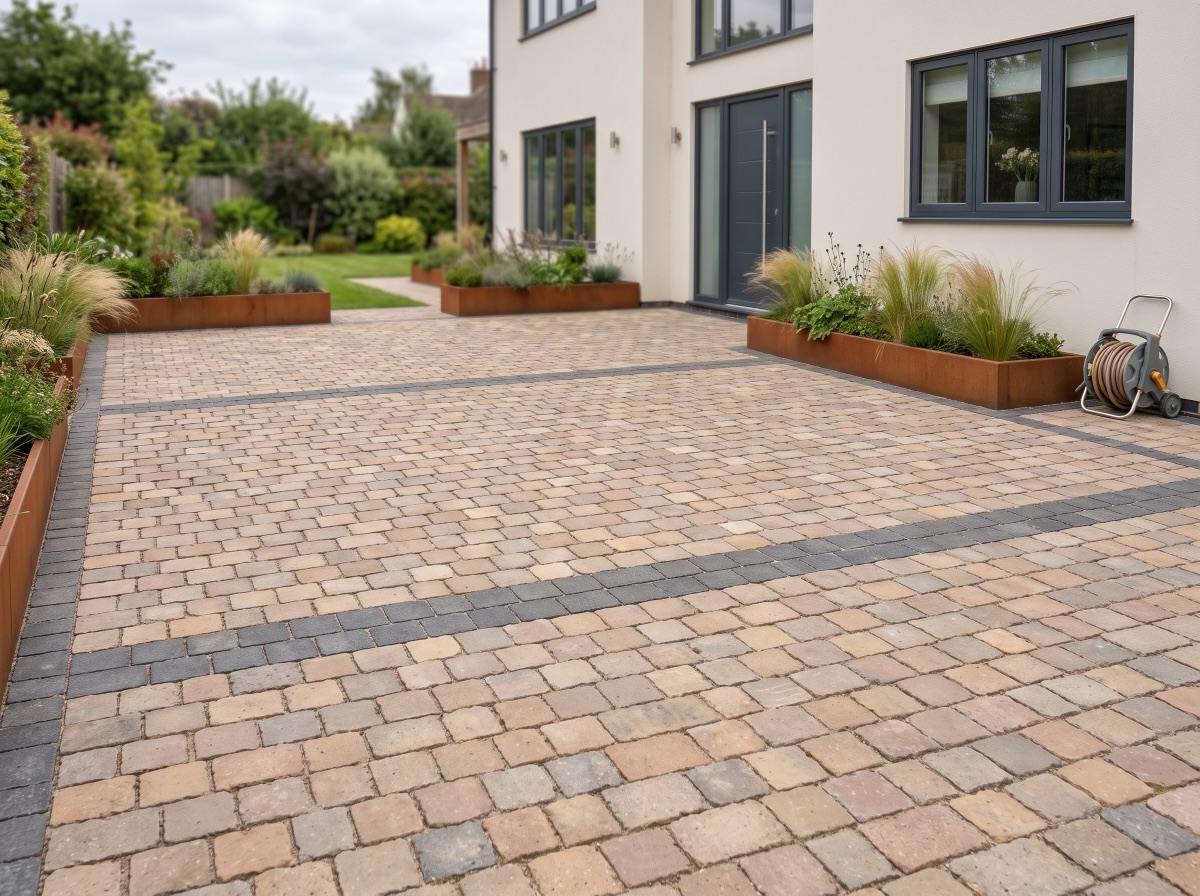
Driveway Design Ideas for 2026
The strongest driveway designs for 2026 share a pattern: one restrained field material, a contrasting border or apron, planting worked into the layout, and drainage designed in from day one. Here are the layouts, edges, EV-bay details and material pairings worth copying.
Read guide -
 Design ideas
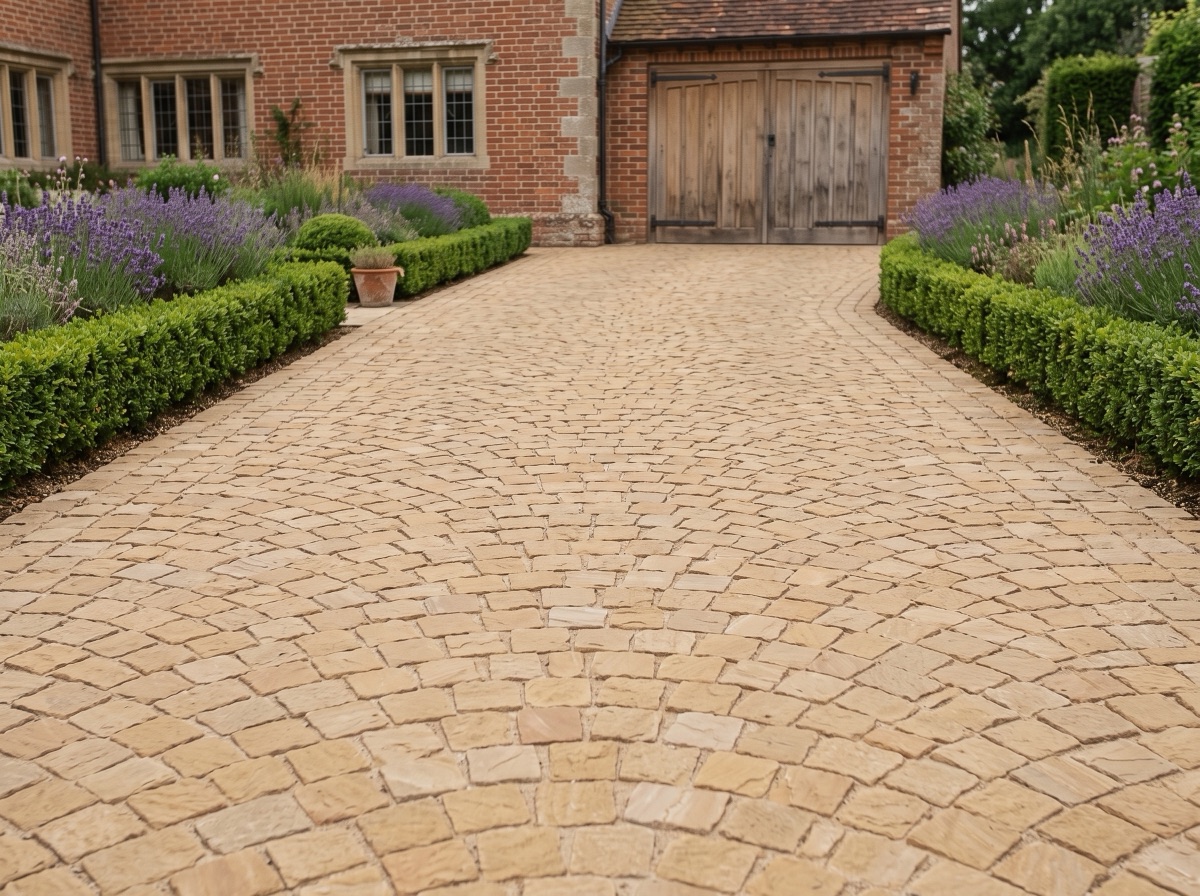
Top Paving Ideas for Driveways
The main UK driveway surfaces are block paving, porcelain, natural stone, resin-bound, gravel, imprinted concrete and tarmac. Gravel is cheapest; block and porcelain lead on looks and repairability. Over 5m² of impermeable front-garden paving needs planning permission unless it drains to a permeable area.
Read guide -
 Laying & how-to
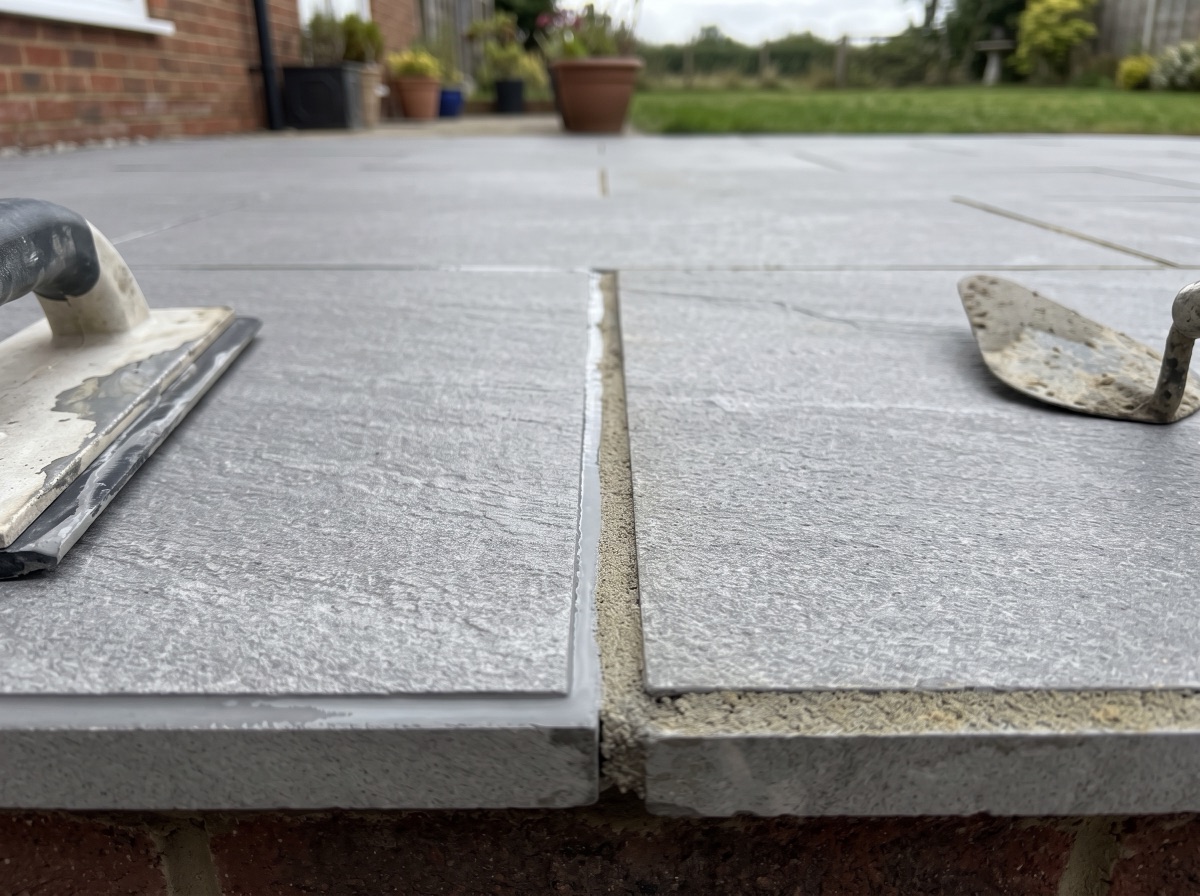
Epoxy vs Cement Grout: Which Is Best for Your Outdoor Project?
Cement grout is cheaper, easier to work and simple to repair; epoxy and resin grouts are harder-wearing, stain-proof and essentially waterproof but cost more and punish slow work. For most patios a quality cement or polymeric joint is right; epoxy earns its price on heavy wear and stain-critical areas.
Read guide -
 Laying & how-to
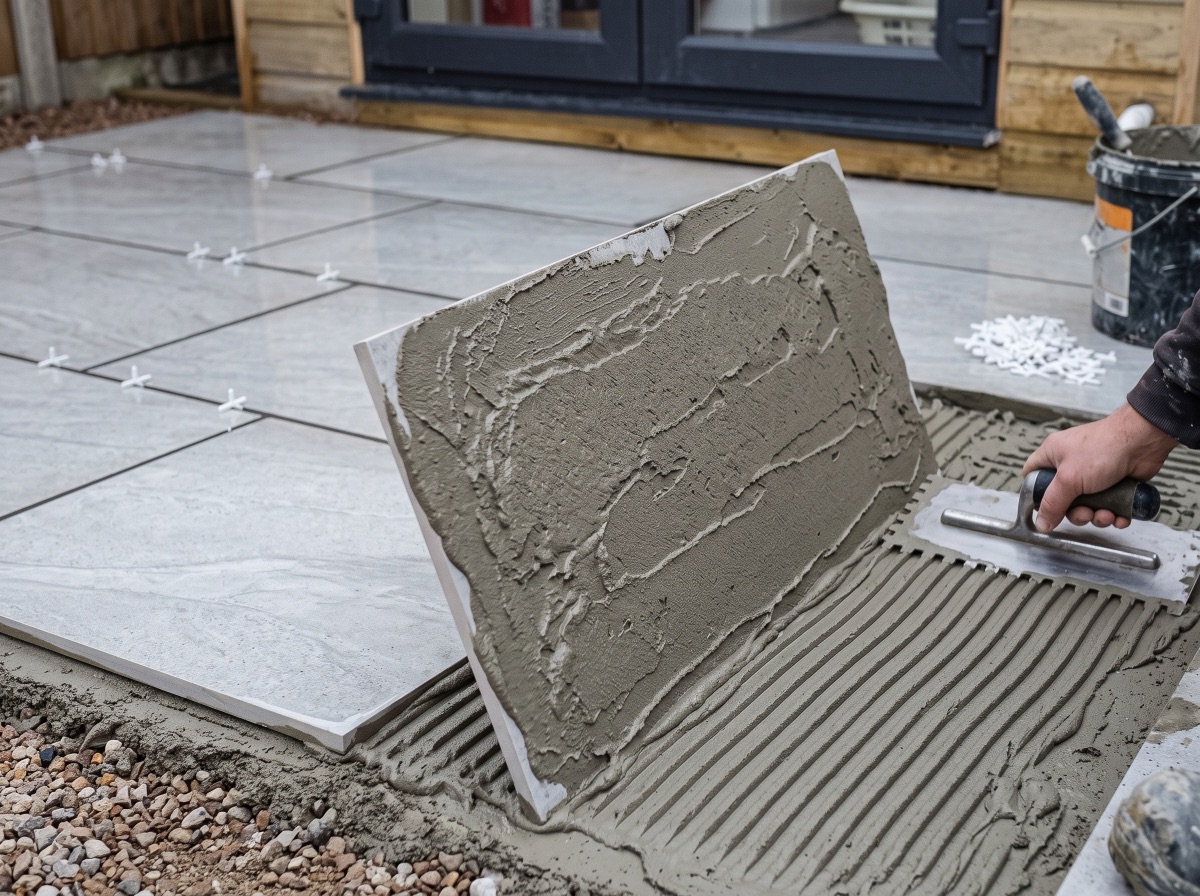
Best Adhesives for Installing Porcelain Paving
Porcelain absorbs almost no water, so it needs either a priming slurry over a full mortar bed (the standard patio method) or a flexible, exterior-rated cement-based tile adhesive — class C2, ideally S1 deformable — when bonding to a concrete slab. Standard indoor tile adhesive will fail outdoors.
Read guide -
 Cleaning & care
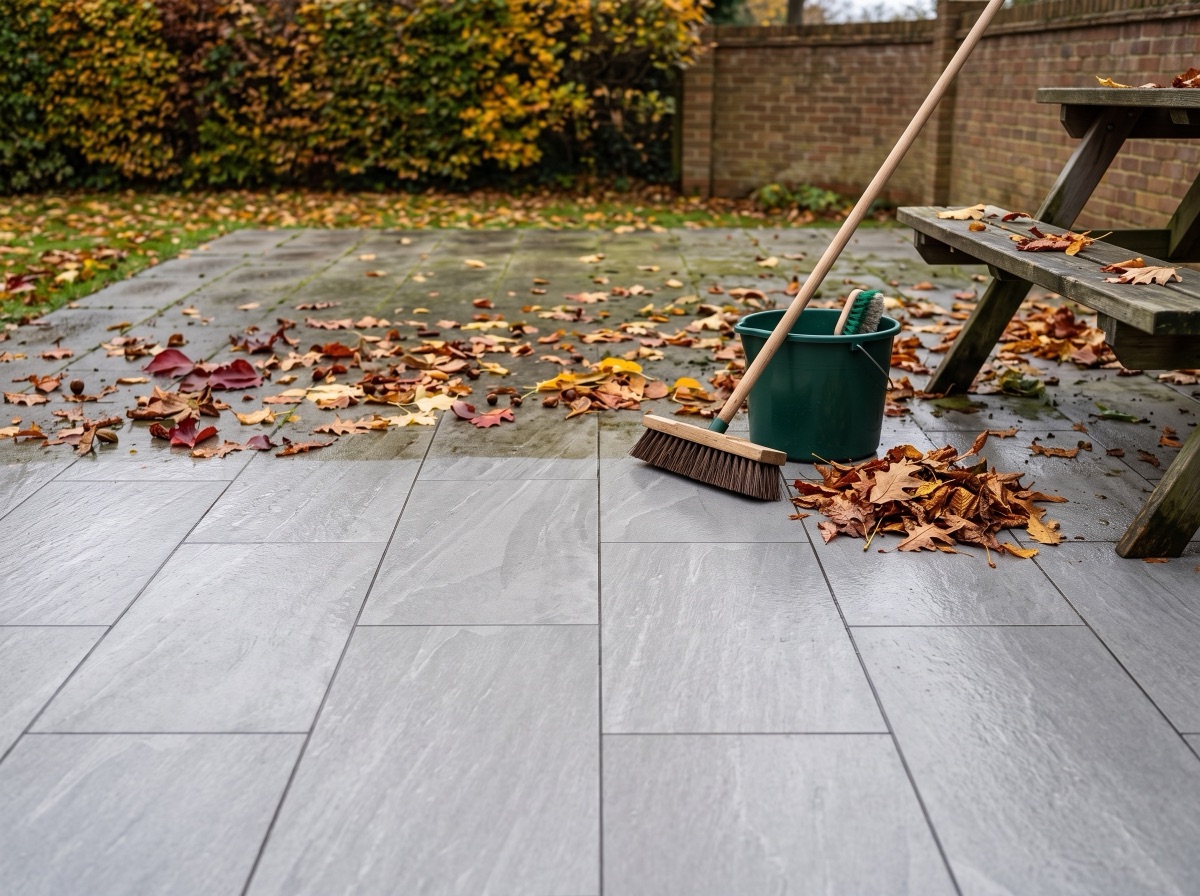
How to Clean Outdoor Porcelain Paving Slabs
Outdoor porcelain is the easiest paving to clean: sweep, wash with warm water and a pH-neutral cleaner, and rinse. It can be jet-washed on a fan setting from ~30cm. Avoid wax-based "shine" products, wire brushes and strong acid on the joints — and treat algae or black spot with a porcelain-safe treatment.
Read guide -
 Laying & how-to
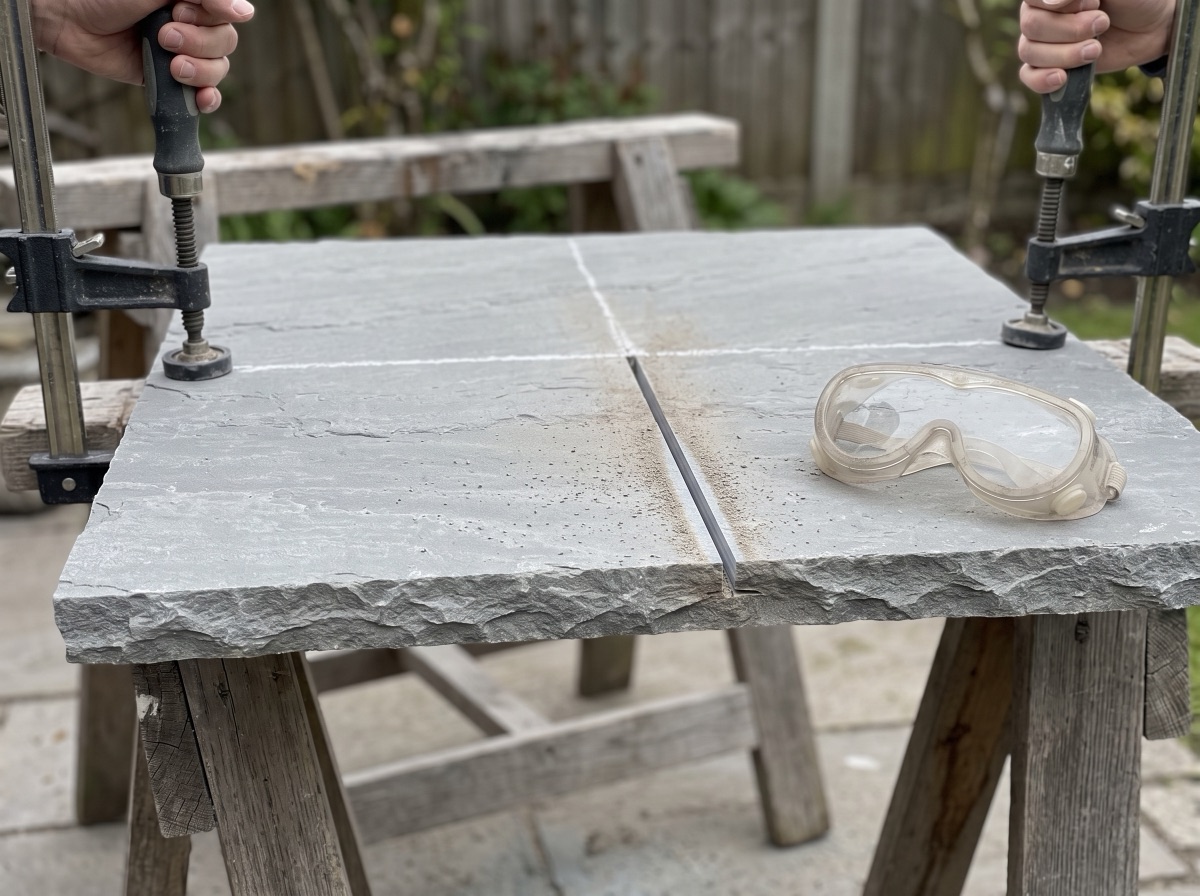
How to Cut Paving Slabs: Best Methods for Perfect Cuts
For clean cuts in paving, use an angle grinder or cut-off saw with a continuous-rim diamond blade and water suppression — score first, cut in passes, and finish from the face side. Porcelain demands a porcelain-rated blade and patience; never dry-cut without extraction: the dust is the real danger.
Read guide -
 Cleaning & care
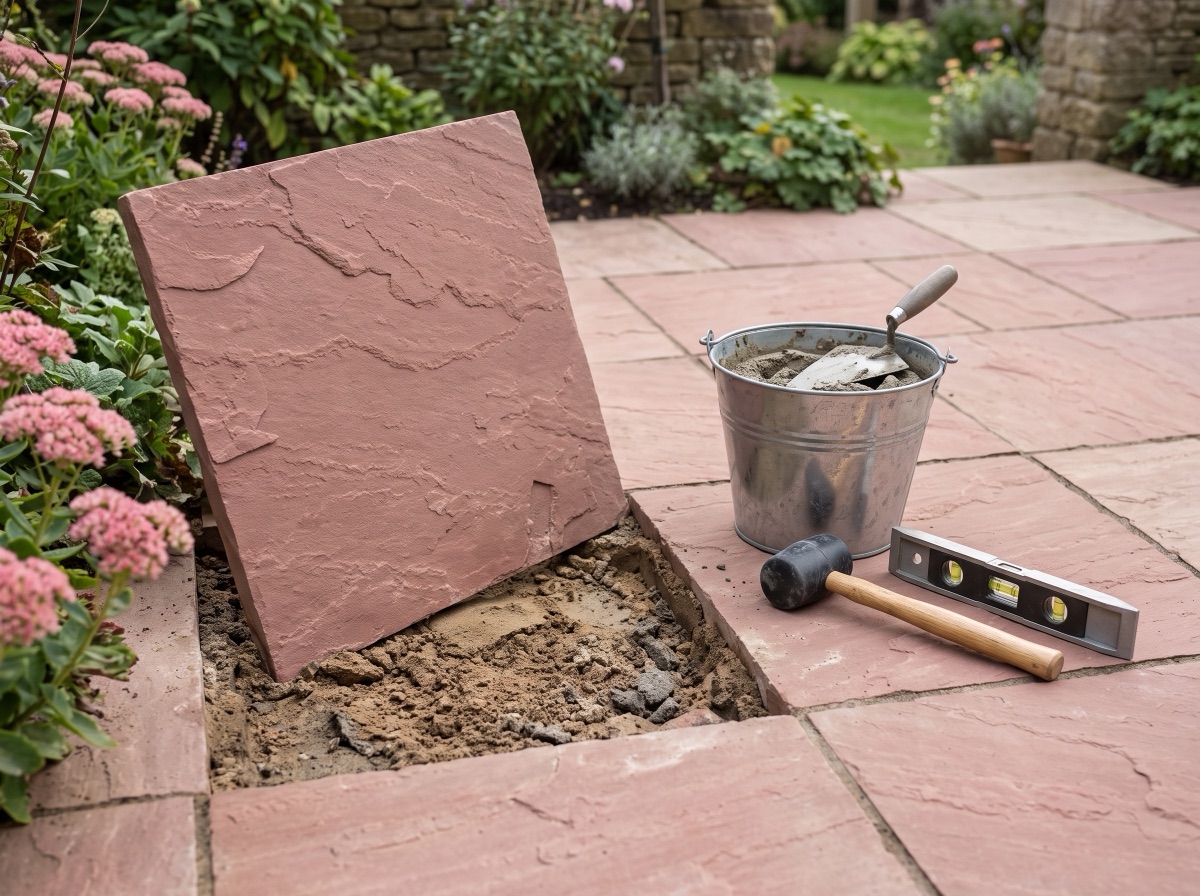
How to Fix Loose Paving Slabs in 7 Steps
To fix a loose or wobbly paving slab properly, lift it, clean off the old bed, lay fresh full-bed mortar, prime the slab (essential for porcelain), re-lay it level and re-joint — then keep traffic off for 48 hours. Re-wedging with sand or dabs of mortar only postpones the wobble.
Read guide -
 Laying & how-to
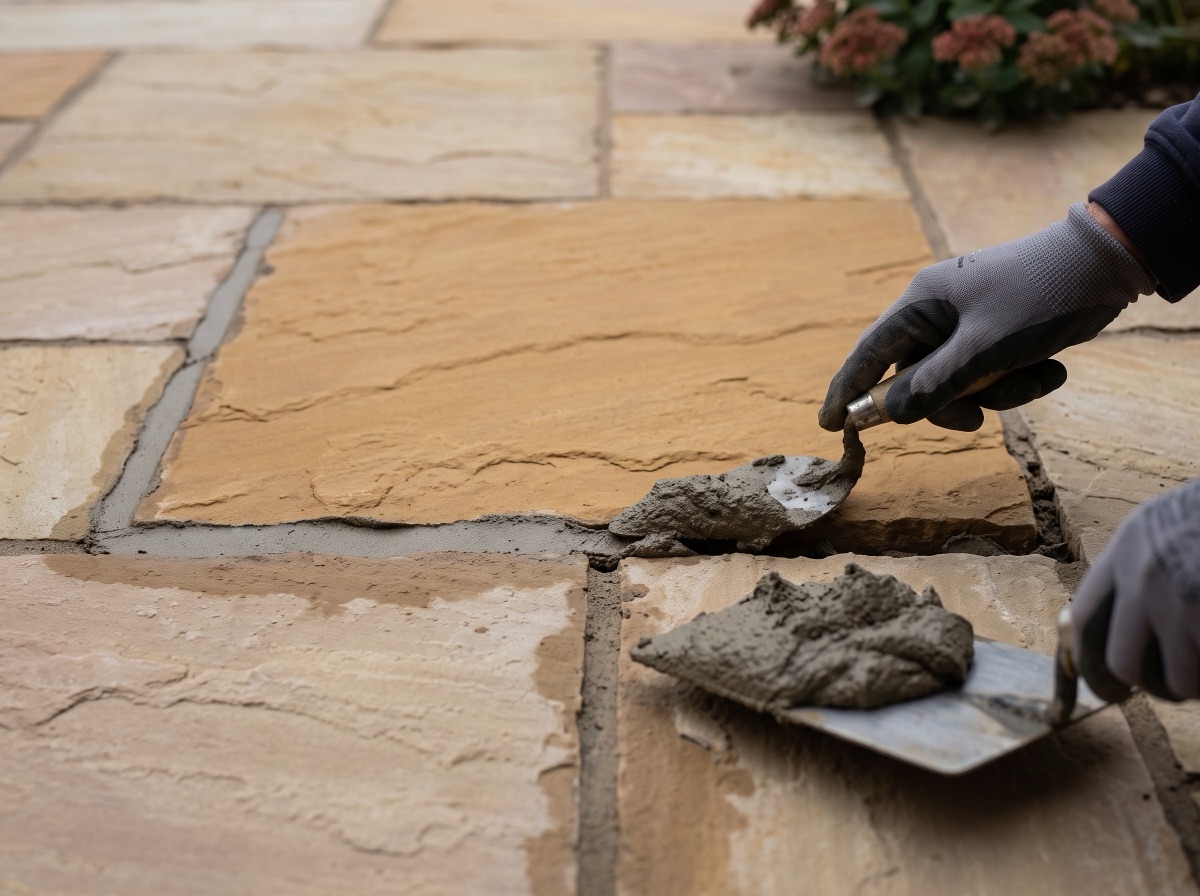
How to Grout Paving Slabs: The Best Methods Explained
There are four proven ways to grout (point) paving slabs: traditional sand-and-cement mortar, ready-mixed brush-in compounds, flowable grouts and two-part epoxy mortars. Brush-in compounds are the easiest for DIY; epoxy and flowable grouts are the most durable for porcelain. Here is how to choose and apply each.
Read guide -
 Laying & how-to
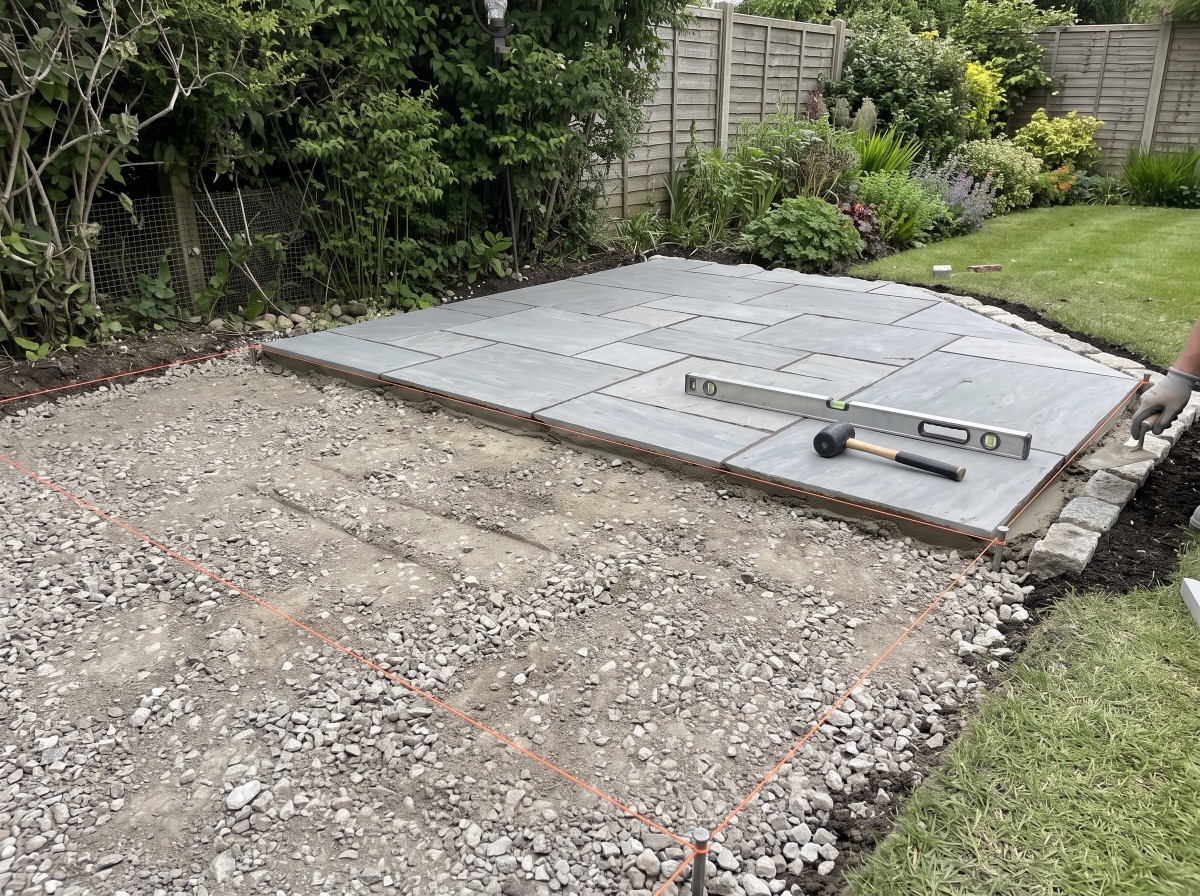
How to Lay a Patio: The Complete Guide
Laying a patio is a nine-step project: plan and mark out with falls, excavate ~150mm, compact the ground, build a 100mm+ MOT Type 1 sub-base, screed a full mortar bed, prime and lay the slabs, then joint, cure and maintain. Here is the complete method from first string line to first barbecue.
Read guide -
 Laying & how-to
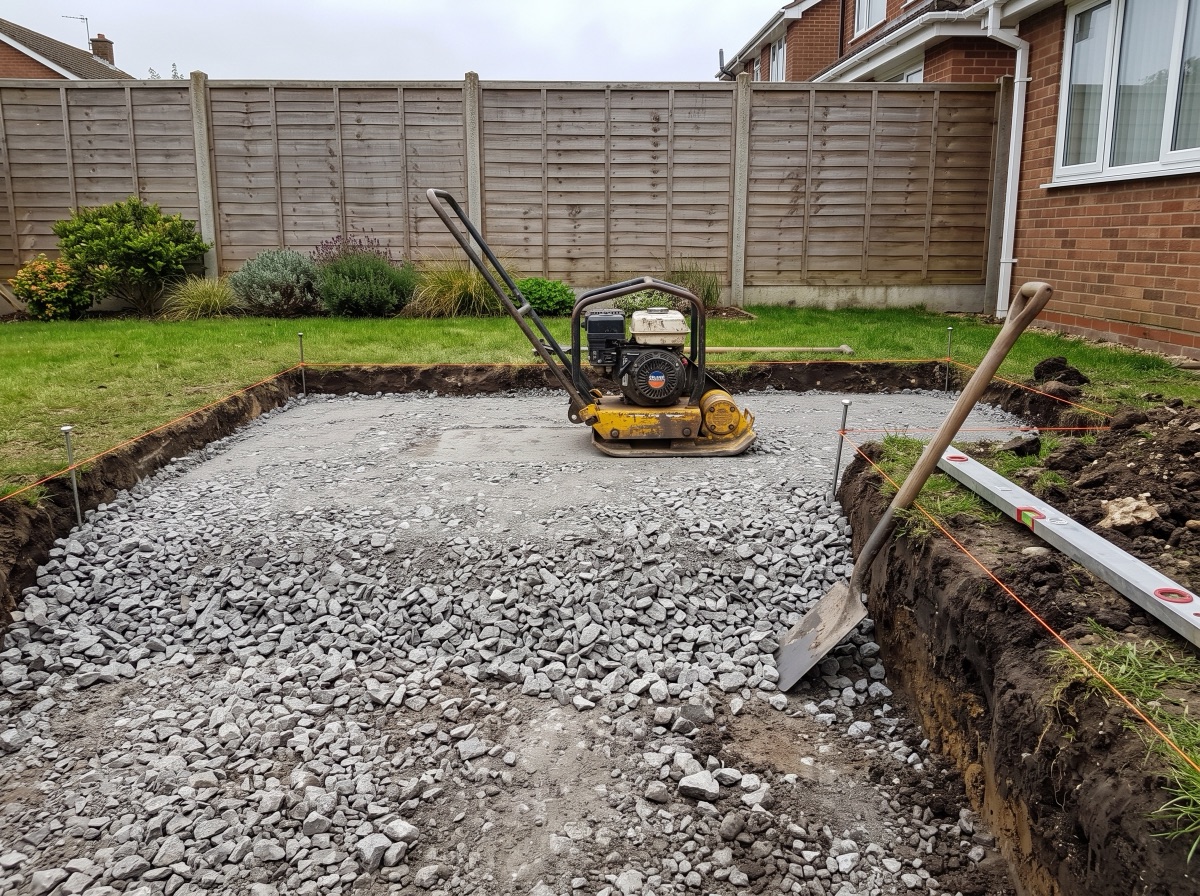
How to Lay a Patio Sub-Base
A domestic patio needs roughly 100mm of compacted MOT Type 1 under a 30-40mm bedding layer and the slab itself. Driveways need 150mm or more. Compact in shallow layers with a vibrating plate, and build in a fall of about 1:80 away from the house before you lay a single slab.
Read guide -
 Laying & how-to
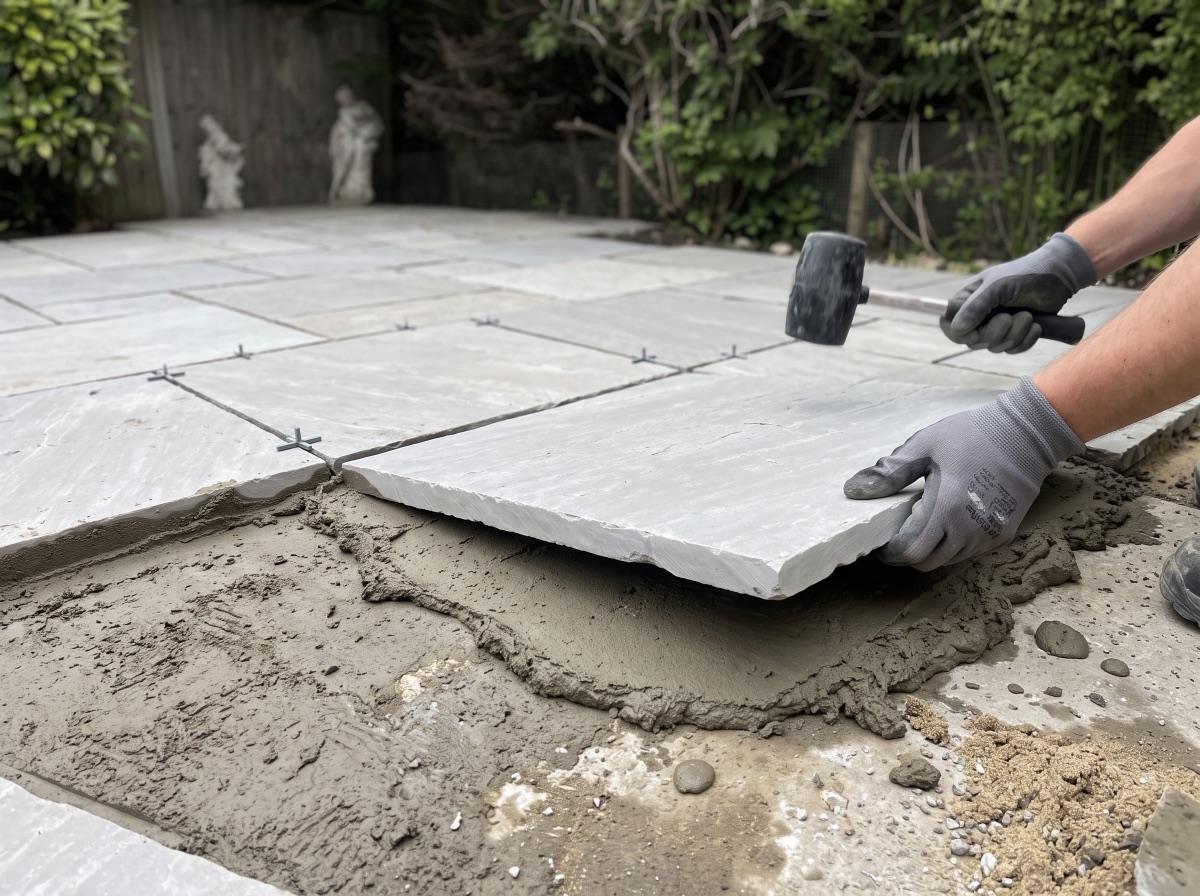
How to Lay Porcelain & Sandstone Paving Slabs
Lay paving on 100–150mm of compacted MOT Type 1, a full mortar bed and 8–10mm joints, with a fall of at least 1:80 for drainage. Porcelain needs a priming slurry on the slab back; sandstone benefits from sealing. Here is the full step-by-step, from excavation to jointing.
Read guide -
 Cleaning & care
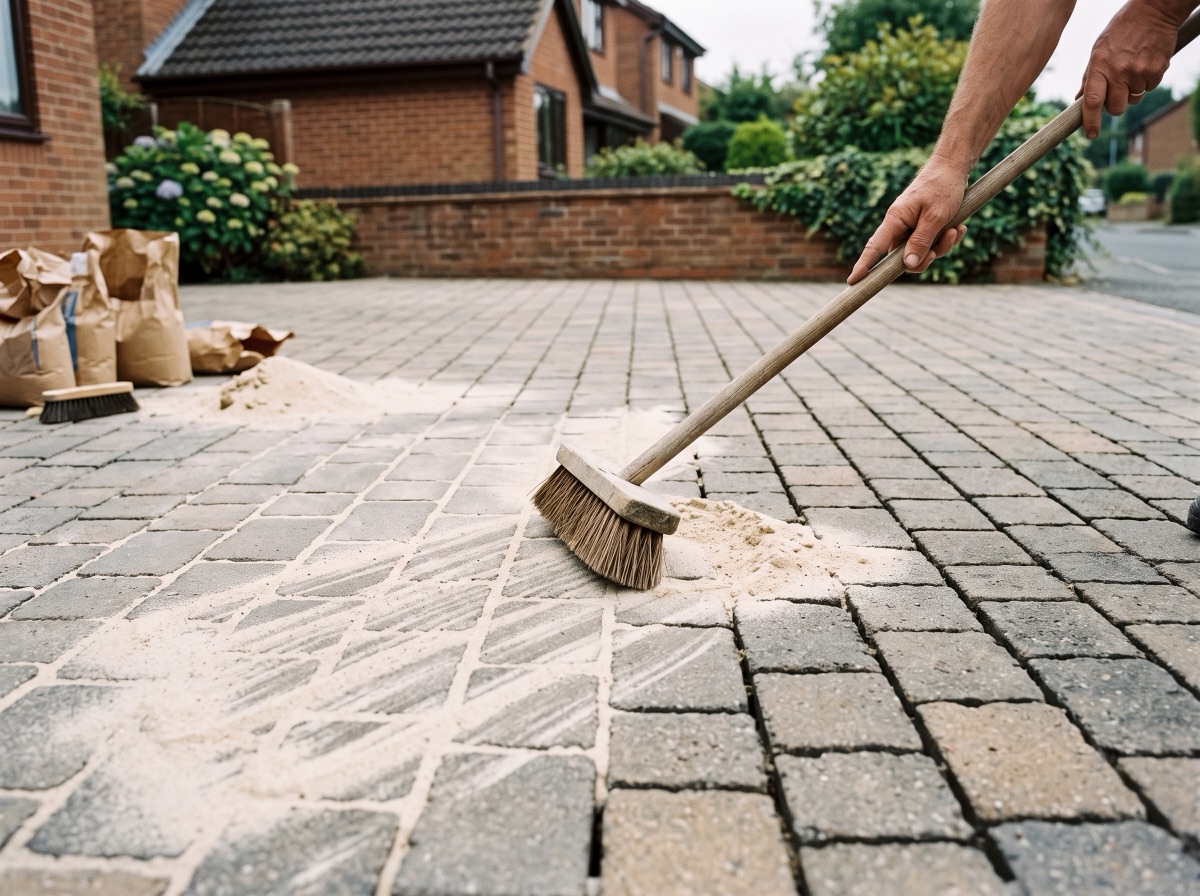
How to Re-Sand Block Paving, Step by Step
Re-sand block paving with kiln-dried sand on a completely dry surface: clean the joints out, brush the sand in diagonally, compact it down, top up and sweep off the excess. Done every year or two (and after every pressure wash), it keeps blocks locked tight and weeds out.
Read guide
Not sure where to start? Order a £0.98 sample and see the colour on your own patio before you commit.