
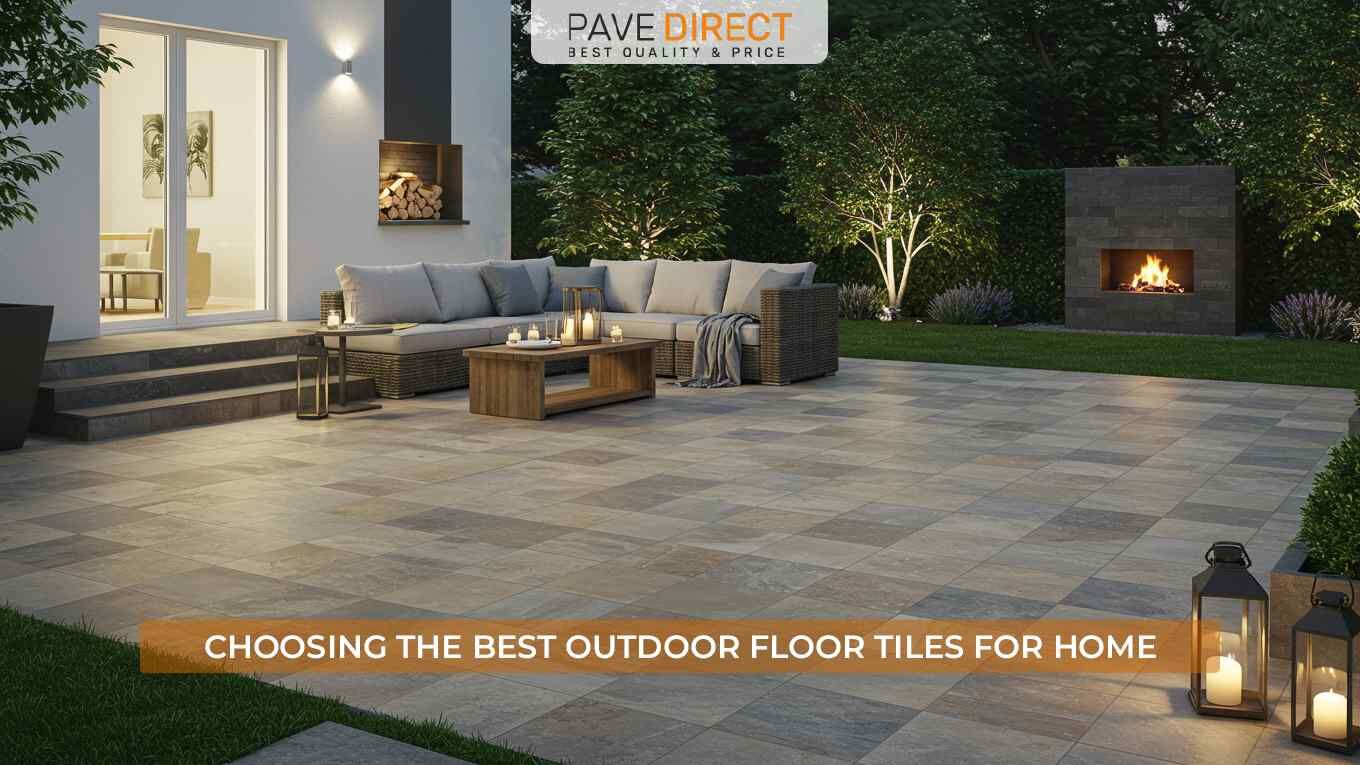
Patios and front yards are the most important places in any home. They set the mood for the house's ambience, letting people into your haven. So, before thinking of the interior decor and furniture, it's essential to focus on the entryway first. What kind of first impression do you want to make? Would there be a fire pit or a fountain? But before all that, you need to have a clear vision for flooring that would host all that. The floor needs to be appealing yet sturdy.
Ask yourself, what type of modern outdoor floor tiles do you want? On paper, an ideal tile option would be a tile that comes with a sturdy base, an aesthetic look, and easy maintenance. However, with heaps of options available in the market, finding the right type can be a bit overwhelming. Luckily, we've simplified the process and provided a few good options, too.
So, follow along to know more!
Why Should You Get Outdoor Floor Tiles Specifically?
Average homeowners aren't familiar with the main differences between indoor and outdoor floor tiles. They don't typically know why they need to find different types of flooring tiles for outdoor use or why they can't just use the same indoor tiles for their outdoor patio or porch.
Here's the catch. Both types of floor tiling options are different from each other, even if they might look the same in some cases. These tiles differ from each other on the basis of durability and design.
Outdoor tiles often look earthy and rigid. They come with a similar look and feel profile as concrete, pavement, stones, and other outdoor, earthy elements. Unlike indoor tiles, outdoor paving tiles have a more textured surface, which makes them slip-resistant and safer. So, these tiles offer traction to you, your pets, and your furniture. Options like patterned outdoor floor tiles are a great example of such durability and textural characteristics.
Secondly, outdoors require a much more rigorous build, and indoor tiles don't match that requirement. Meanwhile, outdoor tiles are specifically made to be durable and last longer, even under the effects of variable external factors. These tiles can withstand harsh conditions and consistent exposure to direct sunlight without getting damaged.
So, next time when you're designing your outdoor space, make sure to choose outdoor tiles only for a long-lasting and beautiful patio.
Factors to Consider While Choosing Outdoor Floor Tiles
With such a wide variety of outdoor flooring tiles, choosing the right one can be difficult. Such an overwhelming decision can take too much of your time, hindering the already expensive home construction process. That's why we've added these important insights that'll not only speed up the choosing process but will also make sure you choose the best outdoor floor tiles.
The Allotted Budget

First and foremost, focus on allotting a minimum and maximum budget for buying suitable outdoor floor tiles. It'll help you narrow down your options and speed up the choosing process, saving both time and energy. For example, if you've fixed a budget of $12 per square foot of material, then you can't really go for premium quality outdoor porcelain floor tile. So, knowing your budget will streamline your choices to the best and most affordable tiles in no time.
However, that's not all. Along with having an expenditure limit, you must be mindful of the "cheap prices" scam. A $20 price tag may seem "cheap" at first, but it'll add up once the patio is completed.
Location and Usage

The main reason why people specifically choose outdoor floor tile is its durability, as they are tougher than the other options. However, while all outdoor tiles are sturdy, their build isn't exactly the same.
Some flooring tiles for outdoor use come with a sturdier build than others. This insinuates the possibility of scratches, cracks, and other damage. Some might face such issues, and some might not; this solely depends on how and where they are used. So, think thoroughly about where and how you want to fix your tiles. Focus on the type of area you are looking at; is it a front patio or a poolside?
Non-slip outdoor floor tiles would be an excellent option for the poolside, but not specifically for the patio. Think about how you would use it, whether you want them on a wall or the floor. The answers to these questions will help you find the right type of tile.
The other main thing to notice is the compatibility of the surface, as some outdoor tiles work better on walls than on floors. If you don't know anything about the surface requirements, you can ask the contractor for help.
Weather and Temperature

The third most important thing to consider while choosing outdoor tiles is the weather of your area. Ponder the normal weather statistics for your area. Notice the standard temperature on an annual basis. This would help you find the specific tile option that can withstand your specific weather requirements.
If the area you live in is hot, such as the suburbs, then you might want to look for tiles that can hold up to the heat. The exact requirements go for areas with cooler weather; make sure you choose a tile option that can withstand the effects of consistent snowfall. For areas with frequent rain, you should focus on finding moisture-resistant and non-slip outdoor floor tiles, such as outdoor porcelain floor tile.
Base your tile search on the weather circumstances of your area for long-lasting outdoor floors.
Normal Exposure to Light

Tiles generally come with beautiful hues and patterns. However, you need to pair them with the right amount of light exposure. Take an example of patterned outdoor floor tiles; they can only showcase their beautiful sequence in an open area with tons of light. Fitting such tiles in a dimly lit place will just overshadow the potential of the tiles. Pair the correct light exposure with the right type of tile and get the whole visual experience.
Compatibility with the Current Style

Every home has a different aesthetic and vibe, made with a specific colour scheme and styling. Naturally, the choice of tile should also tie nicely with the already existing colour scheme of the house.
The tile style and colour should not clash with the already established style. For example, if your house has a bohemian aesthetic, choosing a tile with neon hues instead of outdoor porcelain floor tile would be the wrong choice as it would look out of place and distracting. So, choose wisely.
Conclusion
Now that you've familiarised yourself with the difference between indoor and outdoor floor tiles and the right approach to finding the right outdoor floor tile, focus on finding one that matches your requirements and price tag.
For further expert advice, contact our tiling experts at Pave Direct. From outdoor floor tiles interlocking to budget-friendly paving slabs, we have it all!
Frequently Asked Questions
Which tile option is popularised as the best tile for outdoor flooring?
Porcelain is known as the best tile option for outdoor patios among many versatile tile options available in the market. It is popular because of its strength and low water absorption. You can also go for options like slate, granite, or quarry tile.
What are the main factors that I should consider before finalising an outdoor tile option?
Focus on durability, slip resistance, and style compatibility before finalising your tile options. Make sure to only look into options within your budget and compatible with the weather in your area.
Is it necessary to put concrete under outdoor tiles?
The answer is typically no. There are many other types of base materials available in the market. Choose whatever fits your requirements, such as the pattern, style, and grit of the material, and budget.
Can't I just lay the outdoor tiles over dirt?
You can, but the durability, stability, and overall longevity of your outdoor paving slabs will be compromised. A lot of homeowners lay down the tiles and paving on outdoor decks and patios right on the surface with no base installation to cut costs, but in the long run, it may cost them more to maintain and replace broken slabs as a result of an uneven base.
Is grouting really necessary for outdoor tile fixtures?
You can leave the grouting part out; however, your flooring won't be as sturdy as grouted floors. It'll chip easily and won't look appealing for a long time. So, for a better and long-lasting outdoor floor, don't forget to grout your floors for a finished, sleek look.
Work out your exact order in seconds
Our coverage calculator turns your patio size into the precise number of slabs and packs — 10% waste allowance included.
Free delivery, £0.98 samples, breakage guarantee
Every order ships free with no minimum spend. Order a £0.98 sample first, choose your delivery date, and if a slab arrives broken we replace it — no quibbling.