
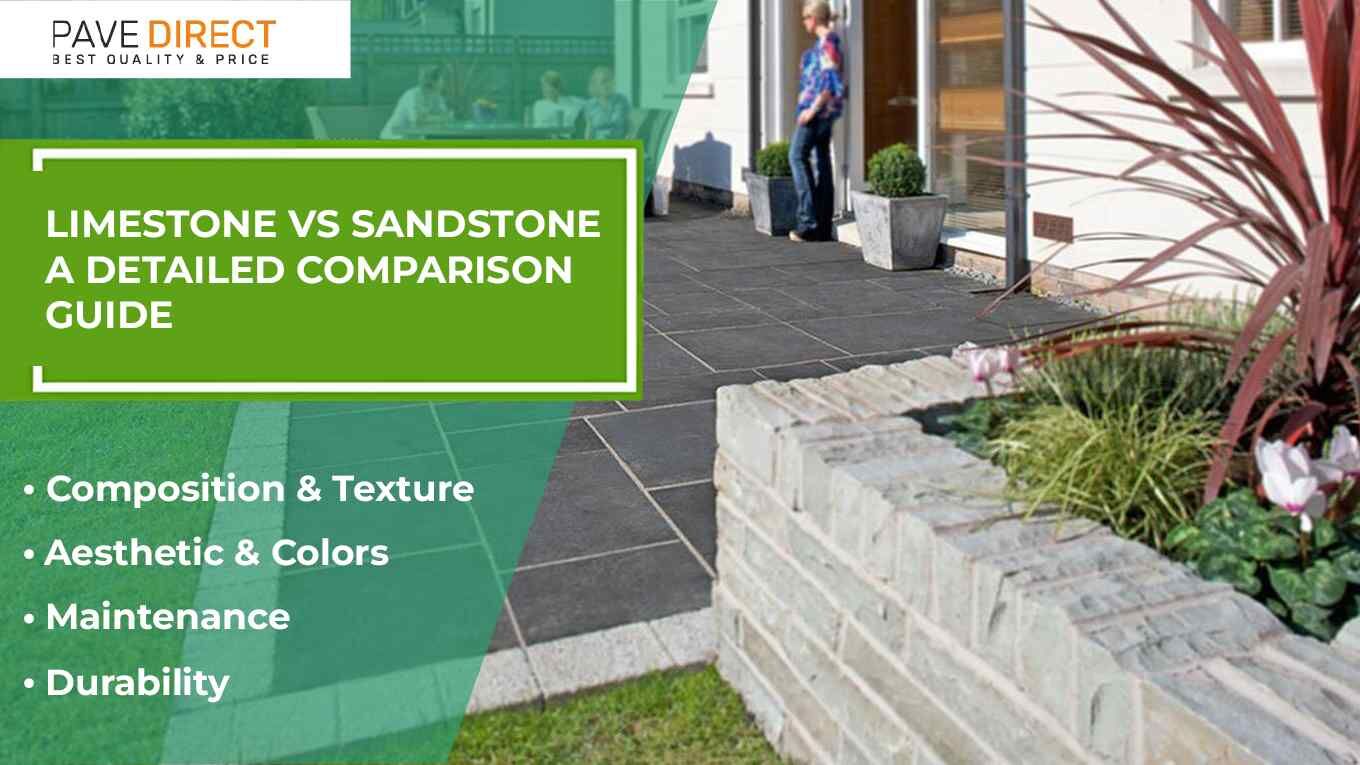
Are you planning to start a new project for your driveway, garden, or patio? If yes, it's time to talk about two stalwarts in the natural stone world - limestone vs sandstone.
Both limestone and sandstone have unique characteristics and allure, making them the perfect options for landscaping or construction projects.
But how do you choose which one is better for you? This comparison guide will explore the differences between limestone and sandstone materials and help you make an informed decision.
So, let's dive in and discover the unique qualities of both Indian Sandstone and Limestone!
Exploring The Contrasts: Limestone vs. Sandstone
Imagine a breathtaking journey spanning thousands or even millions of years, where nature's artistic sandstone or limestone will be fully displayed.
Sandstone, a sedimentary rock formed from the accumulation and compaction of sand over thousands of years, showcases a rich history in its unique composition of mineral particles and rock fragments.
Similarly, limestone, another sedimentary marvel, has been crafted over millions of years from calcium carbonate deposits. Its distinctive features have made it a favourite for construction and architectural projects.
Sandstone vs Limestone: Which is Best for Your Project?
Are you trying to decide between sandstone and limestone paving for your project? Both are excellent choices, but they have different features to consider.
Indian sandstone comes in many beautiful colours and textures, which make outdoor spaces feel warm and full of character.
Limestone has a classic look with subtle colours and is very durable, which makes it a good choice for indoor and outdoor projects.
Let's look at their differences to help you make the right decision.
Composition and Formation:
Indian sandstone is a sedimentary rock that forms over many years due to the gradual accumulation and consolidation of sand grains.
It mainly comprises quartz grains bound together by silica, calcite, or iron oxide. This rock is a remarkable example of the geological processes shaping our planet.
On the other hand, limestone is primarily composed of calcium carbonate, which is derived from the remains of ancient marine organisms.
This rock emerges due to an intricate process of sedimentation and lithification, decorated with intricate patterns of fossilised creatures and mineral formations.

Appearance and Texture:
Indian sandstone and limestone are popular natural stones used in the construction industry.
Indian sandstone is known for its wide range of colours, from earthy browns to cool greys and whites. Its texture ranges from soft and velvety smooth to ruggedly coarse, adding depth and character to any used space.
Conversely, limestone is appreciated for its hues that range from soft creams to rich greys, often embellished with mesmerising veins and fossil imprints.
The texture of limestone varies from fine-grained to coarse, making it a unique and tactile material that is pleasing to the senses.
Both limestone and sandstone paving stones offer distinct advantages, presenting an excellent choice for various architectural and design applications.

Sandstone vs Limestone Durability and Strength:
Regarding endurance, Indian sandstone asserts its dominance with a formidable resilience against the elements.
It possesses commendable compressive strength and weathering resistance and is a stalwart guardian in outdoor environments.
However, while possessing a degree of durability, limestone may exhibit a softer disposition than its sandstone counterpart.

Maintenance and Care:
In the maintenance domain, limestone and sandstone both require meticulous attention to maintain their shine.
Consistent cleaning with mild detergents and scheduled sealing constitute the foundation of their upkeep routine. This provides their durability and resistance against stains and weathering.
Vulnerable to the erosive forces of time and weather, specific varieties of limestone require extra care and attention to maintain their pristine beauty.
Applications and Uses:
Sandstone or limestone paving is a highly versatile construction material widely used in architectural and landscaping applications. These materials are known for their durability, resistance to weathering, and aesthetic appeal.
Indoors, limestone and sandstone are commonly used for flooring, wall cladding, and countertops due to their timeless elegance and ease of maintenance.
You can also use these stones for your outdoor projects to build attractive walls, garden pathways, and beautiful pool borders.
These materials remain indispensable in various construction projects with their excellent physical properties and aesthetic versatility.

Cost Comparison:
In the pricing realm, the cost of Indian sandstone or limestone varies based on several factors, including quality, availability, and sourcing.
Although limestone vs sandstone has a slightly heftier price tag due to its denser composition and more intricate processing requirements, both materials provide exceptional value for their functional and aesthetic advantages.
Indian Sandstone: Why It Stands Out from Others?
In the ongoing discussion about which is better between Indian sandstone vs limestone, sandstone has emerged as the preferred option due to its unique characteristics that make it suitable for construction and landscaping projects.
Both materials showcase nature's artistry and offer numerous possibilities for architectural and landscaping endeavours.
Limestone paving slabs are the ideal choice for interior flooring or outdoor usage due to their durability.
Indian Sandstone Paving Slabs, however, is a better choice if you are looking for a range of hues and textures.
Key Takeaway:
Several factors come into play when choosing between limestone vs sandstone for your home or outdoor space.
Your budget, desired look, and maintenance requirements are essential considerations affecting your decision. Both stones have unique benefits and drawbacks, and it's crucial to weigh them carefully before making a choice.
For instance, Indian sandstone is denser and more rigid than limestone, making it more resistant to wear and tear and long-lasting. On the other hand, limestone has a softer texture, making it easier to cut and shape, giving you a more comprehensive range of design options.
Ultimately, your decision will depend on your specific requirements and tastes. If you still need to decide which stone to pick for your outdoor paving, patios, or luxury garden, contact us at Pave Direct.
Our specialists have extensive knowledge and experience with both types of stones and will help you make an informed decision that suits your needs.
Frequently Asked Questions (FAQ)s:
1. Which is older, sandstone or limestone?
Limestone is typically older than sandstone, with its formation dating back millions of years, compared to sandstone, which generally formed over thousands of years.
2. Does sandstone dissolve in water?
Sandstone comprises approximately 20-25% of sedimentary rock and comprises porous, silicate particles cemented together. The cementing process imparts insolubility to the sandstone.
3. Which offers more options, limestone paving or sandstone?
Limestone paving and sandstone offer a wide range of options, but sandstone typically provides a greater variety of colours and textures, allowing for more creative possibilities in design.
4. Which stone, sandstone vs limestone, is better suited for the UK weather?
Regarding weather suitability for the UK, Indian sandstone tends to be better suited due to its durability and resistance to weathering, making it a popular choice for outdoor applications in the region.
5. Is sandstone hard or soft?
Sandstone is generally considered a hard rock, although its hardness varies depending on factors such as its composition and the amount of cementing material present.
Additional Reading!
Popular Types of Raj Green Sandstone For Your Outdoor Space
What Makes Raj Green Indian Sandstone So Special?
Work out your exact order in seconds
Our coverage calculator turns your patio size into the precise number of slabs and packs — 10% waste allowance included.
Free delivery, £0.98 samples, breakage guarantee
Every order ships free with no minimum spend. Order a £0.98 sample first, choose your delivery date, and if a slab arrives broken we replace it — no quibbling.