
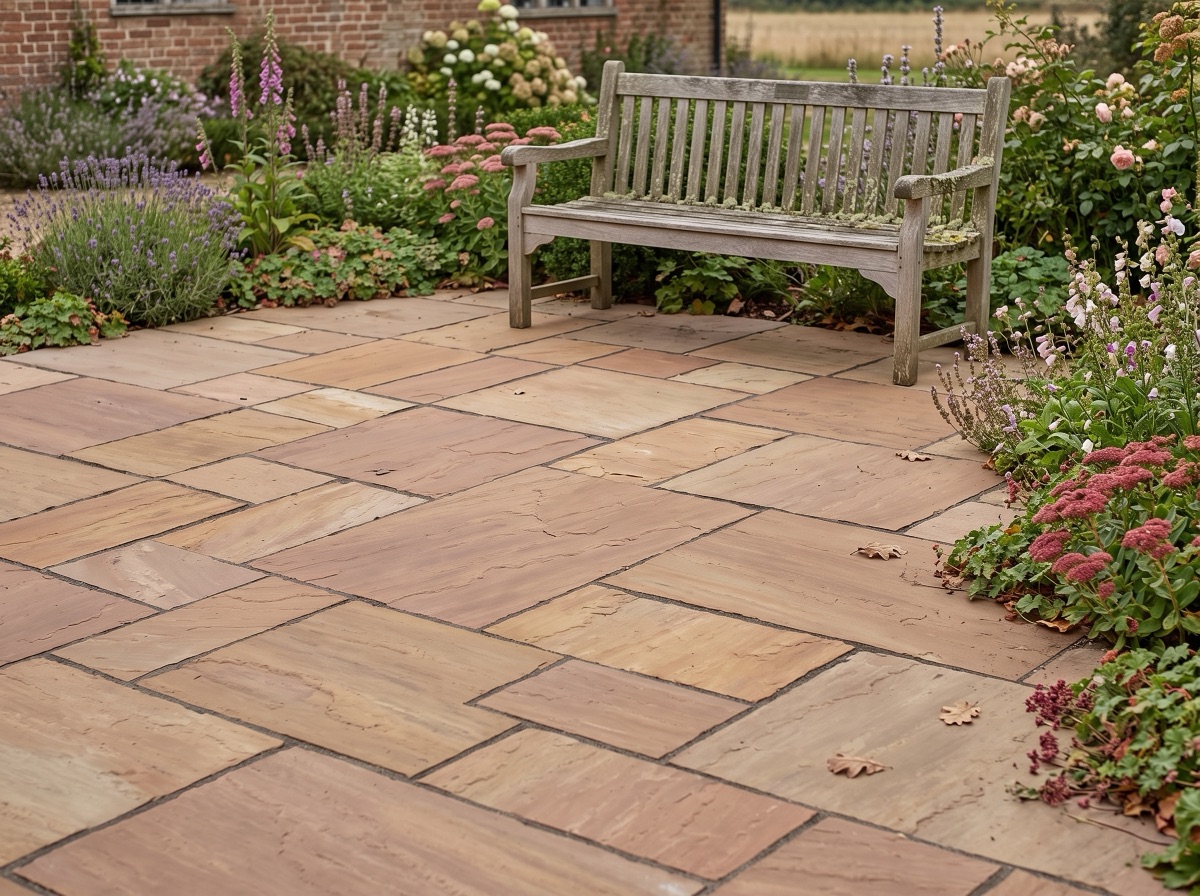
Imagine entering your backyard and being greeted by a beautifully designed patio or pathway made of Indian sandstone.
The unique blend of natural colours and durability of Indian sandstone makes it a popular choice for homeowners and landscape designers alike.
And who would want to transform their outdoor space into something other than a haven of relaxation and entertainment?
In this blog, we'll dive into the art of laying Indian sandstone and provide all the information you need to create a stunning outdoor space you'll love spending time in. So, let's get started!
Tools and Materials Required For Laying Indian Sandstone
Get excited to create a lovely Indian sandstone patio! But before you start, ensure you have all the necessary tools and materials. Here's what you'll need to bring your vision to life:
✔ Indian sandstone slabs
✔ Sharp sand
✔ Brush
✔ Cement
✔ Spirit level
✔ Tape measure
✔ Rubber mallet
✔ Pointing trowel
✔ Jointing compound or mortar mix
✔ Sub-base material (e.g., hardcore or MOT Type 1)

Step#1: Getting Your Space Ready
A successful laying Indian sandstone slabs project begins with thorough planning and preparation. If you're planning to give your outdoor space a stunning makeover with Indian stone, then let us tell you, it will be worth it!
But wait, before you start the installation process, you must ensure a well-planned and prepared approach. Don't worry; our experts at Pave Direct got you covered!
Here are the steps for laying Indian sandstone to help you achieve seamless pavings and bring you closer to your dream outdoor space.
Measure and Mark
Accurately measuring where you plan to lay the sandstone is essential to ensure a smooth and precise installation.
Use a measuring tape to mark the boundaries and any specific patterns or designs you wish to incorporate.
Pay attention to corners, curves, and angles. Consider any irregularities in the surface or variations in the thickness of the stone.
Once you have the measurements, plan the layout and order the necessary materials for laying sandstone slabs.

Clear The Area
Removing any vegetation, debris, or obstructions from the surface you'll be working on to ensure a safe and efficient working environment is necessary.
This will help you achieve a clean workspace, vital for various tasks, such as construction, gardening, or even simple home repairs.
By clearing the area and creating a smooth surface, you minimise the risk of accidents, ensure optimal performance, and increase the lifespan of your tools and equipment.
So, before you start any project, thoroughly clean and prepare the area to set yourself up for success.

Dig and Level
To prepare the area for laying Indian sandstone, excavating the ground to a suitable depth is necessary.
The depth required will depend on the space used, so clearly understanding your plans beforehand is essential.
Once the excavation is complete, checking the ground level is critical to ensure no uneven areas.
This is done using a spirit level or a laser level, which will provide accurate results.
But the question mostly asked is: can you lay Indian sandstone on a dry bed? And what about laying Indian Sandstone on sharp sand? Yes, you can but for low-traffic areas like garden pathways. However, they are subject to move overtime, which is why we recommend MOT wet mortar.
Properly excavating and levelling the ground will create a safe and functional space that meets your needs.
Step#2: Picking The Perfect Sandstone
Regarding Indian sandstone, various options exist. However, the wide range of Indian sandstone Paving Slabs sometimes makes deciding on the perfect stone for your project challenging.
But worry not, as Pave Direct Experts are here to help you make an informed decision.

I) Color and Texture
One of the first things you should consider is the colour of the sandstone. It comes in various colours, including, brown, beige, red, Kandla grey, and Raj Green Indian Sandstone.
Each colour has its unique character and complements different styles of landscaping. For instance, grey sandstone gives a modern look, while brown sandstone provides a more rustic feel.
II) Size and Thickness
Indian slabs are available in various sizes and thicknesses. Pave Direct offers your favourite sandstone in sizes and thicknesses.
It ranges from 20mm to 50mm, allowing you to choose the thickness that best suits your project. Consider the size of your project area and select the appropriate slab dimensions accordingly.
III) Finishes
Indian sandstone is finished differently, such as riven, honed, or sawn finish sandstone. Riven sandstone offers a more natural and textured look, while a honed finish provides a smoother and more uniform appearance.
Step#3: How to lay Indian sandstone Paving Slabs
Congratulations on your new Indian sandstone! You're going to love how it looks in your home. Now, let's dive into the exciting process of installation together.
Don't fret; we'll be with you every step of the way to ensure a flawless and durable finish. Are you ready to get started?
Prepare The Ground
First, prepare the ground before pointing to Indian sandstone. You should put down a layer of crushed rock or gravel to do this.
This layer will keep the sandstone from sinking into the ground over time and provide a stable base to rest on.

Bedding Mortar
The best mortar mix for Indian sandstone is cement, sharp sand, and water! Once you've got that perfect blend, apply a nice and even layer onto your sub-base, ensuring everything's level. It's a straightforward process, and we are here to help you every step of the way!

Laying Indian Sandstone
All right, let's start laying Indian stones with the fun part! As you place each slab onto the mortar bed, make sure to handle them with care.
Don't forget to leave a gap of 8 to 10mm between the slabs to ensure proper drainage. It's essential to keep them snugly fitted together, just like putting together a puzzle.
We recommend you use slurry primer for Indian Sandstones with wet mortar. They provide extra adhesion that helps porous paving slabs like Indian sandstone to stick at their place until you decide to replace them.
With your attention to detail, this project will turn out beautifully!

Cut and Shape
When it comes to laying sandstone slabs, there's no doubt that you'll need to cut and shape them to fit your desired layout.
But don't worry, it's more intimidating than it sounds! With the right machinery or tools, you will make precise cuts that will complement your design flawlessly.
So, let's get to work and make those stunning sandstone slabs fit like a glove!

Settle and Seal
Once laying Indian sandstone pattern is done, a quick tip is to let it rest for at least 24 hours before taking a stroll.
This will allow the mortar to dry and the sandstone to settle in nicely, resulting in a sturdier and longer-lasting finish.
Once it's all set, remember to apply a suitable sealant to protect your sandstone from pesky stains, weather damage, and everyday wear and tear. Happy paving!

Step#4: Maintenance and Care: Preserving the Beauty
You've made a great choice by choosing and laying Indian stone for your space. Taking care of your sandstone is crucial if you want it to last for years without losing its charm.
So, let us walk you through a few tips on maintaining your sandstone and keeping it in pristine condition!
Don't worry - it's super easy! Here are some tips to keep your sandstone in tip-top shape:
Regular Cleaning:
Are you ready to give your sandstone surface a fresh look? Great! Here's a quick tip: start by sweeping or hosing down the surface to eliminate all the debris and dirt.
But don't be too harsh with your cleaning! Using strong chemicals can damage the sealant and the sandstone. So, be gentle and treat your sandstone carefully to keep it looking beautiful for years!
Weed Control:
Keeping your outdoor space looking beautiful and well-maintained is essential, right? You should watch for those sneaky little weeds that like to grow between sandstone slabs.
They ruin the look of your space and even compromise the integrity of your outdoor flooring. So, regularly remove them and keep your outdoor space in tip-top shape!
Resealing:
Over time, the sealant on the sandstone wears off. Keeping an eye on the sealant over time is essential. As it wears off, your stone might lose its natural beauty and become vulnerable to damage.
But don't worry - all you need to do is apply a fresh coat of the appropriate sealant, and your sandstone will look gorgeous again in no time!
Wrapping Up:
Laying Indian sandstone isn't as difficult as you might think. Proper planning and preparation will make your backyard a beautiful, relaxing oasis.
With the help of Pave Direct Experts, you are confident that your Indian sandstone will look amazing.
Remember to follow the installation steps carefully and perform regular maintenance to keep your sandstone looking its best.
With these simple tips, you will create your dream outdoor space. So, don't hesitate to start laying sandstone slabs today!
Expert Input: Should you need help with the apt selection of sandstone, be it in terms of its hue, texture, dimensions, or form, fret not and simply communicate your concerns to us.
At Pave Direct, our team of skilled professionals is always ready to assist you in resolving such predicaments.
Frequently Asked Questions(FAQs):
1. Can you lay Indian sandstone on a dry bed?
No, You can not Lay your Indian sandstone on a dry bed. It is suggested that paving should be done with a full wet bed of mortar.
2. What to mix for laying Indian sandstone?
For a high-strength, using a sand-to-cement ratio of 5:1 is recommended. Going weaker than this ratio is not advised.
To achieve the correct consistency, combine the sand and cement and gradually add water until the desired texture is achieved.
3. Can you lay Indian sandstone on concrete?
Yes, you lay Indian sandstone on a concrete base, but ensuring the concrete is thoroughly mended and level before applying the stones is vital.
4. How thick should the mortar bed be for Indian sandstone?
It is recommended to have a mortar bed that is approximately 30-40mm in thickness. However, the exact thickness required varies depending on the size and thickness of the used stones.
5. Do you need a primer for Indian sandstone?
While it is not mandatory, using a primer significantly enhances the adhesion of sandstone during laying Indian sandstone slabs and minimises the likelihood of staining.
Porous stones, such as sandstone and limestone, are more susceptible to reflective stains, which a primer prevents.
Therefore, it is recommended to use a primer for such stones to ensure a long-lasting and flawless finish.
Additional Reading:
Choosing the Best Grout for Outdoor Porcelain Tiles: A Complete Guide
How To Clean Outdoor Porcelain Tiles? Quick & Effective Tips
Outdoor Porcelain Tiles

