
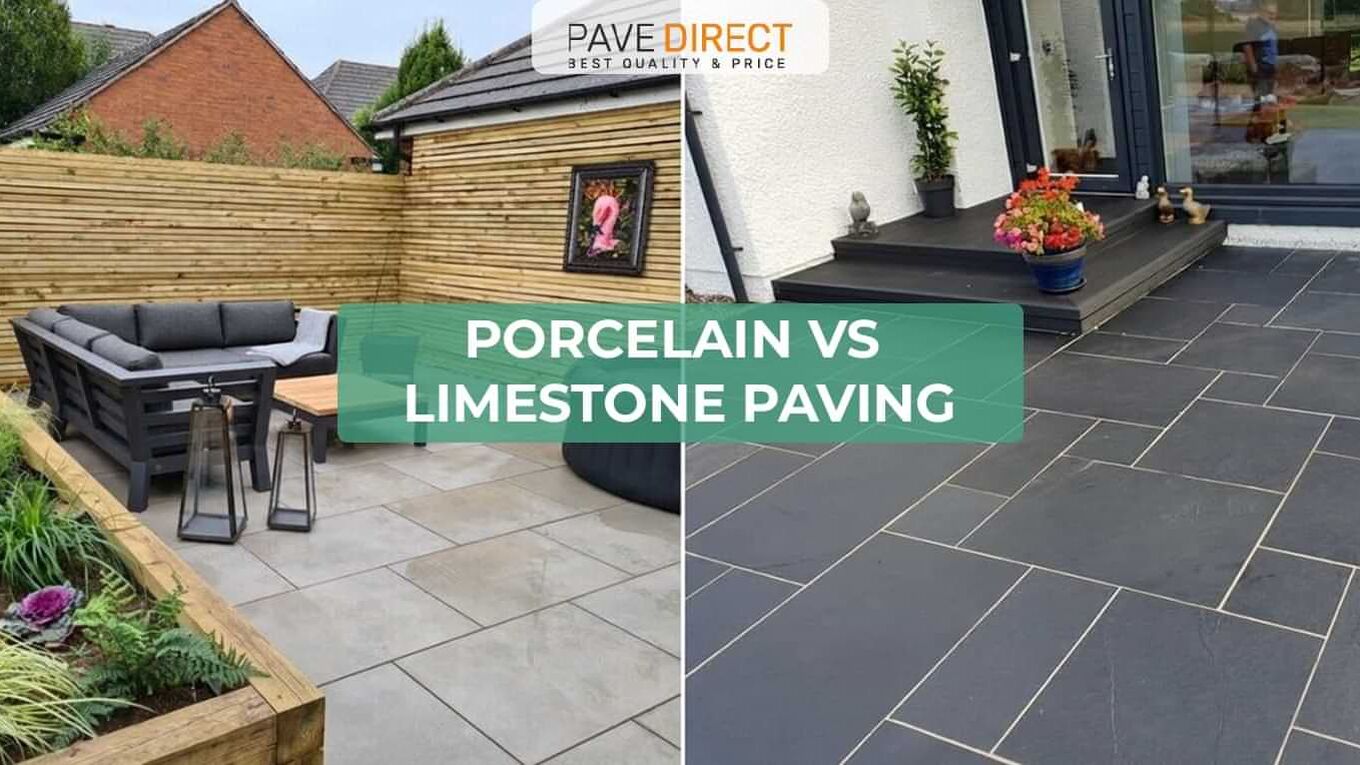
You've probably spent way too long scrolling through patio photos. Your neighbour swearing by limestone, and a builder recommending porcelain tiles.
Then someone's sandstone paving down the road turns green after one wet autumn, and the whole decision becomes overwhelming.
The limestone vs porcelain paving question trips up thousands of UK homeowners every year.
Worried about what the verdict is going to be? Outdoor porcelain tiles handle British weather better, are highly dense and durable and stay in place for decades (assuming it has a strong subbase and mortar) than limestone. If you prefer the natural look and do not mind the yearly maintenance ritual, limestone is your answer.
About British Conditions
British conditions are tough: It holds persistent damp from October to March, hard frosts, shaded north-facing corners that barely dry, and enough summer UV to bleach unsealed stone over time.
What This Guide Covers
This guide covers:
Comparison table guide between Limestone and Porcelain.
Costs over a decade.
Genuine maintenance demands.
Slip and frost safety.
Aesthetics and DIY feasibility.
At a Glance: Limestone vs Porcelain
Criterion | Indian Limestone | 20mm Outdoor Porcelain ( R-11 ) | UK Winner |
Cost Per m² (from) | £22.16-£35.76 | £17.81-£23.61 | Porcelain |
Maintenance | Reseal every 1-3 years | Zero sealing needed | Porcelain |
Frost Resistance (BS EN ISO 10545-12) | Yes, if sealed | Yes, and is certified | Tie |
Slip Resistance (wet) | R-9 to R-10 Rated | R-11, R-12 rated | Porcelain |
UV Colour Stability | Lightens over time | Permanent pigment | Porcelain |
Algae Risk (north-facing) | High in damp shade | Minimal | Porcelain |
Ideal For | Indoor areas, like hallways and kitchens | Vehicular traffic and wet environments | Depends on different factors and preferences |
How UK Weather Makes Patio Regrets
A surface that works fine in other nations falls apart in Britain. From October to March, your patio gets hammered, gets exposed to persistent damp, and frost that cracks stone from the inside.
The shade where moss grows faster than you can clean it is also a major concern. Summer bleaches softer materials noticeably. Sometimes, within just a few years.
Porcelain handles all these situations differently. Frost can't crack it from the inside because it's too dense ( 2380 - 2450 kg/m³ ), damp doesn't get in, and moss can't take root in it.
This is why picking limestone paving for a north-facing, damp garden without sealing it regularly results in it being green and patchy by winter two.
Most patio regrets boil down to one thing. You picked a material without actually knowing what it'd ask of you over time.
Indian Limestone: Character With A Maintenance Commitment
Brits who genuinely enjoy keeping their patio maintained and don't hesitate to reseal it every couple of years, limestone's natural beauty and how it improves with age make the effort completely worthwhile.
Three Indian limestone options dominate the UK market, each with a distinct appeal:
Tandur Yellow (£35.76/m²): Warm honey tones with fossils and natural veining. Develops a beautiful patina over the years.
Kota Blue (£22.16/m²): Cool grey-blue tones that work with both period properties and modern extensions.
Kota Black (£27.88/m²): Dark and dramatic against lighter walls. Confident and contemporary without the clinical feel of some porcelain.
All three come calibrated to plus or minus 2mm thickness. That consistency matters, as it allows easier laying, fewer trip hazards, and less breakage when you're installing it.
Finishes come in two flavours. Natural riven, which is textured and grips well when wet. Or honed, which is smoother and feels more contemporary underfoot.
Homeowners who've had limestone for fifteen years often say it looks better now than it did on day one. That's not them being sentimental. The stone actually improves.
Indian Limestone’s Trade-off
The trade-off is porosity. At 1.7%–2.21% water absorption by weight, limestone lets water in. In a UK winter, that water can freeze, expand, and cause surface spalling.
A breathable, penetrating sealer (around £20–£40 for a 5-litre tin) is applied after installation and then reapplied every one to three years. In shaded areas, regular soft washing or a biocide treatment is needed, as algae and moss will build up over time.
Best For:
Period or traditional properties.
Homeowners who are comfortable with seasonal upkeep.
Gardens where natural stone character matters more than convenience.
Get a sample in your hand. See it in your garden light, in the rain, or at different times of day. What looks warm in a photo feels different in reality. Suppliers like Pave Direct offer many options to choose from.
Outdoor Porcelain: Engineered for British Conditions
If you can't commit to maintenance, need zero sealing, live with constant wet weather, or have kids running about who need grip underfoot, porcelain is exactly built for that.
Moreover, thickness matters, and getting it wrong is costly. Two thicknesses dominate UK installations, and they're designed for different jobs:
16mm+: These pronounced thicknesses are suitable for patios, paths, and seating areas only. They are not suitable for driveways.
20mm+: These are made for wet areas, patios, and driveways. Also considered the safe default for most UK applications.
The most popular size is 900×600mm; large-format slabs reduce visible grout lines.
Pave Direct offers 30+ finishes. Popular ranges include:
Kandla Grey (convincing sandstone effect)
Monte Grey (R-11 rated, charcoal)
Raj Green (R-11 rated, clean modern look)
Dunestone Black Patio Porcelain Paving Slabs (epitome of strength and beauty), and more.
Entry-level prices start from £17.81/m².
With under 0.5% water absorption, compared to limestone's 1.7%–2.21%, exterior porcelain tiles let in almost nothing. Freeze-thaw damage is effectively eliminated.
It's vitrified (fired above 1,200°C), passes BS EN ISO 10545-12 frost resistance testing, and carries an integral through-body pigment that UV cannot bleach.
A Look That Lasts For A Quarter Century
The colour remains the same for more than 25 years, guaranteed ( provided the surface is maintained and kept free from harsh chemical exposure).
Built For Wet Weather & Wet Feet
R-11 and R-12+ anti-slip ratings cover a wide range of ceramic tiles, meeting HSE recommendations for outdoor wet areas. Unlike smooth, polished porcelain (R-9), which is not suitable for outside use.
Exterior Porcelain’s Trade-off
The trade-off is consistent colour appearance, which means no natural variation. For some gardens, that's a positive; for others, it lacks the visual appeal.
Best For:
Modern extensions.
Recently constructed houses or housing developments.
North-facing or damp gardens.
Homeowners who want a fit-and-forget surface.
The 5 Decisions That Define the Choice
1. Cost Over 10 Years

Virtified tiles start from £18.84/m² for Kandla Grey Porcelain. Installation costs are broadly similar; porcelain's diamond-blade cutting adds roughly £5–£10/m² in labour.
The real difference is maintenance: Sealing and algae management add £150–£390 on a 20m² limestone patio over a decade. Porcelain adds nothing when it comes to sealing.
2. Frost & Weather

Porcelain's near-zero absorption means no freeze-thaw cracking. Sealed limestone survives UK winters well; unsealed limestone in damp conditions eventually spalls.
Both porcelain and sealed limestone pass BS EN ISO 10545-12 when correctly specified.
3. Slip Safety

R-11 porcelain (Monte Grey, Himalaya White) grips like a damp pavement. Natural riven limestone is similarly grippy, though algae buildup can reduce that grip over time. Both materials are safe outdoors; the key is correct specification.
4. DIY Feasibility

Limestone cuts with a standard stone disc, takes wider joints (8-15mm), and is forgiving of minor imperfections.
Porcelain needs a continuous-rim diamond blade, narrow joints (2–3mm), and SBR slurry back-priming. Professional installation is recommended for porcelain.
5. Aesthetics

Limestone's your pick if you want that real stone look, all the natural colour shifts and character that come with it. This kind suits Victorian, Georgian, Edwardian homes, or a proper cottage garden where that weathered appeal just fits.
Porcelain makes sense if you've built something modern, got clean geometric lines in your garden, or you're in a city where everything's sharp and uniform. That's when porcelain's clean finish actually works better.
For period properties where zero maintenance is the priority, Kandla grey porcelain is a genuine bridge; it reads convincingly as natural stone.
Which Material Suits The UK Garden?
Choose Limestone If… | Choose Porcelain If… |
Property is period or traditional | Home is a modern extension or new build |
Natural variation is the priority | A uniform, clean finish suits better |
Annual maintenance feels manageable | Maintenance needs to be minimal |
The garden gets reasonable sun | The garden is north-facing or damp |
DIY installation is planned | Professional laying is preferred |
5 Common Myths About Porcelain and Limestone
Myth 1: "Porcelain is as slippery as glass when wet." R-11 porcelain has the same wet grip as a damp pavement. The myth comes from smooth indoor porcelain (R-9). Outdoor porcelain is an entirely different spec.
Myth 2: "Limestone lasts forever without sealing." Unsealed limestone in UK conditions will suffer algae, staining, and frost spalling over time. Resealing every 1-3 years is what makes it a viable long-term choice.
Myth 3: "Porcelain cracks in frost because it's brittle." Frost cracking comes from trapped water, not hardness. Porcelain's under-0.5% absorption means nothing freezes inside. It passes BS EN ISO 10545-12 specifically because of this.
Myth 4: "Porcelain needs sealing against acid rain." Porcelain's closed surface is unaffected by acid rain. This advice is meant for natural stone and has been incorrectly applied to porcelain for years.
Myth 5: "Porcelain looks fake." Modern stone-effect ranges like Kandla grey are difficult to distinguish from natural stone at normal viewing distance. Some architects now specify porcelain for heritage extensions. It ages better visually than bleached natural stone.
Final Words
You now understand what each material actually demands and delivers. Limestone develops character over time but needs regular sealing in damp climates. Porcelain stays consistent and asks nothing of you beyond occasional cleaning.
Both choices are suitable depending upon whether your garden and your lifestyle align better with natural stone that improves with age, or engineered tile that stays exactly as it is.
FAQs
Q1. When should limestone be sealed after laying?
Wait four to eight weeks. This lets efflorescence (white salt deposits) emerge and be cleaned before sealing. Apply a breathable penetrating sealer by brush or roller, then reseal every one to three years.
Q2. Does porcelain paving need a special laying method?
Yes, full mortar bed, with each slab back-primed using SBR or polymer-modified slurry. Spot bonding fails with porcelain and causes hollow spots over time.
Q3. What porcelain thickness is right for a driveway?
20mm+ is best for driveways and patios, especially in wet weather conditions. Using 16mm under vehicle load risks cracking. It's a specification issue, not a quality one.
Q4. Is porcelain really zero-maintenance?
No, porcelain is not maintenance-free. It requires maintenance with a light rinse once or twice a year. Because its nature is dense and non-porous, it is highly resistant to stains, scratches, and moisture.
Q5. Why is Pave Direct cheaper than Marshalls or B&Q?
Pave Direct buys direct from manufacturers at volume with lower retail overheads. The savings pass to customers. The product is the same; the supply chain is shorter.
Work out your exact order in seconds
Our coverage calculator turns your patio size into the precise number of slabs and packs — 10% waste allowance included.
Free delivery, £0.98 samples, breakage guarantee
Every order ships free with no minimum spend. Order a £0.98 sample first, choose your delivery date, and if a slab arrives broken we replace it — no quibbling.