
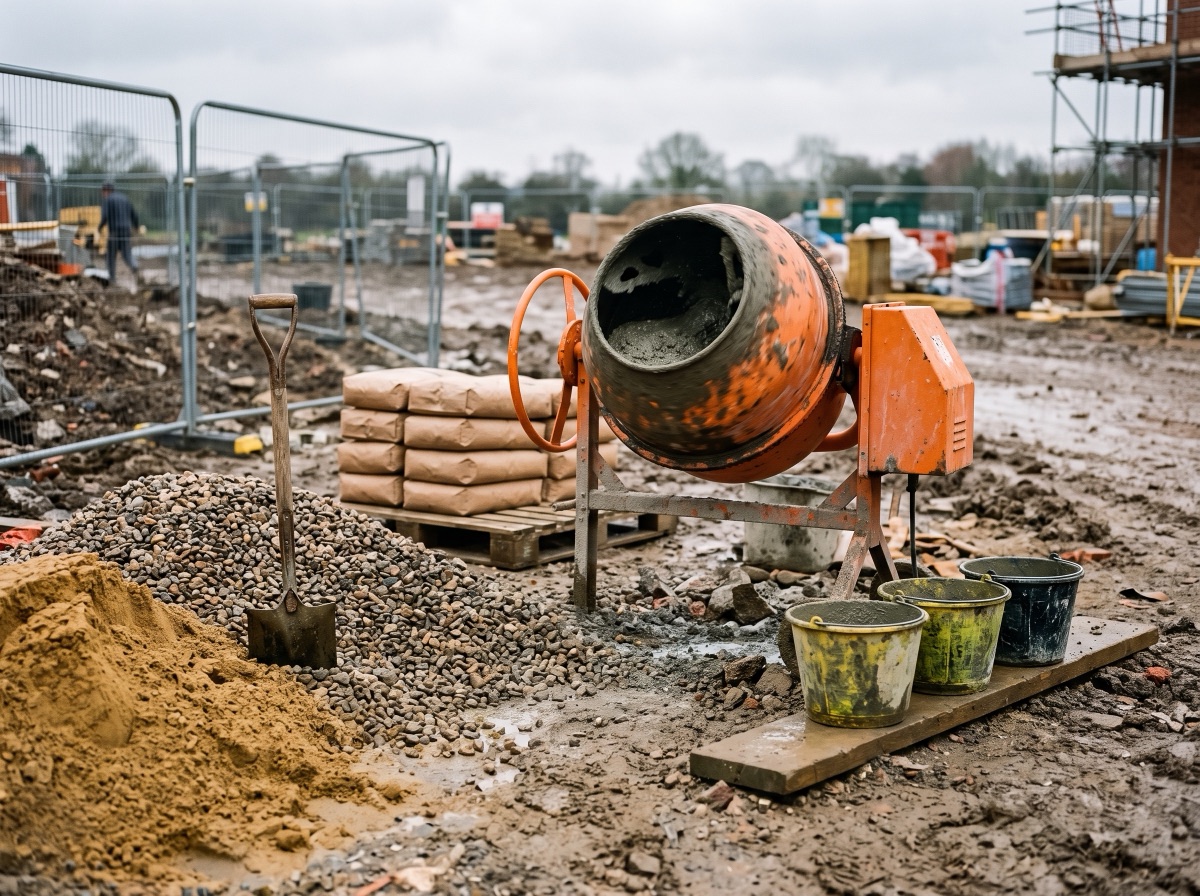
Concrete ratios are cement : sand : aggregate by volume. The UK workhorses: 1:2:4 for general structural work (pads, footings), 1:3:6 for mass fill and blinding, 1:1.5:3 where extra strength is needed. Keep water minimal — a sloppy mix is a weak mix. Mortar (no coarse aggregate) is a different material.
A concrete ratio is parts of cement : sand : coarse aggregate, measured by volume. For most garden and landscaping jobs you only need three: 1:2:4 (general purpose — pads, post footings, shed bases), 1:3:6 (mass fill and blinding), and 1:1.5:3 (stronger structural duty). The other half of the recipe is water discipline: add as little as gives you a workable mix, because excess water is the single biggest strength-killer in site-mixed concrete.
What each ingredient does
- Cement — the glue. More cement = more strength and cost, up to a point; it does nothing until water triggers the cure (hydration).
- Sand (fine aggregate) — fills the gaps between stones. Use sharp/grit sand for concrete, not soft building sand.
- Coarse aggregate — 10–20mm stone; the skeleton that carries load. "Ballast" is pre-blended sand+stone, convenient for small jobs (a common all-in recipe is 1 cement : 5 ballast for general purpose work).
- Water — enough to hydrate the cement and make the mix placeable, and no more. A mix that slumps like porridge will cure weak and dusty.
The common UK ratios and when to use them
- 1:3:6 — mass fill / blinding. Low strength, low cost: filling over-dig, blinding over hardcore, haunching where strength isn't critical.
- 1:2:4 — the general-purpose standard. Shed and greenhouse bases, fence-post footings, small pads, washing-line spurs — the default answer for domestic concrete.
- 1:1.5:3 — medium-high strength. Slabs taking heavier loads, garage floors, footings for masonry structures like an outdoor kitchen counter.
- 1:1:2 — high strength. Rarely needed domestically; thin structural sections and repairs where maximum strength is wanted.
For load-bearing or regulated work (house foundations, structural slabs), specifications call up designed concrete grades — order ready-mix to the engineer's spec rather than translating to buckets.
Concrete vs mortar — don't swap them
Mortar is cement + sand only (often with plasticiser). It bonds masonry and beds paving; it is not a structural pour. The two you'll actually use around paving: bedding mortar at about 1:4 cement:sharp sand mixed semi-dry (see the laying guide), and pointing mortar at about 1:3 for joints (jointing methods). Concrete with its coarse stone would make both jobs impossible.
Measuring ratios accurately
Use a bucket, not a shovel: shovelfuls of damp sand and dry cement weigh wildly differently. Gauge every ingredient with the same bucket, level-filled — 1:2:4 is one bucket cement, two sand, four stone. Batch consistently and successive mixes will colour-match and cure alike, which matters anywhere concrete stays visible.
Mixing: by hand or mixer
- Blend the dry ingredients first — turned three times on a board, or 2–3 minutes in a drum mixer.
- Form a crater, add roughly half the water, and turn/mix.
- Add remaining water a little at a time until the mix just moves and holds a ridge — then stop.
- Use within about 45 minutes to an hour; never "refresh" a stiffening mix with extra water (retempering kills strength).
Weather rules
- Cold: don't pour below about 3°C and falling — hydration stalls and frost can wreck an uncured pour. Cover fresh work with insulation or hessian in marginal weather.
- Hot/windy: the mix loses water too fast — dampen the sub-base first, work in shade if you can, and cover or mist-cure the surface so it doesn't dry before it cures.
- Curing: keep concrete damp for the first days rather than drying it out; it reaches most of its working strength at 28 days but takes foot traffic much sooner.
Safety
Wet cement is caustic: it burns skin on prolonged contact and the dust harms lungs and eyes. Waterproof gloves, eye protection and a dust mask when handling dry cement are non-negotiable, and any cement in the eye is an immediate rinse-and-A&E job.
Work out your exact order in seconds
Our coverage calculator turns your patio size into the precise number of slabs and packs — 10% waste allowance included.
Free delivery, £0.98 samples, breakage guarantee
Every order ships free with no minimum spend. Order a £0.98 sample first, choose your delivery date, and if a slab arrives broken we replace it — no quibbling.
Frequently asked questions
What is the best concrete mix ratio for general use?
1:2:4 (cement : sharp sand : coarse aggregate, by volume) is the general-purpose UK standard for pads, bases and footings. Use 1:3:6 for mass fill and blinding, and 1:1.5:3 where more strength is needed.
What is the difference between cement and concrete?
Cement is the grey binder powder; concrete is cement mixed with sand, coarse stone and water. Mortar is cement and sand only — used for bonding masonry and bedding paving, not structural pours.
What mix do you use for bedding paving slabs?
A mortar, not a concrete: sharp sand and cement at about 4:1, mixed semi-dry so it holds its shape when squeezed, laid as a full 30–50mm bed.
How much water goes in a concrete mix?
As little as gives a workable, placeable mix — typically around half the cement volume, added gradually. Excess water is the most common cause of weak, dusty concrete; the mix should hold a ridge, not pour.
How do you keep concrete batches consistent?
Gauge every ingredient by the same level-filled bucket, keep the water addition the same per batch, mix for the same time, and use each batch within the hour without re-wetting it.