
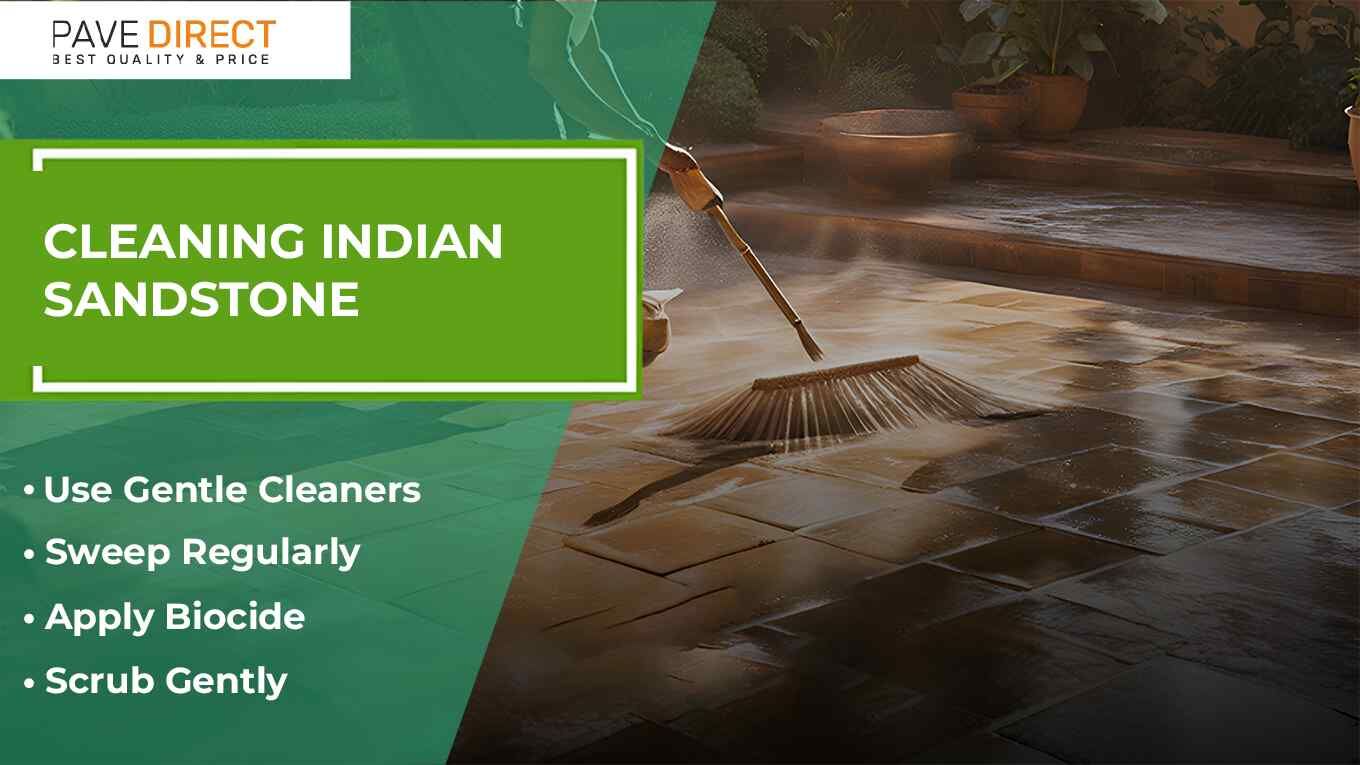
Today we are going to learn how to clean Indian sandstone with our expert tips. This sandstone is one of the best stones used to produce patios, pathways and other surfaces outdoors, as it shows striking sandstone colors and good wear resistance.
As with everything, cleaning the sandstone can revamp outdoor areas, ensuring good looks and increased life duration.
Moving forward, we are going to show you some of the best practices for cleaning Indian sandstone, so that it remains looking bright and with no stains.
Explore Sandstone PavingBrowse our range of natural sandstone paving slabs, ideal for patios, pathways and garden landscaping projects. |  |
Most Popular Ways of Cleaning Indian Sandstone Slabs
Here are some of the most popular ways that you can use to clean your Sandstone and to make sure that it remains in that clean state for a longer period of time.
Cleaning Indian Sandstone with a Pressure Washer:

When you want to clean the sandstone and you don't have multiple ingredients at hand, the best and easiest way to clean your outdoor sandstone slabs is with a pressure washer. Pressure washer is a quick way to wash your sandstone slabs without much hassle.
For this method to work, you need to have a good supply of water, a pressure washer and that’s it. Start with a gentle touch and when you encounter some difficult dirt or sediment, you can apply thorough pressure to get it out of the way.
Cleaning Indian sandstone with bleach:

One thing that we do not recommend is washing your Sandstone with bleach. The reason for that is the harshness of the Bleach which can damage the stone, causing discoloration or weakening its surface.
Instead, use a gentle, neutral-pH cleaner to clean your sandstone safely. Mix it with water, apply it to the stone, and scrub gently with a soft brush. This will keep your sandstone clean without harming it.
Always avoid harsh chemicals to maintain the beauty and durability of your sandstone.
Cleaning Indian sandstone with Vinegar:
Vinegar is a popular cleaning solution for many tasks, but it’s not suitable for sandstone. Its acidic nature can stain, burn, or etch the surface, causing noticeable damage and breaking down the sandstone’s sealant.
Moving on, here are some of the requirements to perform a proper cleaning process on your Indian Sandstone slabs.
Requirements for Cleaning Indian Sandstone Slabs:
Before you start cleaning, gather the necessary tools and materials:
Soft Broom: For removing dirt and debris.
Mild Dish Soap: It is important to use a gentle soap which won’t damage the stone.
Soft Brush: Then you have to scrub, use a soft bristle brush.
Bucket: For mixing soap and water.
Low-Pressure Hose: To rinse the area thoroughly.
Biocide: An eco-friendly moss and algae solution.
Sealant: After cleaning, to protect the stone.
Now, let’s take a look at the steps to clean your Sandstone efficiently and without damaging the surface after you are done with the process. Let’s begin.

How To Clean Indian Sandstone Paving Step by Step
1. Sweep Away Debris Regularly:
Sweeping prevents buildup that causes the grime from building up causing discoloration. A soft bristle broom will ensure you don’t scratch the stone.
2. Use Gentle, pH Neutral Cleaners:
Avoid cleaners that contain acid, or are harsh otherwise, as they may erode the stone surface. Choose a pH neutral soap solution instead. Next use mild dish soap dissolved in warm water and spread it uniformly over the surface.
3. Scrub Gently:
And if your spots or stains are persistent scrub, gently, with a soft brush. Don’t use steel brushes or anything too abrasive. Use a soft nylon brush to protect the texture of the stone while cleaning.
4. Biocide for Algae and Moss:
Sandstone can over time develop algae and moss. If necessary, use an eco-friendly biocide treatment to remove organic growth which does not harm surrounding plants or the stone.
5. Rinse Thoroughly:
Next, rinse off the cleaning solution with a low: pressure hose or a bucket of water after scrubbing. Most people do not recommend high pressure washers as they can etch away sandstone over time.
6. Try a Mild Vinegar Source:
Others say use a diluted vinegar solution to get rid of light stains, but it should be used sparingly so it doesn’t damage the beautiful natural composition of the stone.
7. Seal for Added Protection:
Sealing (sealing sandstone annually will help stone last longer and will keep stains from penetrating) can be done with a sealant designed for natural stone.
Explore Sandstone PavingBrowse our range of natural sandstone paving slabs, ideal for patios, pathways and garden landscaping projects. |  |
Conclusion
Indian sandstone does not have to be damaged or poor in condition to be cleaned and maintained. With the right tools and techniques you can prolong the lifespan of your stone and keep it beautiful.
Follow this guide and you can be sure your sandstone surfaces stay an attractive feature of your outdoor spaces. You can protect your investment and improve your home’s overall aesthetic by regular cleaning, treating the moss, and correct sealing.
Indian sandstone looks stunning with regular maintenance keeping it fresh and vibrant and ensuring this brilliant material maintains its appeal to outdoor spaces for many years to come.
Frequently Asked Questions (FAQs)
1. How often should I clean my Indian sandstone?
This type of sandstone should be cleaned at least once a month. But a bit of seasonal deep cleaning in spring and fall does help to keep it looking its best.
2. Can we clean Indian sandstone with bleach?
They should not be cleaned with bleach or acidic cleaners, as they can harm the stone. Instead, use gentle, neutral-pH soaps for cleaning.
3. Is it good to clean sandstone with vinegar?
Avoid using vinegar to clean sandstone. Its acidity can damage the stone. Use a neutral-pH cleaner instead..
4. How can I prevent stains on my sandstone?
By applying a sealant once a year, your sandstone will have protection from staining and other forms of weather damage.
5. What should I do about cracks in my sandstone?
If it is a small crack, fill with suitable stone filler. Professional repair may be needed for larger damages.
Are you ready to freshen up your Indian sandstone? Simple cleaning steps and you will enjoy the beauty of your outdoor space! For more tips and expert advice, visit Pave Direct. Happy cleaning!
Additional Reading:
How to clean outdoor porcelain tiles
How do you lay paving slabs
Work out your exact order in seconds
Our coverage calculator turns your patio size into the precise number of slabs and packs — 10% waste allowance included.
Free delivery, £0.98 samples, breakage guarantee
Every order ships free with no minimum spend. Order a £0.98 sample first, choose your delivery date, and if a slab arrives broken we replace it — no quibbling.