
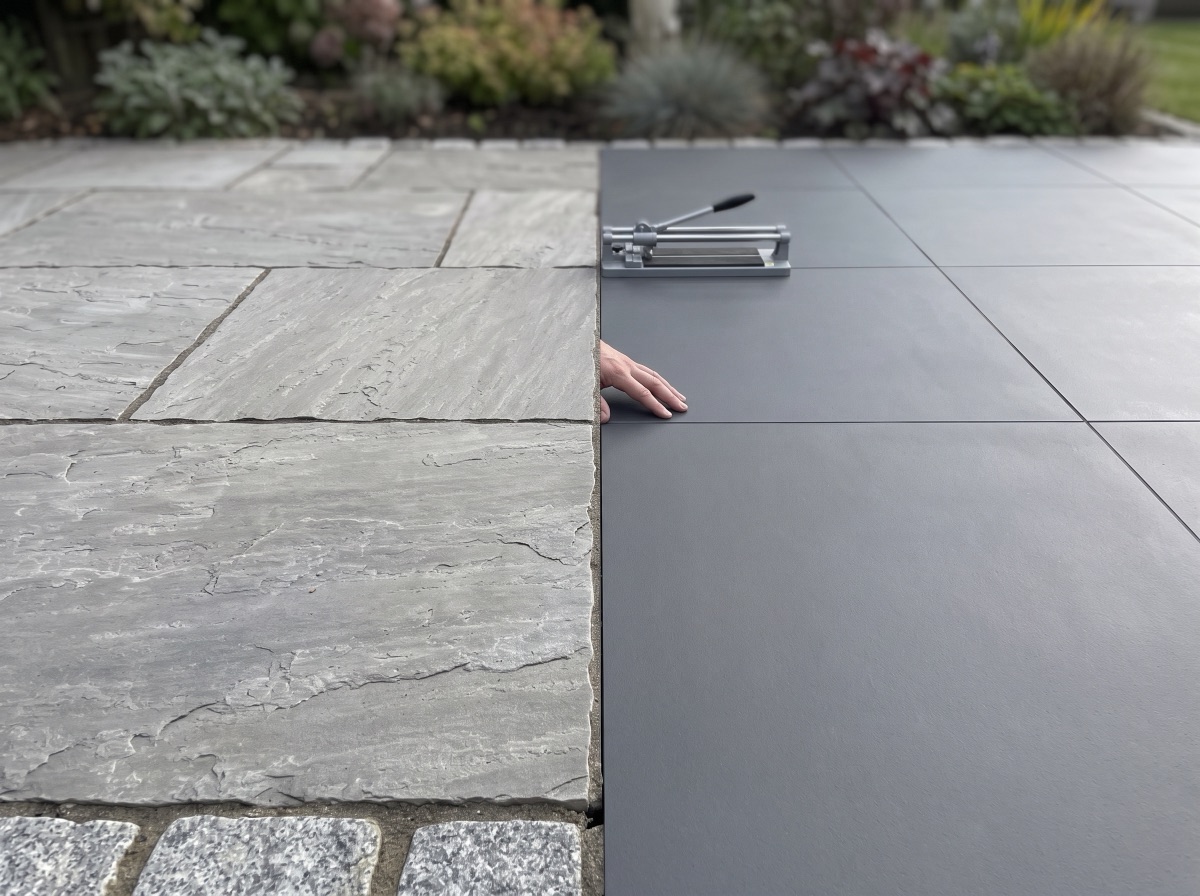
Paving is an essential part of in shaping any outdoor space, especially when redesigning a garden or patio area. It is the surface your family walks on every day, where outdoor furniture is placed, and where gatherings, celebrations, and everyday moments take place over the years. Choosing the right paving material directly affects comfort, safety, and long-term durability.
Among UK homeowners, Indian sandstone paving and porcelain paving slabs are two of the most popular options for outdoor use. Both materials are known for their visual appeal and suitability for patios, pathways, and garden landscapes. However, they differ significantly in areas such as initial cost, maintenance requirements, slip resistance, durability, and overall performance in different weather conditions.
Indian Sandstone
Indian sandstone is dug, which means it is taken from the ground after being there for millions of years. It is broken up into slabs and brought to your yard. Since every slab is unique, it gives it a homey and relaxed feel that can hardly be imitated.
This stone is brown with a fossil print design and rough-textured appearance and fits well in traditional gardens, older dwellings, and anywhere a rustic appearance is needed. Its residents appreciate the fact that the sandstone blends seamlessly with the surrounding scenery, resulting in the appearance that the construct is less artificial.
Porcelain Paving
On the other hand, porcelain paving is a relatively new concept. This is fine clay that has been fired at very high temperatures to make it very hard, thick, and free of holes. It does not inherently appear as sandstone, but it can be disguised to appear as stone, wood, marble, or concrete up to an exquisite level.
Porcelain is unique because it is stable and strong. You know what you're getting with samples; there are no shocks with colour shifts or odd fossils. This is what many homes like when they want clarity and innovation in their style.
Porcelain vs Indian Sandstone
Indian Sandstone and Porcelain both have their own importance. Sandstone has been in the market for centuries, while porcelain is manufactured using the latest technology.
Aesthetics and Design
The floors, in case you want to have floors, are not a matter of what use they will be; it is a matter of how you want your outdoor living spot to be.
Indian Sandstone
Do you desire a warm, traditional, natural garden? Or clean, neat, and new? Kandla Grey Indian sandstone can be used separately to provide both heat and beauty.
The warm browns, soft greys, and even a hint of pink or lilac are seen in small quantities, blending with the light creams and yellows.
When placed along a patio, these small changes make for a soft, friendly scenery that is calm and inviting.
Porcelain
Can porcelain mimic natural stone? In Porcelain, you have full power over the pattern. Don't like how stone works, but like how it looks?
You can opt for porcelain that is modeled to look close to real stone in detail, but also the colour and texture must be somewhat alike.
Plain porcelain of cool greys or charcoal, usually in large size and in a straight pattern, creates a fresher, more current look.
Porcelain can mimic battered wood or silky concrete that matches your home's floors.
Which gives a more modern/contemporary look? To be safe, it's best to match your flooring to your house. If you have an old brick or stone house, Indian sandstone will make it appear as if it were always there. Many modern additions feature large glass doors, and smooth porcelain flooring, like smooth Kandla Grey Porcelain, helps to carry the clean lines outside, making your yard an extension of your living room.
For a more detailed comparison of Kandla Grey Sandstone and Kandla Grey Porcelain, visit: Kandla Grey Porcelain vs Natural Kandla Grey
Maintenance and Durability
Once individuals consider flooring, they cannot help but imagine and ask, Which requires less maintenance? How will it be in five, in ten, in twenty years? It is essential to be strong, as nobody wishes to renovate their porch on a biannual basis.
Indian Sandstone
Indian sandstone is robust and lasts for decades.
It absorbs water, thus can develop moss, algae, or frost if not correctly cared for in a wet environment like the UK.
Sealing is the answer. A good finish will cover up small holes in the rock, preventing water, dirt, and plants from entering.
Does Indian Sandstone need sealing? How often? Yes. Sandstone typically requires resealing every two to three years. It's not hard, but you do have to be dedicated to it.
Porcelain
You may ask, Is porcelain truly maintenance-free? Compared to sandstone flooring, it is virtually indestructible.
It's hard, vitrified skin doesn't let water in.
It doesn't naturally get frost, stains, or scratches.
The rain will remove any dirt, and anything that refuses to come off can be wiped off or jet-washed out without damaging the floor.
Will my patio fade in the sun? Not if you have porcelain pavement. It does not require seals and is resistant to fading in sunlight.
So, which is more durable, sandstone or porcelain? Both materials will last a long time if installed correctly on a solid base. The upkeep that comes in between is what's different. If you take care of the native stone and aren't set on a specific date, sandstone is a fulfilling material that improves with age. Plus, if you'd rather not think about upkeep at all, remember that porcelain makes things easy.
Installation Process
Pavement must be put down correctly, no matter what kind of pavement you use. If you put slabs on a base that hasn't been crushed, the slabs will probably become unstable, water will pool, or weeds will grow in the joints. Is Indian Sandstone or Porcelain easier to install DIY? And what are the installation costs for each?
Indian Sandstone Paving
Indian sandstone is a little easier to work with on your own.
Various slabs can be slightly dissimilar in terms of thickness and, therefore, will require the use of mortar to place them in order and adjust as you proceed, ensuring a flat surface.
Because the stone is real, minor imperfections augment its rustic appearance.
Mortar or pointing material is also used to fill holes, which tends to hold the entire surface together.
Indian Sandstones are generally cheaper to install as they are softer than porcelain, and you can also install them with proper experience.
Porcelain Paving
It takes more work to do porcelain paving.
The edges of the slabs are all the same width and thickness, so your base needs to be perfectly level to achieve a smooth look.
Because porcelain is also very thick, you need a perfect wet saw with a diamond blade to cut it.
Many builders would rather hire someone to install porcelain for perfect cuts, finishing, and a finished product that looks great. That is the reason the installation costs for porcelain slabs are higher.
Weather Resistance
Indian Sandstone
Given that it is sealed and cleaned properly and installed,
Indian sandstone patio is resistant to rain, frost, and changes in temperature.
Freeze-thaw can split the unsealed face of India stone paving over a series of winters.
Some cracking can be established due to moisture trapped in the unsealed stone.
Reseal Indian sandstone every 3 to 4 years for protection and ensure good drainage.
Porcelain Flooring
When it rains, porcelain flooring doesn't care.
Since it doesn't absorb water, it can't freeze.
Even when it's cold outside or it rains cats and dogs, porcelain doesn't change shape or colour.
It doesn't fade in direct sunlight or UV light, which is why lovely pale grey porcelain decks will stay beautiful in gardens looking south.
Pro-Tip: If you live in a wet or shady place where moss grows a lot, porcelain might be a better choice. Its smooth, non-porous design makes it harder for moss and algae to grow, and it also saves you time from having to scrub or pressure wash.
Safety Considerations
Indian Sandstone
Indian stone paving, in its natural form, is safe to walk on.
Indian sandstone is naturally a little rough, and thus, your feet can grip it.
How does sandstone perform in wet conditions? Even when wet, sandstone is safe to walk on as long as they are textured, clean, and not covered with moss, algae, or wet leaves
It is necessary to sweep and wash the mats.
Porcelain Outdoor Tiles
The manufacture of porcelain outdoor tiles has been designed to prevent them from becoming slippery. Indoors, slip-resistant porcelain tiles can be used outdoors.
Outdoor porcelain is rougher than the indoor tiles. So, is porcelain paving slippery when wet? Porcelain is marked R11 or higher for slip resistance, and still foot-safe when wet.
Porcelain is neither water nor moss/algae-retaining; safer in the long run, and does not have to be cleaned as frequently.
Porcelain requires almost no maintenance.
Environmental Impact
Indian sandstone Paving Slabs
A significant portion of Indian sandstone isn't produced; the impact of production is minimal, and nature does most of the work. However, mining and exporting from India add to carbon emissions.
That's why it's essential to buy from trustworthy sellers who support fair wages and safe workplaces.
Porcelain Paving Slabs
Porcelain is quite durable as they are fired at high temperatures, giving it a reality of robustness. But it is easy when you are at home with companies that care about the environment strictly. The great news is that porcelain garden tiles last for a while, and are low maintenance, requiring little amounts of chemicals, cleaners, and sealers, which means lower costs over time.
Still, installation is the most environmentally friendly option, regardless of the choice made. A patio that's 30 years long will always look better than one that needs to be redone and pounced after 5 p.m.
Conclusion
Porcelain v sandstone, which one is better? Indian Sandstone patio slabs would be the right choice in case you desire your yard to be adorned with the natural and warm touch of a unique yard, in which the maintenance would minimally require some small activities.
Porcelain is the smarter decision in case you are in need of a contemporary patio that simply does not need lots of maintenance and will remain clean and in proper condition with no effort.
Indian Sandstone vs Porcelain, it does not make any difference whether you live your life in this way or that way. Right is only what strikes your style. If you desire an outdoor area that will withstand the test of time, then invest in materials that do last, along with a professional who can install it, should the need arise.
Pave Direct is your best Indian Sandstones and Porcelain paving slabs supplier in the UK. Do your research and buy Indian Sandstone paving or porcelain based on your taste and the functionality you require in your outdoor space to live a long life of zero worries!
Frequently Asked Questions
Q: Do I Need to Seal Indian Sandstone?
A: Yes. Sealing sandstone prevents it from stains, fading, and the growth of algae. They always need to be sealed after being laid and re-sealed every few years.
Q: Does Porcelain Paving Get Slippery?
A: No, porcelain is rated R11 or more for its slip-resistance. This should be checked before making any purchase.
Q: Is Sandstone or Porcelain More Expensive?
A: Porcelain is usually more expensive per meter and less expensive in terms of maintenance. Sandstone is less costly in the short term, but it requires sealing and additional cleanups.
Q: What are the Common Colours and Finishes for Each?
A: In both the categories of Indian Sandstone and Porcelain, Kandla Grey and Raj Green are popular choices that UK homeowners go for. The popular finishes are riven and smooth.
Q: Which offers a natural/rustic appeal?
A: Although Porcelain is able to mimic the colour and texture of the natural stones, Indian Sandstone offers a more natural and rustic appeal due to the inconsistent yet beautiful tone and colour variation

