
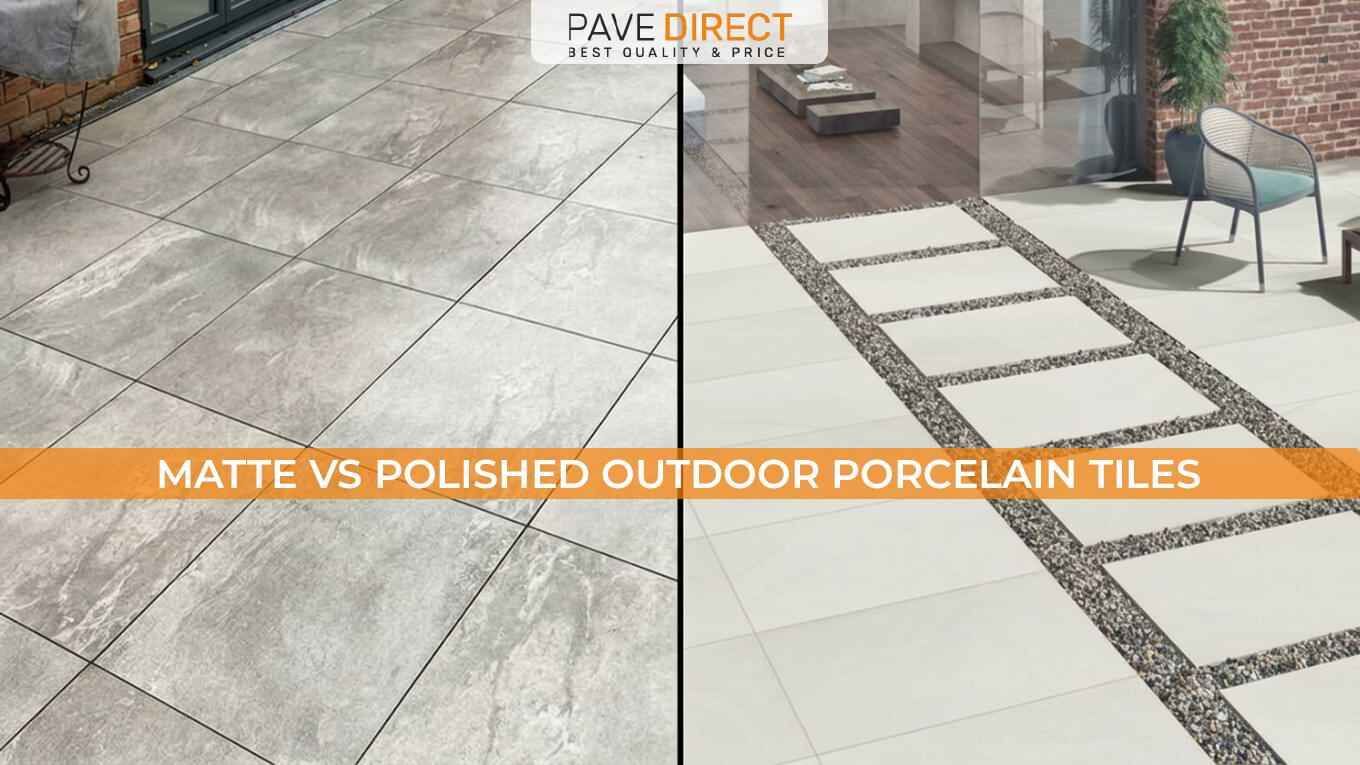
Choosing between Matte vs Polished Outdoor Porcelain Tiles sounds easy at first...
Right up until you picture rainwater sitting across the patio. Muddy paw prints coming in from the lawn. Algae were creeping into shaded corners, and somebody nearly slipped while carrying drinks outside.
That’s usually when people realise this isn’t just a style decision anymore. It’s a practical decision, too.
A lot of UK homeowners regret rushing this choice because polished porcelain tiles often look incredible in a showroom. Bright lights. Dry floors. No moss, and no wet leaves. Real gardens are different, though. Especially in the UK, where rain and damp weather are simply part of everyday life.
This guide breaks down Matte vs Polished porcelain outdoor tiles properly so you can choose the best outdoor porcelain tiles for UK gardens without ending up with maintenance headaches a year later.
Table of Contents
What Are Matte Garden Paving Tiles?
What Are Polished Outdoor Surface Tiles?
Matte vs Polished Outdoor Porcelain Tiles Comparison
Why Matte Tiles Are Popular in UK Gardens
Best Tiles for Garden Areas
Porcelain vs Ceramic Tile Outdoors
Hybrid Garden Layout Ideas
Installation Guide and Common Mistakes
Maintenance and Cleaning
Cost Breakdown
Why Homeowners Choose Pave Direct
FAQs
Final Recommendation
What Are Matte Garden Paving Tiles
Matte exterior grade porcelain tiles are non-glossy, lightly textured surfaces built specifically for outdoor spaces like patios, pool surrounds, and garden paths.
Their textured finish improves grip underfoot, which is why many homeowners now prefer slip-resistant porcelain paving slabs in the UK for patios, garden paths, and wet outdoor areas.
Key Benefits:
Superior Wet Grip: Safer footing during wet weather, especially with R11 slip rating tiles, compared to smooth glossy finishes that become slippery.
Hides Everyday Wear: Muddy footprints, dust, and small scratches stay far less visible long-term on textured surfaces.
Built For Weather: Handles frost, heavy rain, and strong UV exposure with solid freeze-thaw cycle resistance, so the surface doesn’t crack or weaken over time.
Natural Appearance: Many stone-look outdoor tiles offer realistic slate or concrete textures without needing regular sealing.
These practical qualities explain why matte porcelain tiles for wet weather patios are increasingly seen by installers as the best tiles for garden renovations.
What Are Polished Outdoor Surface Tiles
Polished exterior grade porcelain floor tiles are smooth, glossy surfaces made to give outdoor spaces a brighter, cleaner, and more high-end look. Their surface is mechanically polished until it becomes shiny and reflective, which is exactly why they stand out so much in showrooms and modern garden displays. For wall applications, a lighter thickness is preferred for vertical cladding (usually around 10–12 mm, or roughly 1–1.2 cm / 0.4–0.5 inch), and ceramic tiles can also be used for walls depending on the design and finish required.
Key Benefits:
Glossy Premium Look: Polished porcelain tiles create a bright, high-end finish that instantly makes a space feel more refined.
Reflects More Light
Because the surface is reflective, it can help smaller or shaded outdoor areas feel more open and visually brighter.Works Well In Sheltered Spaces
In covered areas where rain exposure is lower, polished porcelain floor tiles can be a strong design choice.Adds A Modern Architectural Style
They suit clean, contemporary gardens really well, especially when paired with minimalist furniture and outdoor lighting.
Matte vs Polished Outdoor Porcelain Tiles: Quick Comparison
Factor | Matte Tiles | Polished Tiles |
Slip Resistance | Excellent | Moderate to low |
Wet Weather Safety | Safer | Can become slippery |
Cleaning Frequency | Lower | Higher |
Scratch Visibility | Hidden better | More noticeable |
UV Fade Resistance | Strong | Slightly more visible |
Algae Visibility | Lower | Higher |
Best Use Cases | Patios, paths, pools | Covered entertainment zones |
10-Year Cost Value | Strong | Higher maintenance costs |
Polished porcelain floor tiles outdoors usually need far more cleaning than expected.
Water spots. Dust. Footprints. Pollen. Algae marks. Glossy surfaces highlight everything faster.
Why Matte Tiles Are Popular in UK Gardens
The shift toward matte outdoor tiles has grown massively over recent years. Most of it comes down to lifestyle. People want outdoor porcelain tiles that still look good after years of real use. Not just on installation day.
This is the reason why many homeowners now consider matte finishes the best tiles for garden renovations.
Matt Finish Options Available at Pave Direct


Best Tiles for Garden Areas
This is where practical choices matter more than looks. In most UK gardens, 20mm porcelain paving slabs are commonly used because they handle daily outdoor use without much hassle.
Garden Patios
For many UK homeowners, matte garden porcelain tiles just feel more practical for everyday garden use. They are easier to live with and usually stay looking decent without much effort over the years.
Outdoor patios never really stay perfect for long. You get BBQ spills, muddy or wet shoes from the garden, rain sitting on the surface, chairs being moved around, and people constantly walking over the same areas in summer.
This is the reason a matte finish makes sense to a lot of people. It can hide the everyday marks so effectively that light stains, scuffs, and mud don’t stand out every time you step outside.
They also feel calmer in a real garden setting, especially on pathways, steps, or outdoor porcelain tiles for sloped garden spaces where rainwater drainage and grip both matter.
In comparison, polished tiles can sometimes look a bit too shiny or formal for a relaxed outdoor space.
Pool Areas
Pool surround tile matte finish products are almost always the safer option. Water and polished porcelain floor tiles are not a great combination in busy family spaces.
For this reason, most installers recommend slip-resistant porcelain paving slabs in the UK around pools, hot tubs, and wet entertainment areas.
Porcelain vs Ceramic Tile Outdoors
Feature | Porcelain | Ceramic |
Water Absorption | Very low | Higher |
Frost Resistance | Excellent | Lower |
Outdoor Lifespan | Longer | Shorter |
Strength | Higher | Lower |
Maintenance | Easier | Higher |
Patio porcelain tiles absorb less than 0.5% water under British and European standards.
That matters because trapped moisture expands during freezing temperatures. Ceramic tiles crack more easily during freeze-thaw cycles, while outdoor porcelain tiles are frost-resistant in the UK and perform far better through harsh UK winters and repeated freezing conditions.
Because of this, outdoor porcelain paving slabs are usually the smarter long-term investment for exposed gardens.
Hybrid Garden Layout Ideas
A simple approach is mixing matte and polished porcelain across different garden zones. It sounds small, but it changes how the whole space feels day to day.
Matte porcelain tends to make sense in the busy parts of a garden, especially in outdoor porcelain tiles for sloped garden designs, where safety and water runoff need extra attention. Think about patios where people gather, walkways that get constant foot traffic, pool edges, and BBQ areas where spills happen.
It has more grip underfoot, especially in R11 slip rating tile installations, and it also hides marks from rain and dirt a lot better. Polished porcelain has its place, too. I like it more in covered corners where the weather does not hit it all the time.
You are not forcing one material to do every job in the garden. The rougher, more durable surfaces take the heavy use. The smoother, more decorative areas get to shine where conditions are calmer.
Installation Guide And Common Mistakes
Installation is one of those things people underestimate with external porcelain paving, especially when the MOT Type 1 sub-base isn’t properly prepared… even when they’ve spent good money on the tiles themselves.
And truth is, most of the problems you see later don’t come from the tile. They come from what was done underneath it. Follow the steps below to avoid costly issues later on.
Step 1: Get The Base Right
This is where it all begins. Most 20mm porcelain paving slabs for garden installations depend heavily on a properly compacted and stable base, because if the ground isn’t right, nothing on top will sit properly for long.
Step 2: Sort Out Drainage
You need a gentle slope so water can move off the surface, especially in cases where outdoor porcelain tiles for sloped garden layouts are being installed.
Step 3: Use Proper Outdoor Materials
This part gets missed a lot. Outdoor work needs outdoor-grade adhesive and materials that can actually handle weather changes.
Step 4: Lay With Steady Spacing
Keep the gaps consistent and balanced. It just helps everything settle and move naturally over time.
Step 5: Take A Final Look Before It Sets
Before everything fully locks in, just step back and check it. Levels, alignment, and how water would actually travel across it.
Common Mistakes To Avoid
Weak or poorly prepared MOT Type 1 sub-base
Wrong or completely flat drainage
Cheap indoor adhesive used outside
Uneven gaps between tiles
Using indoor polished tiles outdoors
Skipping proper levelling
Ignoring how frost and rain will affect it later
Most of these don’t show up on day one. They usually appear after a few heavy rains or once winter hits properly.
Small patios can sometimes be done as a DIY. But anything larger… it usually makes more sense to get it done the first time properly. Fixing it later is rarely simple or cheap.
Maintenance and Cleaning
How Matte Outdoor Tiles Should Be Cleaned
Matte outdoor tiles are usually very simple to look after in everyday garden spaces. They hide dirt well and do not need constant scrubbing. Here are the steps you can follow to maintain and clean them:
Sweep the surface weekly to help remove dust and leaves before they settle into the surface.
Wash with mild soap and warm water for everyday stains and muddy footprints.
Clean algae early in damp areas over time, especially after rain.
Avoid strong chemical cleaners because harsh products may slowly wear the tile surface and grout joints.
Use a soft brush for stubborn marks without damaging the tile finish.
Check grout lines occasionally to stop moss or small weeds from spreading between tiles.
How Polished Porcelain Tiles Should Be Cleaned
Polished porcelain tiles need more regular cleaning to keep the glossy finish looking clear and even. The following steps are listed below to maintain and clean the polished porcelain tiles:
Sweep regularly to remove grit and dust.
Use a pH-neutral tile cleaner.
Clean with soft clothes or brushes.
Make sure to rinse the surface thoroughly after washing it.
Dry tiles after cleaning to help reduce visible water spots and streak marks outdoors.
Wipe spills quickly to prevent stains and keep the surface looking clean and even.
Strong scrubbing tools can slowly damage the polished shine. So, avoid abrasive pads and harsh chemicals.
Overall Difference
Matte tiles are lower maintenance overall, while polished tiles need more regular cleaning to keep their glossy finish looking fresh outdoors.
Cost Breakdown
Tile Type | Average UK Cost per m² |
Matte Outdoor Porcelain | £30-£60 |
Premium Stone Look Outdoor Tiles | £50-£80 |
Polished Porcelain Tiles | £45-£90 |
Natural stone options like Kandla Grey Indian Sandstone Paving Slabs and Raj Green Indian Sandstone Paving Slabs remain popular too.
But outdoor tile paving usually reduces:
Sealing costs
Moss treatment
Surface staining
Long-term maintenance time
That convenience becomes valuable surprisingly fast once the garden starts getting used properly every day.
Why UK Homeowners Trust Pave Direct for Porcelain Patio Slabs
For people planning to buy outdoor porcelain paving slabs in the UK, Pave Direct focuses on how outdoor tiles perform under real garden conditions, not just how they look in a showroom. That’s a big reason many UK homeowners choose them for outdoor porcelain paving slabs and stone-effect porcelain tiles.
Their collections are picked with proper outdoor use in mind, including UK frost resistance, UV-stable exterior tiles, slip resistance, low water absorption, and long-term durability. So the idea is simple… the tiles should handle real weather and real life without becoming a constant maintenance problem.
Some of the popular options include matte stone look outdoor tiles and slip-resistant porcelain paving slabs in the UK, designed for safer everyday garden use. They also offer porcelain paving slabs designed to match the look of Kandla Grey Indian Sandstone and classic Raj Green Indian Sandstone Paving Slabs, along with more modern porcelain alternatives.
Final Recommendation
For most UK homes, Matte vs Polished Outdoor Porcelain Tiles usually comes down to one thing: Practicality versus appearance.
If your garden is exposed to British weather, matte outdoor flooring tiles are almost always the safer and lower-maintenance option. They handle rain, moss, muddy shoes, pets, and furniture movement much better over time.
Polished porcelain tiles still work beautifully in covered entertainment spaces, though, especially where visual impact matters more than practicality.
And honestly, the smartest garden designs often combine both.
Frequently Asked Questions
What thickness is best for outdoor porcelain tiles?
For patios and general garden areas, 20mm (approximately 3/4 inch) porcelain tiles are usually the standard choice. They handle everyday foot traffic well and stay stable in normal outdoor conditions.
For driveways or vehicle-loaded areas, thicker, heavy-duty porcelain (often 20mm reinforced systems or specially rated driveway slabs) is required, along with a proper concrete base to support car weight and long-term pressure.
Are porcelain tiles suitable for driveways or just patios?
Porcelain tiles can be used for both patios and walkways, while driveway use requires 20mm heavy-duty porcelain with a reinforced concrete base designed for vehicle load.
How long does outdoor porcelain paving typically last?
Outdoor porcelain paving typically lasts 20–30+ years when installed on a compacted base with proper drainage and frost protection.
Do porcelain tiles fade in sunlight over time?
No, porcelain tiles are UV-stable and retain colour even after long-term exposure to direct sunlight and seasonal weather changes.
Can damaged porcelain tiles be repaired?
Damaged porcelain tiles can sometimes be repaired, depending on the type and severity of the damage. Minor issues such as light surface scratches, small chips at the edges, or cosmetic wear can often be improved using repair fillers or polishing methods.
What sub-base is required under porcelain patio tiles?
Porcelain Patio Tiles require a compacted hardcore base (100–150mm MOT Type 1) with a 25–40mm bedding layer of full-bed adhesive or sand-cement mix.
Can you use polished tiles outside the UK?
Yes, but mainly in covered or low-rain areas. In open UK gardens, they can become slippery and need more maintenance due to moisture and weather exposure.
Are polished tiles safe outside?
They are safe only in controlled spaces. In wet or exposed areas, they reduce grip, so matte or textured tiles are usually safer for everyday garden use.
Why are your patio tiles slippery?
Slipperiness usually comes from algae, standing water, or smooth, polished surfaces. Dirt buildup and poor drainage can also reduce grip over time, especially after rain.
Work out your exact order in seconds
Our coverage calculator turns your patio size into the precise number of slabs and packs — 10% waste allowance included.
Free delivery, £0.98 samples, breakage guarantee
Every order ships free with no minimum spend. Order a £0.98 sample first, choose your delivery date, and if a slab arrives broken we replace it — no quibbling.