
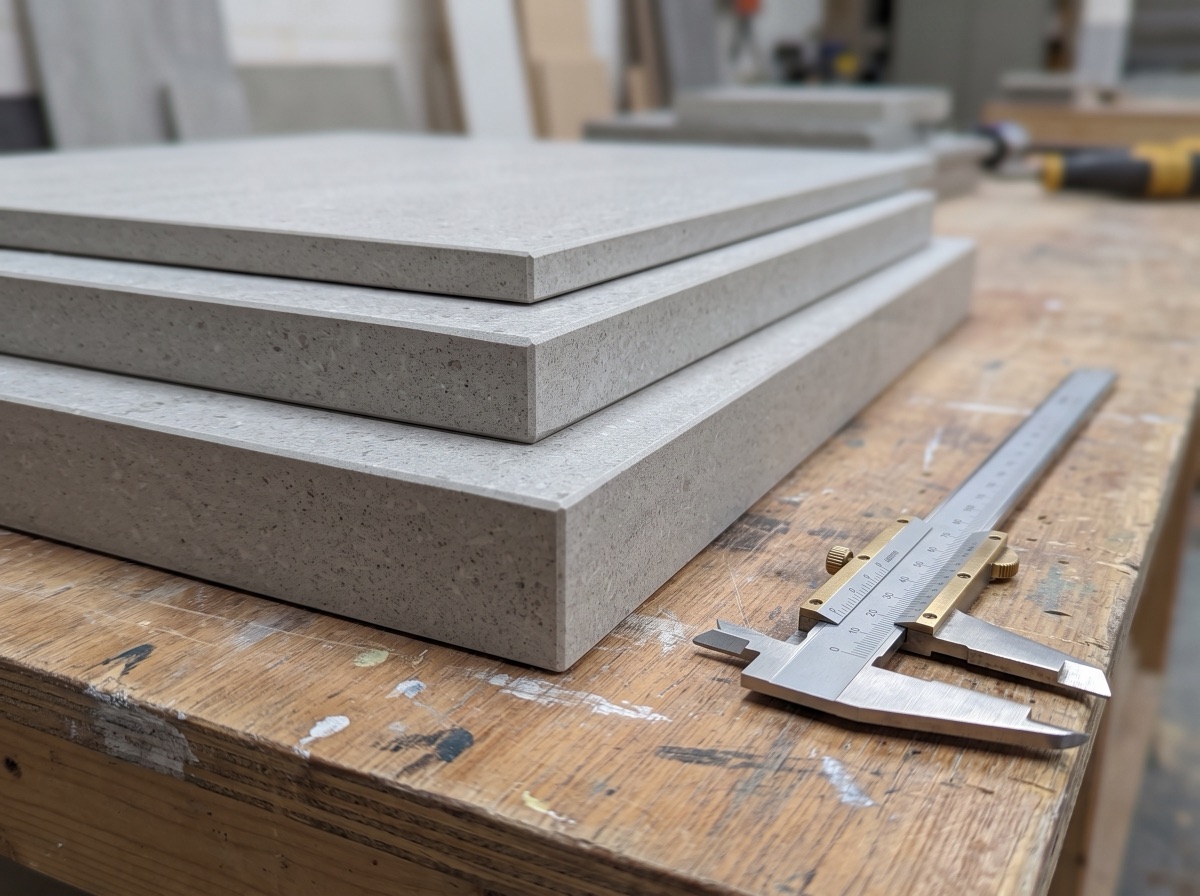
Pick the wrong thickness and you could be looking at cracked slabs, a sunken driveway, or a costly re-lay inside two years. It is the single most common mistake homeowners make when buying outdoor porcelain tiles, and it is entirely avoidable.
Outdoor porcelain paving comes in three main external thicknesses: 16mm, 20mm, and 30mm, designed for a specific range of applications, from a quiet garden patio to a heavily used driveway.
Explore Best Porcelain PavingDiscover modern, durable and low-maintenance outdoor porcelain tiles perfect for patios and gardens. | ![]() |
Quick Guide: Which Thickness Do You Need?
- 16mm → Light-use garden patios and pedestrian paths
- 20mm → Standard patios, pool surrounds, and domestic driveways (light vehicles)
- 30mm → Heavy-use driveways, commercial areas, and challenging ground conditions
By the end of this guide, you will know exactly which thickness your project needs, what sub-base to prepare, and what to look for when buying.
Why Porcelain Paving Thickness Matters
Thickness is not just a number; it is what determines whether your porcelain paving performs for 30 years or fails in three. Here is why it matters:
Structural Integrity

Thinner slabs flex more under load. On an imperfect sub-base or over a weak spot in the mortar bed, that flex becomes a crack. A 16mm slab is significantly more vulnerable to point loading than a 20mm or 30mm equivalent.
Load-bearing Capacity

A person walking across a patio produces very different forces to a one-tonne vehicle on a driveway. Thickness must be matched to the expected load. Specifying 16mm for a driveway is one of the most reliable ways to end up with broken slabs.
Freeze-thaw Resilience
UK winters are hard on paving. Whilst porcelain itself has very low water absorption (under 0.5%), a thicker slab resists the ground movement caused by frost heave far better than a thin one. This matters particularly in northern England, Scotland, and elevated sites.
Bedding Compatibility

The thickness of the slab dictates the depth of mortar bed and sub-base required. When you get this wrong, you will see that the finished surface is at the wrong height, or the bedding failing under load.
Note: Professional landscapers consistently recommend a minimum of 20mm for any outdoor porcelain paving exposed to vehicular access. Specifying anything less, regardless of how good the sub-base is, is a risk not worth taking.
Cost vs. Longevity

A 30mm slab costs more upfront. But if it prevents a re-lay on a driveway, it pays for itself many times over. Buying the correct thickness is cheaper in the long run than remediation.
Indoor vs. Outdoor: Know The Difference
Internal porcelain tiles are typically 6–10mm, which is entirely adequate for floors inside a home. For any external application, like patio, path, or driveway, outdoor porcelain paving starts at 16mm. Using an indoor tile outside is a guarantee of failure.
Common Porcelain Paving Sizes in the UK
One of porcelain's key advantages over natural stone is its calibrated manufacturing. Every slab comes out of the kiln at a consistent, precise thickness.
There is no variation from slab to slab as you get with riven sandstone or slate. This makes installation cleaner and the finished result more professional.
Typical sizes available from UK suppliers include:
- 600x600mm
- 900x600mm
- 1200x600mm
- 450x450mm
As a rule of thumb: the larger the slab, the thicker it should be. A 1200x600mm slab has significantly more unsupported span between fixing points than a 450x450mm tile, which means it needs greater inherent strength. Porcelain slabs 900x600 and above are generally best specified at 20mm or 30mm.
Common Size | Recommended Thickness | Best Application |
450 x 450mm | 16mm or 20mm | Garden patio, paths |
600 x 600mm | 16mm / 20mm / 30mm (driveway) | Patio, driveways |
900 x 600mm | 20mm or 30mm | Large patios, driveways |
1200 x 600mm | 20mm or 30mm | Contemporary patios, driveways |
Plank formats | 20mm | Modern garden design, terraces |
Cobbles | Variable by product | Driveways, paths, feature areas |
16mm Porcelain Paving: When to Use It
16mm is the entry-level outdoor porcelain thickness. It is calibrated and consistent; every slab the same, and it is available in a good range of styles, colours, and finishes. It is, however, a thickness with clear limits.
When 16mm is the Right Choice
- Domestic garden patios with standard pedestrian foot traffic
- Garden paths and walkways
- Covered outdoor areas: a portico or loggia where exposure and load are minimal
- Garden steps, provided there is a solid concrete substrate beneath each tread
The Limitations of 16mm
Do not use 16mm porcelain on driveways or anywhere a vehicle will load the surface. It is not engineered for that.
Similarly, be cautious with large format slabs at 16mm. A 900x600mm slab at this thickness has more unsupported span than is ideal, and is more vulnerable to cracking if the mortar bed has any voids.
Bedding requirements for 16mm porcelain
- Sub-base: 100–150mm compacted MOT Type 1 hardcore
- Mortar bed: 40–50mm semi-dry mortar or proprietary porcelain adhesive
- Full bed adhesion is essential; no hollow spots beneath the slab
Browse our full range of 16mm porcelain paving at Pave Direct.
20mm Porcelain Paving: The Industry Standard
If you ask any experienced landscaper what thickness to specify for outdoor porcelain paving, the answer will almost always be 20mm.
It is the workhorse of the range; strong enough for driveways, versatile enough for patios, available in the widest selection of styles and colours, and compatible with all mainstream bedding systems.
What Makes 20mm the Go-to Choice
- Sufficient strength for standard domestic foot traffic and light vehicular use
- Works confidently with large format slabs, 900x600mm and 1200x600mm, without the flex risk of 16mm
- Available in every style: concrete effect, stone effect, wood-effect plank, and more
- Compatible with both wet mortar and proprietary adhesive bedding systems
- The thickness specified by most manufacturers for external use warranty compliance
Note: Most professional landscapers specify 20mm outdoor porcelain tiles as the baseline for any external paved area. It gives you the performance margins to handle imperfect sub-base conditions, which, in real-world installations, is most of them.
Best Applications for 20mm Porcelain Slabs
- Garden Patios and Terraces: The clear first choice for most domestic projects
- Driveways with standard passenger car access
- Pool surrounds and outdoor entertaining areas
- Steps, paths, and garden walkways
- Contemporary designs using porcelain slabs 1200x600 or plank formats
Bedding Requirements for 20mm Porcelain on a Driveway
- Sub-base: 150mm compacted MOT Type 1 hardcore, no shortcuts
- Mortar Bed: 50mm minimum, semi-dry mix (5:1 sharp sand to cement)
- Butter the back of each slab with a proprietary porcelain adhesive. Do a full bed mortar, no spot bedding, no exceptions
- Jointing: use a porcelain-grade resin pointing compound once mortar has cured
At Pave Direct, our outdoor porcelain paving range includes an extensive selection of 20mm porcelain slabs in every popular size and finish.
30mm Porcelain Paving: Heavy-Duty Performance
30mm porcelain paving is the specification for anyone who needs more than the standard. It is genuinely heavy-duty: a thicker, denser slab with significantly higher load-bearing capacity, designed to cope with regular vehicular access, commercial footfall, or ground conditions that would test a lighter slab.
What 30mm Porcelain Offers
- Substantially higher resistance to cracking under load, essential for vans, SUVs, and motorhomes
- Industrial-inspired designs (often replicating concrete) that complement modern architecture
- All the low-maintenance benefits of porcelain, frost-resistant, stain-resistant, easy to clean, at commercial-grade thickness
- Greater rigidity across large format slabs, minimising flex and the risk of cracking
When to Specify 30mm Porcelain
- Driveways with regular access by heavier vehicles; vans, SUVs, or motorhomes
- Commercial and semi-commercial outdoor areas: pub gardens, retail forecourts, café terraces
- Public realm paving (light commercial pedestrian zones)
- Any area where ground conditions are challenging; heavy clay, areas prone to subsidence or movement
Bedding Requirements for 30mm porcelain
- Sub-base: 150–200mm compacted MOT Type 1 hardcore
- Mortar Bed: 50mm+ wet mortar bed
- Concrete haunching or a concrete frame around the driveway perimeter
- Full Bed Adhesion: Zero voids beneath the slab
16mm vs 20mm vs 30mm: Side-by-Side Comparison
Feature | 16mm | 20mm | 30mm |
Typical use | Light patio / paths | Patio + domestic driveway | Heavy driveway / commercial |
Foot traffic | ✅ Yes | ✅ Yes | ✅ Yes |
Vehicular access | ❌ No | ⚠️ Light cars only | ✅ Yes |
Sub-base required | 100–150mm MOT Type 1 | 150mm MOT Type 1 | 150–200mm MOT Type 1 |
Mortar bed depth | 40–50mm | 50mm+ | 50mm+ |
Large format slabs | ⚠️ With caution | ✅ Yes | ✅ Yes |
Commercial grade | ❌ No | ⚠️ Light use only | ✅ Yes |
Relative weight | Lightest | Standard | Heaviest |
Choosing Thickness by Application
Garden Patios
For most domestic garden patios, 20mm porcelain paving is the right call. It handles foot traffic from people and pets, it works with large format slabs, and it provides the margin of safety you want in UK conditions.
16mm can be used on smaller-format, lighter-use patios with a well-prepared sub-base, but if in doubt, step up to 20mm.
Recommended slip resistance for outdoor use is R11 or above. We highly recommend checking the product specification before ordering.
Popular Choices
Grey porcelain paving is the most popular colourway for UK patios, but white porcelain paving, black porcelain paving, and beige porcelain pavingare all widely used.
Driveways
20mm is the minimum for a domestic driveway. 30mm is better for anything heavier or higher-frequency. The sub-base matters just as much as the slab.
A 30mm tile on a poor sub-base will still fail. Plan for 150mm compacted MOT Type 1 as standard, and ensure full mortar bed coverage with no voids.
Also consider drainage: since April 2008, driveways over 5m² must comply with SUDS regulations. Permeable jointing, channel drainage, or a fall to a planted area are all options. Speak to your installer.
Pool Surrounds and Water Features
Specify 20mm with an R12 slip resistance rating for areas that will be regularly wet. Choose lighter colours to reduce surface heat absorption. Ensure a minimum 1:80 fall away from the pool edge to prevent water pooling.
Steps and Raised Areas
Use 20mm minimum on step treads, always on a solid concrete substrate. Nosing tiles or bullnose edges are strongly recommended for safety, particularly for households with older or younger occupants. The tread projection on each step should be consistent to avoid trips.
Indoor Use
Internal porcelain tiles are typically 6–10mm, which is entirely adequate for domestic floors. High-traffic commercial interiors may use 10mm+.
Never use indoor-rated tiles for external applications. They are not manufactured to withstand frost, UV, or the moisture levels typical of UK outdoor conditions.
Porcelain vs Other Paving Materials: A Thickness Comparison
Material | Driveway thickness | Patio thickness | Notes |
Porcelain | 20–30mm | 16–20mm | Calibrated; frost-resistant; low maintenance |
Concrete flags | 50mm (standard) / 60–80mm (heavy) | 50mm | Budget-friendly; widely available |
Natural sandstone | 25–35mm | 18–22mm | Variable thickness; sealing required |
Granite setts/slabs | 50mm | 25–35mm | Very dense; excellent for heavy use |
Clay pavers | 65mm standard | 50–65mm | Traditional; very durable; no sealing needed |
How to Lay Porcelain Paving
This is a summary. For a full step-by-step breakdown, read our dedicated porcelain paving installation guide.
Step 1
Plan the area and calculate quantities. Use a paving calculator to avoid wastage.
Step 2
Excavate to the correct total depth: sub-base + mortar bed + slab thickness + 10–15mm above the drainage level.
Step 3
Compact 150mm MOT Type 1 hardcore using a whacker plate. Do not skip this step.
Step 4
Lay a 50mm semi-dry mortar bed at 5:1 sharp sand to cement.
Step 5
Apply a thin-bed porcelain adhesive to the back of each slab (back-buttering).
Step 6
Place slabs with consistent 3–5mm joint gaps. Do not butt-joint porcelain — it does not allow for thermal movement.
Step 7
Check level and fall continuously. Use a rubber mallet to seat; never a metal hammer.
Step 8
Allow 24–48 hours to cure before foot traffic; 7 days minimum before vehicle access.
Step 9
Point joints with a porcelain-grade resin jointing compound once the mortar has fully cured.
What to Look for When Buying Porcelain Paving Slabs
Thickness is the starting point, but there are several other specifications worth checking before you order:
- Slip Resistance Rating: R11 minimum for all outdoor use; R12 for wet areas and pool surrounds
- Frost Resistance Certification: Essential for UK outdoor applications
- Water Absorption: Should be <0.5%; this is standard for quality outdoor porcelain
- PEI Rating: Minimum PEI 4 for external paving; PEI 5 for commercial or high-traffic areas
- Rectified Edges: Machine-cut to precise dimensions, essential for tight joint installation
- Calibrated Thickness: Consistent across all slabs in the batch, avoid non-calibrated products
Popular styles and finishes
Concrete effect porcelain paving has become one of the most popular choices for contemporary driveways and patios, particularly in 30mm.
Stone effect and wood-effect plank formats remain strong performers for garden and terrace use. Porcelain cobbles offer a traditional aesthetic with none of the maintenance of natural stone.
Kandla Grey porcelain slabs, a warm mid-grey with a natural slate-inspired texture, are one of the most searched-for finishes in the UK, and a reliable choice for any contemporary outdoor scheme.
Best Porcelain PavingDiscover modern, durable and low-maintenance outdoor porcelain tiles perfect for patios and gardens. | ![]() |
Conclusion
The rule is straightforward: 16mm for light garden patios and pedestrian paths; 20mm as the standard for all general outdoor paving, patios, and domestic driveways; 30mm for heavy-use driveways, commercial applications, and challenging ground conditions.
Get the thickness right, prepare the sub-base properly, and use a professional installer — and your porcelain paving will look excellent and perform reliably for decades.
Ready to order? Browse the full range of outdoor porcelain paving at Pave Direct, including 20mm porcelain paving slabs. Free samples available. Trade accounts welcome.
Frequently Asked Questions
Where can I buy porcelain paving?
You can buy high-quality porcelain paving from Pave Direct, a trusted UK supplier of outdoor tiles. They offer durable and stylish porcelain slabs ideal for patios and garden spaces.
How thick are porcelain paving slabs?
16mm, 20mm, and 30mm thickness are available for outdoor porcelain paving slabs in the UK. Indoor porcelain tiles are thinner, typically 6–10mm. Always specify outdoor-grade porcelain for any external installation, indoor tiles will fail outside.
Is 16mm or 20mm porcelain better for a patio?
20mm is the industry standard and the safer choice. It handles larger format slabs more reliably, provides better resistance to ground movement, and is more widely available. 16mm can work on a smaller-format, lighter-use patio with a properly prepared sub-base — but for most homeowners, 20mm is the right answer.
Can you use 20mm porcelain paving on a driveway?
Yes, for standard domestic vehicles on a properly prepared 150mm Type 1 sub-base with a 50mm mortar bed and full bed adhesion. For heavier vehicles, vans, or high-frequency use, upgrade to 30mm.
What thickness of porcelain do I need for a driveway?
20mm is the practical minimum for a domestic car driveway. If you have heavier vehicles (SUVs, vans, motorhomes) or want full manufacturer warranty compliance, specify 30mm porcelain driveway slabs.
Visit Our Popular Colours of Porcelain Paving: Beige Porcelain Black Porcelain Grey Porcelain


