
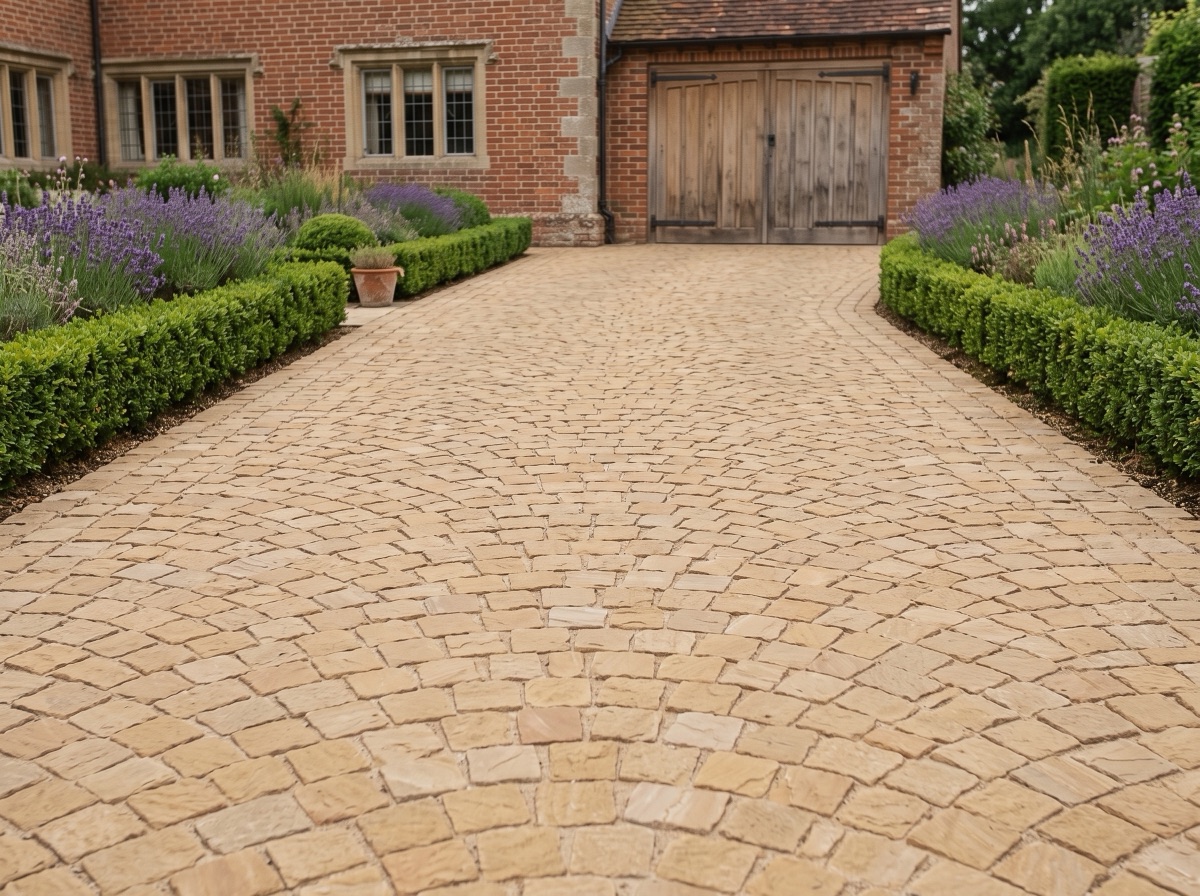
The main UK driveway surfaces are block paving, porcelain, natural stone, resin-bound, gravel, imprinted concrete and tarmac. Gravel is cheapest; block and porcelain lead on looks and repairability. Over 5m² of impermeable front-garden paving needs planning permission unless it drains to a permeable area.
A driveway has to do two jobs a patio never does: carry a car (1.5–2+ tonnes concentrated on four contact patches) and handle rainwater legally. Those two constraints — build-up strength and drainage — decide which surfaces make sense long before looks come into it. Here are the options that work in the UK, with honest pros and cons.
First, the rule everyone forgets: drainage and planning
In England, paving more than 5m² of a front garden with an impermeable surface requires planning permission — unless the water drains to a permeable area (lawn, border, soakaway) or you use permeable paving. It's why resin-bound, gravel and permeable block systems have grown so fast. Design the water's route before you choose the surface.
Block paving
Concrete or clay blocks on a screeded laying course. Endlessly repairable (lift and relay individual blocks), huge pattern choice, and permeable versions exist. Joints need re-sanding periodically and weeds will exploit neglected joints (prevention guide).
Porcelain paving
The contemporary premium look — batch-consistent colour, no sealing, stain-resistant, easy to keep clean. On a driveway porcelain must be specified and bedded for vehicle loads: either 30mm slabs on a properly built base, or 20mm bonded onto a reinforced concrete slab — this is a design decision, not an afterthought (see the thickness guide). Choose an anti-slip finish (anti-slip range, R-ratings explained).
Natural stone setts and slabs
Granite or sandstone setts are the heritage option — genuinely beautiful, extremely durable, and repairable like block paving. Full-size natural stone slabs on a driveway need generous thickness and a full mortar bed on a substantial sub-base. Indian sandstone cobble setts (like the Kandla Grey 100×100 setts at roughly 40–60mm thick) suit edgings, borders and aprons as well as whole surfaces.
Resin-bound surfacing
Aggregate mixed with clear resin and trowelled seamless — permeable (usually no planning issue), smooth for pushchairs and wheelchairs, and modern-looking. It needs a sound sub-base or existing slab beneath, professional installation, and quality varies enormously with the installer; UV-stable resin matters if you don't want it yellowing.
Gravel
The cheapest usable driveway and the easiest DIY: permeable, instantly smart with a shingle top-up, and a good burglar alarm underfoot. It migrates (gravel grids largely fix this), needs raking back, and isn't ideal on slopes.
Pattern-imprinted concrete
Poured concrete stamped and coloured to imitate blocks or stone. Seamless and weed-free, but it cracks like any slab, repairs never colour-match, it needs resealing every few years, and it's impermeable — so drainage design is on you.
Tarmac
The workhorse: relatively cheap at scale, fast to lay, handles vehicles effortlessly. Aesthetically limited, softens in heat, and edges crumble without proper restraints. Best value on long or utilitarian drives.
Mixed-material designs
Often the smartest answer: a gravel or resin field with stone sett borders, porcelain apron strips at the entrance, or block paving parking bays inside a gravel court. Mixing lets you put the expensive material where eyes and tyres actually land — and a contrasting border lifts even a plain surface.
Quick chooser
- Lowest budget: gravel, then tarmac.
- Best repairability: block paving or setts.
- Most contemporary: porcelain or resin-bound.
- Permeable by default: gravel, resin-bound, permeable block.
- Kerb-appeal value: a well-detailed block, stone or porcelain drive with crisp edging beats any single "premium" material badly installed.
Sizing a surface? The coverage calculator converts your area into slabs and packs with a wastage allowance, and samples are the cheap way to check a colour against your brickwork before committing.
Work out your exact order in seconds
Our coverage calculator turns your patio size into the precise number of slabs and packs — 10% waste allowance included.
Free delivery, £0.98 samples, breakage guarantee
Every order ships free with no minimum spend. Order a £0.98 sample first, choose your delivery date, and if a slab arrives broken we replace it — no quibbling.
Frequently asked questions
What is the cheapest option for paving a driveway?
Gravel is the cheapest usable driveway surface, followed by tarmac at scale. Both are dramatically cheaper than block, stone or porcelain — the trade-off is looks and, for gravel, ongoing raking and top-ups.
What type of paving is best for a driveway?
There is no single best: block paving and stone setts win on repairability, porcelain (correctly specified at 30mm, or 20mm bonded to a concrete slab) wins on looks and low maintenance, and resin-bound or gravel win on permeability and drainage compliance.
Do I need planning permission to pave my front garden?
In England, yes if you lay more than 5m² of impermeable surface that does not drain to a permeable area. Permeable surfaces (gravel, resin-bound, permeable block) or draining the run-off to a lawn, border or soakaway avoids the requirement.
Can porcelain paving be used on a driveway?
Yes, when specified for vehicle loads: 30mm porcelain on a properly constructed base, or 20mm porcelain fully bonded onto a reinforced concrete slab. Standard 20mm slabs on a mortar bed alone are for pedestrian use.
Which driveway adds the most value to a house?
Surveys and agents consistently point to a tidy, well-drained, low-maintenance driveway in keeping with the property — in practice a well-detailed block, stone or porcelain drive. Condition and detailing matter more than the specific material.