
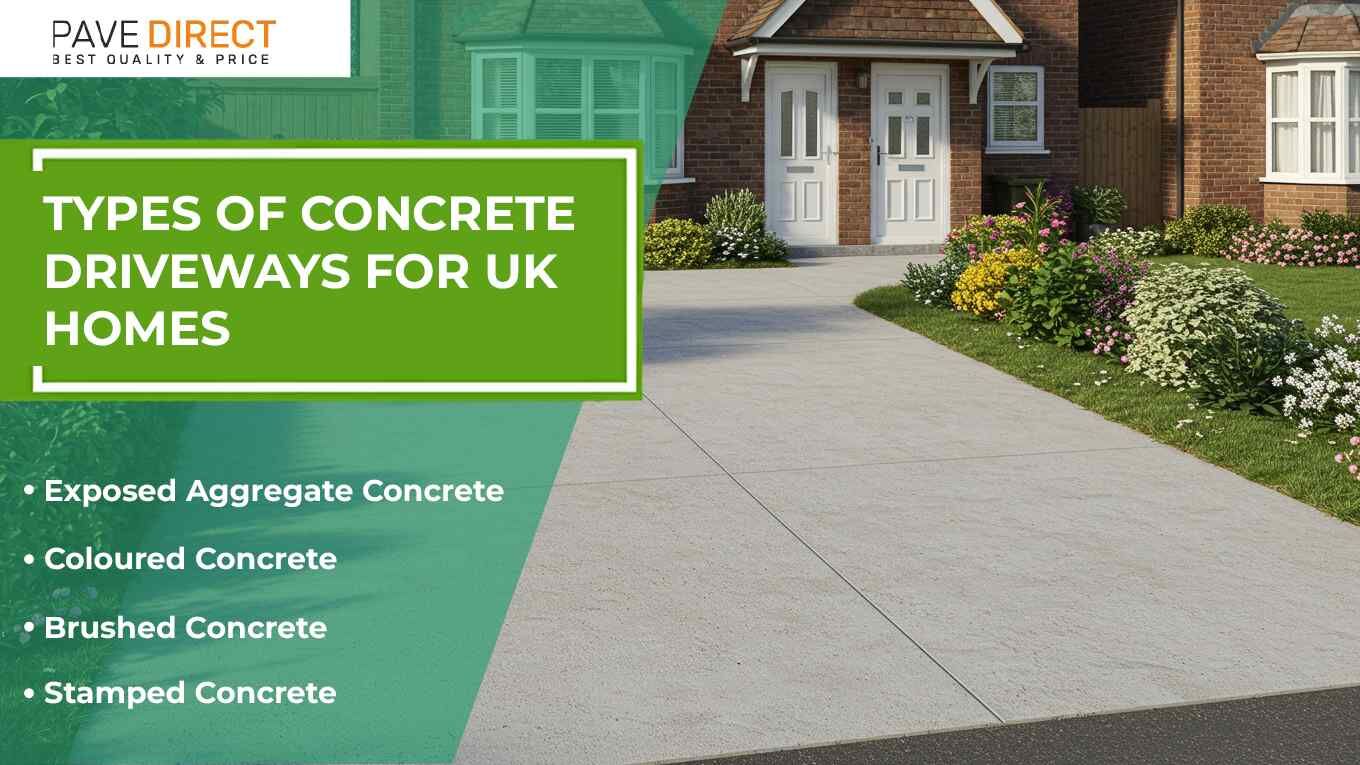
Your driveway takes them all: freeze-thaw cycles in winter, UV exposure in summer, mud and salt from vehicles. Concrete handles it really well while costing 40 to 50% less than block paving or natural stone.
This guide compares 8 concrete finishes so that you can choose based on your preference, budget, climate zones, and how much maintenance you are willing to put in throughout the year.
Quick note on materials: All the concrete types below can be paired with complementary materials, porcelain patio paving, natural stone borders, or block edgings, if you want to add visual interest. We'll mention where these work best as you read.
Types of Concrete Driveways
A concrete driveway is a popular choice in England due to its practicality and affordability. We have jotted down some of the most creative ways you can use to make your concrete driveway actually yours.
Plain Concrete Driveway

A plain concrete driveway is one of the most straightforward options for any homeowner. They offer a clean, clear, and functional surface to work with.
Cost: £25–£35/m²
Maintenance: Annual (sealing recommended)
Lifespan: 15–20 years (with sealing)
Best for: Budget-conscious homeowners, contemporary homes where "minimal aesthetic" is intentional, or rental properties
Reality Check:
Plain concrete will show every stain, crack, and tyre mark.
It's not ugly; it's honest. If you can live with a weathered look, it's your cheapest option.
This idea is common for homeowners who seek a budget-friendly driveway paving solution that is practical at the same time.
Pattern Imprinted Concrete (PIC) Driveways

PIC driveways are made by pouring and stamping concrete with patterns to mimic materials like brick, stone, or slate. But should you choose PIC driveways?
Cost: £50–£70/m² (initial) + £150–£250 every 3 years (resealing)
Maintenance: High – requires resealing every 2–3 years to prevent water penetration and sealant failure
Lifespan: 15–20 years if you stay on top of sealing; 5–8 years if you skip maintenance
Best for: Homeowners who want "stone look" at concrete price AND are willing to reseal regularly
Reality Check:
This is your highest-maintenance option.
Water finds cracks in the pattern lines. If you skip one reseal cycle, degradation accelerates.
Budget the full 15-year cost upfront: initial + (5 reseal cycles × £200) = true cost ~£1,700–£2,000 total for 40m².
If you are a homeowner in the UK, desiring a driveway with the appearance of natural materials and the least maintenance, this idea is for you.
Exposed Aggregate Concrete Driveways

You can achieve this look by exposing the small natural stones within the concrete. It offers a distinct texture and decorative finish.
Cost: £40–£60/m²
Maintenance: Moderate – annual jet-wash, reseal every 5–7 years (optional but extends life)
Lifespan: 20–25 years (with occasional sealing); 15–20 years (without)
Best for: Homeowners who want visual interest and durability without constant fussing. Works in all UK climates. Slip-resistant (safer in wet weather). Contemporary or traditional homes.
Reality Check
Exposed aggregate is the Goldilocks option, not the cheapest, not the fanciest, but reliable.
The exposed stones give it character that improves with age (not degrades like plain concrete).
Dirt and moss show less than on plain concrete. You'll want to jet-wash annually (satisfying to watch), but resealing isn't mandatory, just recommended.
This is the choice experienced homeowners make. If you're unsure what you want, pick this, and you won't regret it.
This idea is especially ideal for homeowners who are looking for a distinctive-looking driveway yet do not compromise on safety and slip resistance.
Brushed Concrete Driveways

Brushed or broom-finish concrete driveways are created by pouring concrete over the surface. The surface of the concrete is then brushed to create a texture, enhancing foot grip.
Cost: £28–£40/m²
Maintenance: Minimal – annual jet-wash, optional sealing every 5 years
Lifespan: 15–20 years (with occasional sealing); 12–15 years (without)
Best for: Homeowners prioritising safety (slip-resistant), modest budgets, or homes with heavy foot traffic. Anyone who wants "clean and functional" over "beautiful."
Reality Check
Brushed concrete splits the difference between plain and exposed aggregate. It's grip-tested (safer for kids, elder family members, wet conditions) and costs only £3–£5 more than plain.
It hides surface dirt better than plain concrete but not as well as exposed aggregate.
Visually, it's "understated"; some call it "boring," others call it "elegant restraint."
No sealing required, though it helps. This is your low-maintenance aesthetic option. Perfect for garden-facing driveways where slip resistance matters.
This idea is especially suitable for properties where safety and functionality are prioritised over decoration and visual appeal.
Coloured Concrete Driveways

Integrating pigments into the concrete mix allows it to have a variety of colours and look very beautiful. Coloured concrete driveways have certain benefits and drawbacks.
Cost: £45–£65/m² (pigment adds £8–£15/m²)
Maintenance: High: annual jet-wash, reseal every 2–3 years to maintain colour vibrancy
Lifespan: 15–20 years (if resealed); 8–12 years (colour fades without sealing)
Best for: Homeowners with specific colour schemes (e.g., matching home exterior, garden palette). Modern/contemporary architecture. Properties where visual cohesion matters.
Reality Check
Coloured concrete fades. This is not failure; it's nature. UV exposure bleaches pigments over time.
If you want true colour retention, seal it every 2–3 years.
Darker colours fade more noticeably than lighter shades.
Quality matters: cheap pigments look blotchy after pour; premium pigments fade evenly.
Budget the full cost: initial + resealing = £500–£800 for 40m² over 15 years.
Before committing, ask your contractor for a test panel on your site. Colour looks different in sunlight vs. shade.
Some homeowners love the weathered patina; others find it disappointing. Know yourself before you commit.
If you intend to have a personalised driveway, it will indeed deliver while complementing your property’s colour scheme.
Concrete Block Paving (CBP) Driveways

Concrete block paving involves laying individual concrete blocks in various patterns in your driveway. It offers a traditional and versatile look.
Cost: £50–£70/m² (individual blocks are cheaper; labour is higher)
Maintenance: Moderate – weed-picking between blocks (annual), jet-wash every 2 years, sand top-up as needed
Lifespan: 20–25 years (with maintenance); 15–18 years (if neglected)
Best for: Homeowners who like the option to replace individual blocks (if one cracks, you swap it, not re-pour). Anyone who prefers a "traditional" aesthetic. Properties with excellent drainage (blocks allow water through).
Reality Check
CBP looks great and is modular (fixable), but weeds are relentless. You'll spend time every spring pulling weeds from between blocks.
Sand washes out and needs topping up. If you hate maintenance, avoid CBP.
If you enjoy tinkering with your driveway, it's rewarding; you can change patterns, replace worn blocks, or refresh the whole look affordably.
More manual labour than poured concrete. Not a "set it and forget it" option.
The permeable version is eco-friendly, but standard CBP with sand joint is just "nice-looking with ongoing work”.
If you desire to create a customisable driveway with repair flexibility, concrete block paving is your go-to.
Here is a guide on how to lay block paving in your driveway: How To Lay Driveway Block Paving?
Permeable Concrete Driveway

This idea is to allow water to pass through. Permeable concrete helps in managing stormwater, reducing runoffs.
Cost: £60–£80/m²
Maintenance: High – annual jet-wash/pressure cleaning (clogging is the killer), inspect drainage annually
Lifespan: 15–20 years (if maintained); 8–10 years (if drainage clogs)
Best for: Eco-conscious homeowners, properties in flood-risk areas, or anyone required by Building Control to manage surface water (new driveways, renovations >5m²). Gardens with poor natural drainage.
Reality Check
Permeable concrete solves a real problem: heavy rain and flooding. It lets water pass through instead of pooling.
If the aggregate base clogs with silt/debris, it becomes a regular concrete driveway that traps water underneath (worse than sealed concrete). You must jet-wash annually to keep it draining. This isn't optional; it's structural.
If you live in a flood zone, it's worth it. If you don't, you're paying a premium price for a feature you don't need. Building Control often mandates this for new driveways; check before you decide.
True cost includes annual maintenance contracts (£150–£250/year for specialist cleaning). Think of it as "environmental responsibility" if you're committed, or "unnecessary hassle" if you're not.
If you are environmentally conscious or live in an area where rain keeps pouring and it snows all the time, permeable concrete driveways must be your top priority.
Polished Concrete Driveways

Polished concrete driveways are created when the concrete surface is polished, and a sleek, glossy finish emerges. This design is mostly used for modern houses.
Cost: £80–£120/m² (polishing labour is expensive)
Maintenance: Very high – regular sealing (every 6–12 months), constant cleaning, slip risk in wet weather
Lifespan: 15–20 years (surface only; polishing wears and needs re-doing every 5–7 years at £30–£50/m²)
Best for: Modern/luxury homes where driveway is a design statement. Homeowners willing to treat it like a floor, not a functional surface. Garages or covered driveways only (outdoor polished concrete is a liability).
Reality Check
Polished concrete looks stunning; sleek, glossy, contemporary. It's also slippery when wet, shows every footprint and tyre mark, and requires obsessive maintenance.
You're polishing a surface that gets walked and driven on daily. It will dull. You'll reseal. It'll still dull. Every raindrop and bird dropping is visible.
Winter slipperiness is a genuine safety issue (you'll need anti-slip treatment, which defeats the aesthetic).
Most homeowners regret polished concrete driveways within 3 years.
It belongs in climate-controlled garages or interior showrooms, not outdoor UK driveways. Unless you're genuinely committed to high-maintenance luxury, avoid this. It's the driveway equivalent of a white leather sofa: beautiful in theory, impractical in reality.
They are ideal for houses with a modern appearance. By applying this design, you create a minimalistic and sophisticated driveway look.
Disclaimer: Polished concrete is the premium option that often disappoints because homeowners underestimate the maintenance burden and slip hazard.
For more Driveway Paving Ideas, explore 15 Top Paving Ideas for Driveways
Choosing the Right Concrete Driveway for Your Home
If you are selecting a concrete driveway, you must consider the following factors first:
Budget
If you want a more budget-friendly option, plain and brushed finishes are more affordable, while decorative options like PIC and coloured concrete are expensive.
Aesthetic Preferences
You should choose a style that goes with your overall home architecture and landscaping.
Maintenance
You should choose a design that requires the amount of attention you are willing to give. Some finishes need more upkeep than others.
Environmental Impact
Sustainable concrete designs like permeable concrete are better for water management and runoff. Such options also comply with local regulations. According to UK SuDS (Sustainable Drainage Systems) guidelines.
Your UK Region Matters
Where you live changes the concrete equation:
South East (London, Kent, Sussex): Low freeze-thaw risk. Plain concrete or PIC works fine.
South West (Devon, Cornwall, Somerset): High rainfall. Permeable or sealed concrete recommended.
Midlands & North West (Birmingham, Manchester, Liverpool): Freeze-thaw is aggressive (30–60 cycles/year). Exposed aggregate or brushed concrete outlasts PIC here.
Wales & Scotland: Worst climate for concrete. Expect faster degradation. Budget for reseal every 2 years, not 3.
Complementary Idea: Porcelain Edging
If you're choosing exposed aggregate or PIC, consider a porcelain paving edge trim (1–2 rows around the perimeter). It:
Creates a clean, intentional boundary (looks designed, not accidental)
Prevents grass/soil staining the concrete edge (keeps it looking fresh longer)
Works with any driveway type
Adds £8–£15/m² to your project cost
This is purely aesthetic; you don't need it. But if you want your driveway to look polished, it's worth considering.
You can also pair your standard concrete driveway paving with Kandla Grey porcelain patios to maintain the cohesive look.
Standards Reference:
If you want to integrate your porcelain paving slabs into your driveway design, consider combining them with concrete elements for a unique and stylish appearance. Pave Direct offers a wide range of Porcelain that you can pair with concrete products to help you achieve your desired look.
Finish | Initial Cost/m² | Maintenance/Year | Reseal Frequency | 20-Year Total Cost/m² |
Plain concrete | £25–£35 | £0–50 | As needed | £25–£100 |
Brushed concrete | £28–£40 | £0–50 | As needed | £28–£120 |
PIC | £50–£70 | £150–250 | Every 3 years | £150–£350 |
Exposed aggregate | £40–£60 | £50–100 | Every 5–7 years | £80–£150 |
Permeable concrete | £60–£80 | £100–150 | Every 2–3 years | £140–£250 |
Polished concrete | £80–£100 | £200+ | Ongoing | £300–£500+ |
Conclusion
So, What Should You Actually Choose?
If you want the lowest cost and don't mind a weathered look: Plain or brushed concrete, ~£30–£40/m². Reseal every 5 years.
If you want "nice looking" without constant maintenance: Exposed aggregate, ~£50–£60/m². Reseal every 5–7 years. This is the sweet spot.
If you want decorative pattern and can commit to resealing: Pattern-imprinted concrete, ~£70/m² + £200 every 3 years. High maintenance, but it looks great.
If you're eco-conscious or live in a flood-risk area: Permeable concrete, ~£70–£80/m². More maintenance, but it manages rainwater and reduces flooding risk.
Key takeaway: Your UK climate will demand more maintenance than you expect. Budget for it upfront, and your driveway will outlast the car parked on it.
FAQs About Concrete Driveway Paving
Which concrete finish will last longest with minimum maintenance?
Exposed aggregate concrete. It's slip-resistant (doesn't need resealing as often), hides dirt better than plain concrete, and lasts 15–20+ years with minimal fuss. Drawback: costs £15–£20/m² more upfront than plain or brushed concrete. If budget is tight, brushed concrete is your second choice—still slip-resistant, costs £5–£10/m² more than plain.
What concrete finish needs the least work?
Exposed aggregate, assuming you live in the South. It doesn't need resealing (unlike PIC), doesn't show stains (unlike plain), and is naturally slip-resistant. In the North/Wales, permeable concrete reduces puddling and algae. True maintenance-free doesn't exist—you'll want to jet-wash annually and seal any minor cracks—but exposed aggregate minimises surprises.
Will my concrete driveway crack in winter?
Concrete cracks from freeze-thaw cycles, especially Nov–March in northern UK. You can't prevent it entirely, but you can slow it down: choose a quality mix (don't cheap out), ensure good drainage (raised driveway = less standing water = less frost heave), and reseal cracks as they appear (£50–£100 per small repair). If you live in Manchester, Glasgow, or Wales, budget for more frequent cracks. If you're in the South, you'll see fewer.
Written by William James, Paving & Driveway Specialist
William has helped 500+ UK homeowners choose and maintain concrete driveways. His advice: pick the finish that suits your maintenance tolerance, not your aspirations. A poorly maintained PIC driveway looks worse than a well-maintained plain one.
Work out your exact order in seconds
Our coverage calculator turns your patio size into the precise number of slabs and packs — 10% waste allowance included.
Free delivery, £0.98 samples, breakage guarantee
Every order ships free with no minimum spend. Order a £0.98 sample first, choose your delivery date, and if a slab arrives broken we replace it — no quibbling.