
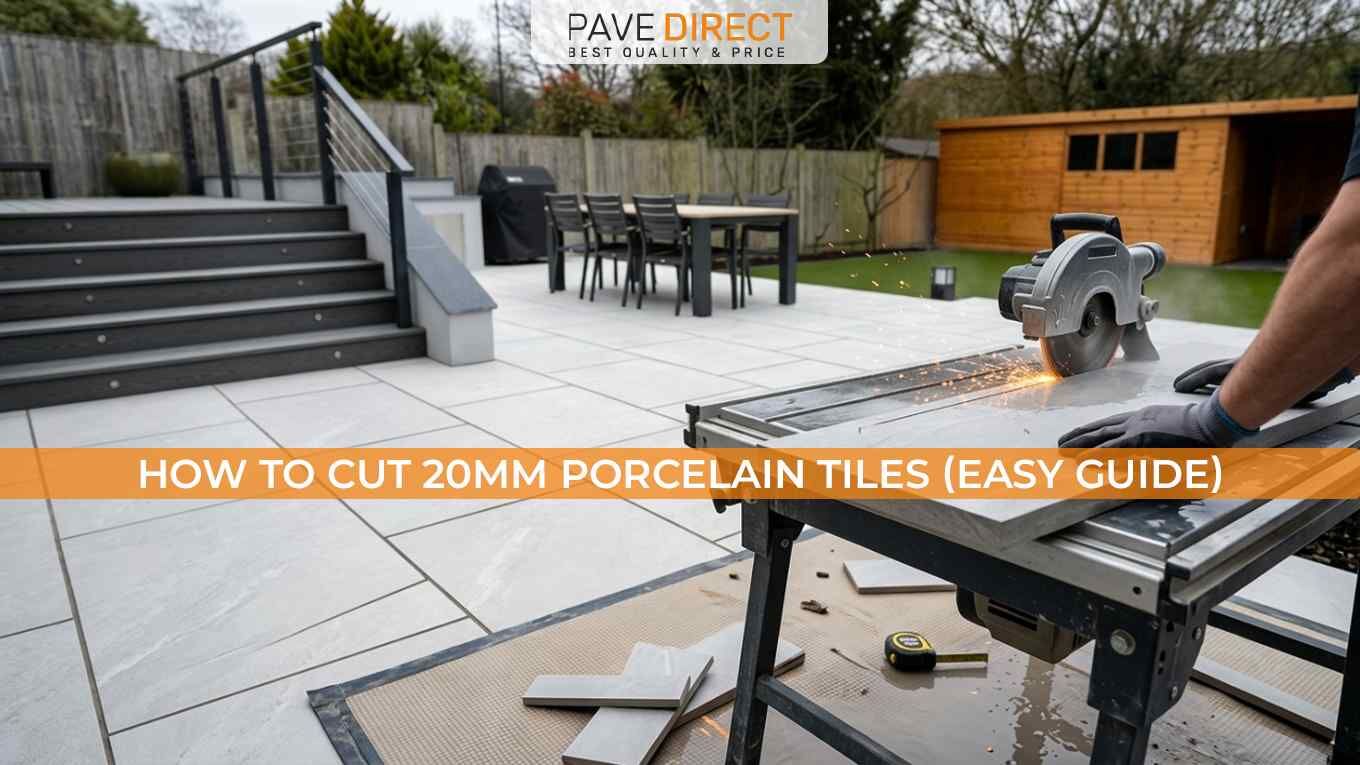
20mm porcelain tiles (also called 2cm porcelain slabs) are very popular for outdoor paving projects like patios, driveways, and garden paths. These outdoor porcelain tiles are strong, durable, and give a modern look.
But because they are thick, cutting 20mm porcelain tiles is harder than cutting standard tiles. If you cut them the wrong way, they can crack or chip. If you do it properly, you will get a clean and professional finish.
This guide will help you understand the right tools for cutting 20mm porcelain pavers, the best methods, and simple tips to cut them easily.
Why 20mm Tiles Are Harder to Cut
Most tiles are around 6–10mm thick. But 20mm outdoor porcelain paving slabs are much thicker, which means:
- They are harder to cut
- They create more heat while cutting
- They can crack or chip easily
- The blade wears out faster
That’s why using the right porcelain tile cutting tools is very important.
Tools You Will Need
Before you start cutting porcelain paving slabs, make sure you have:
- Diamond blade (made for porcelain, not ceramic)
- Angle grinder or wet tile cutter
- Pencil or marker
- Straight edge or ruler
- Safety goggles and gloves
- Ear protection
- Dust mask (or use water to reduce silica dust)
Method 1: Cutting with an Angle Grinder

An angle grinder for tile cutting is easy to use and good for small jobs or straight cuts.
Steps:
- Mark your cut line clearly
- Place the tile on a stable surface
- Wear your safety gear
- Make a light cut first (this helps avoid tile chipping)
- Cut slowly and smoothly
- Let the blade cool between cuts
Tips:
- Always use a diamond blade for porcelain tiles
- Don’t push too hard — let the tool do the work
- Try to keep the blade straight
Method 2: Using a Wet Tile Cutter (Best Method)

A wet tile cutter for porcelain is the best option for clean and accurate cuts. It is commonly used by professionals for cutting thick porcelain tiles.
Steps:
- Mark the tile
- Fill the machine with water
- Place the tile in position
- Slowly push the tile towards the blade
- Let the blade cut naturally
Tips:
- Water keeps the blade cool and reduces dust
- Always cut slowly
- Get help if the tile is large
Method 3: Two-Step Cutting Method

This method works if your machine allows you to adjust blade depth when cutting porcelain slabs.
Steps:
- First cut halfway (around 10mm)
- Then cut fully (20mm) on the same line
Why this works:
- Less pressure on the blade
- Reduces risk of cracking
- Gives a cleaner finish
Method 4: Manual Tile Cutter (Not Recommended)

Manual cutters are not strong enough for 20mm porcelain paving.
- Tiles will likely crack or break
- Not suitable for cutting thick porcelain tiles
Always use power tools instead.
Cutting Outdoor Porcelain Tiles
Outdoor porcelain paving slabs are usually 20mm thick and designed for heavy use. When cutting outdoor porcelain tiles:
- Use a wet saw for porcelain tiles if possible
- Support the whole tile properly
- Check your blade often
- Mark clearly (surface can be textured or anti-slip)
Safety Tips
When cutting porcelain tiles, safety is very important:
- Wear safety goggles
- Use a dust mask (important for silica dust)
- Keep hands away from the blade
- Never cut without securing the tile
- Let the blade cool down
Common Mistakes to Avoid
- Using the wrong blade → causes chipping
- Cutting too fast → causes cracks
- Not wearing safety gear → unsafe
- Using manual cutter → tiles break
- Dry cutting indoors → harmful dust
- Not supporting large slabs → tiles snap
FAQs
Can I use a normal tile cutter?
No, standard cutters are not strong enough for 20mm porcelain tiles.
Do I need a wet saw for cutting porcelain tiles?
A wet tile cutter gives the best results, but an angle grinder can also work.
Why is my blade overheating?
You may be cutting too fast, using the wrong blade, or not using water.
Can I cut curves in porcelain tiles?
Yes, but it’s harder. Use an angle grinder and cut slowly.
How long does a blade last?
A good diamond blade for porcelain can cut around 30–120 metres, depending on quality.
Final Thoughts
Cutting 20mm porcelain tiles is not difficult if you use the right tools and method.
Remember:
- Use a diamond blade for porcelain
- A wet tile cutter gives the best results
- Cut slowly and carefully
- Always follow safety rules
Visit Our Popular Colours of Porcelain Paving: Beige Porcelain Black Porcelain Grey Porcelain
Work out your exact order in seconds
Our coverage calculator turns your patio size into the precise number of slabs and packs — 10% waste allowance included.
Free delivery, £0.98 samples, breakage guarantee
Every order ships free with no minimum spend. Order a £0.98 sample first, choose your delivery date, and if a slab arrives broken we replace it — no quibbling.