
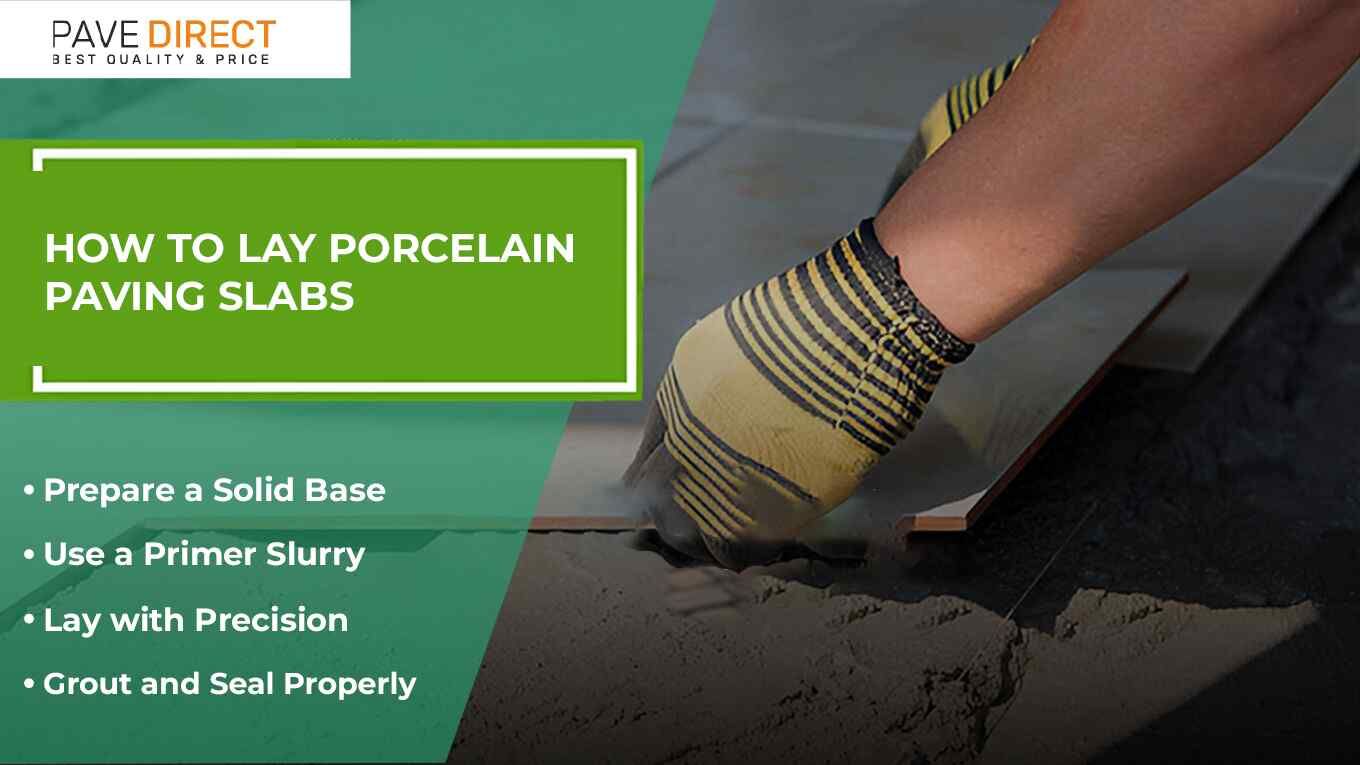
Porcelain paving slabs is a great choice for those seeking to produce a solid, modern open air space. Excellent choices for patios, pathways and driveway uses. Their sleek appearance, stain resistance and extreme weather resistant nature make them an ideal selection. Today i will guide about how to lay porcelain paving slabs.
Lay porcelain paving slabs for your outdoor spaces is not so easy task but with enough preparation and the right tools, you can do it yourself. Here's a guide to installing Porcelain paving slabs to give you confidence laying them.
Step 1. Gather Your Tools and Materials
All you need to do before you start is to make sure you have all the tools and needed materials ready for laying porcelain slabs.
Here’s a list of essentials:
- MOT Type 1 aggregate (for sub-base)
- Porcelain primer slurry
- Exterior tile adhesive
- Grout suitable for outdoor use
- Pointing trowel and rubber float
- Spirit level
- Spade, wheelbarrow, and rake
- Rubber mallet
- Cement mixer or bucket for mixing adhesive
Step 2. Now, Prepare The Ground
Begin by clearing out the area that the slabs are to lay. Take out existing turf, soil and debris, until the ground is level and firm. Then, once cleared, lay a sub base for porcelain paving of MOT Type 1 aggregate. The advantage here is that will give a stable foundation and will assist at drainage.
- Tip: Compacting the sub-base tightly can be done with a plate compactor for bigger surfaces. Try to sink the burns around 100mm (4 inches).

Step 3. Set The Bedding Layer
After the sub base has been compacted you now need to create a strong bedding layer. Use four parts of sharp sand to one part of cement. Distribute the mortar thinly over the prepared area, so that it will be 30-40mm (1.2-1.6 inches) thick.
- Tip: Water should be allowed to drain away from any buildings, so the surface should fall away (about 1 – 2%) from buildings.

Step 4. Apply Primer Slurry To The Slabs
Porcelain paving slabs are non porous and need to have a bonding primer applied to the mortar so that it will adhere properly. Apply a generous amount of porcelain primer slurry mix to the back of each slab and lay onto mortar.
- Tip: If you don’t apply this primer, then the slabs will most likely not bind properly and over time will start to shift or lift.
Step 5. Lay The Porcelain Paving Slabs
Place each porcelain slab at one corner to carefully position to the mortar bed and work your way across the area. Use a rubber mallet to tap them into place, but make sure they are level.
- Tip: Check that the slabs are laid evenly, and the right height, using a spirit level regularly. Space each slab 5mm to 10mm and leave to grout later.

Step 6. Grout The Joints
After the slabs are laid and the mortar has time to set (normally 24 to 48 hours) the joints can be grouted. Pick an outdoor grade grout that will tolerate the weather and flex with temperature changes.
- Tip: Push the grout into the joints with a rubber float, but firmly. As you work wipe away any excess grout with a damp sponge to avoid staining the surface of the porcelain.

Step 7. Seal and Finish
Porcelain slabs themselves do not need to be sealed but it is a good idea to seal the joints to keep water out and avoid the grout from slowly failing under the onslaught of water over time.
- Tip: Use the area only when the grout has fully cured. It takes a few days, depending on the weather as to when this happens.

Final Thoughts
Porcelain paving slabs are a beautiful long lasting outdoor option but laying them does need to be carried out with a little care and attention to detail but you are rewarded with beautiful outdoor space you can enjoy for years. It doesn’t matter how you plan on using your slabs, if you follow these steps you’ll know they have been laid well and they’re in great shape.
FAQs on Laying Porcelain Paving Slabs
1. Should I seal porcelain paving slabs?
Forget that, but it is recommended to seal the grout joints to guard against moisture.
2. How thick should mortar bed for porcelain paving slabs be?
Strong support can be had in 30-40mm (1.2-1.6 inches).
3. Why do we need a primer for porcelain paving slabs?
Porcelain is non porous and primer ensures its proper adhesion.
4. Can Porcelain Paving slabs be used on Driveways?
They need to be thick yes, and the sub base reinforced.
5. What grout should I use for porcelain paving you need to know?
Use grout designed for use outside, for weather resistant grout in temperature changes.
6. How long it takes for the mortar or grout to set?
Mortar takes 24-48 h0urs to get its set and the grout a few days to cure.
7. Can I lay porcelain paving slabs onto sand?
No, you require a secure foundation and that's a mortar mix.
Additional Reading!
Are 20mm Porcelain Paving Slabs Good For Gardens?
Why Are 20mm Porcelain Paving Slabs Ideal Choice For Outdoors?
How To Lay Porcelain Paving Slabs: Quick 7 Step Guide
Work out your exact order in seconds
Our coverage calculator turns your patio size into the precise number of slabs and packs — 10% waste allowance included.
Free delivery, £0.98 samples, breakage guarantee
Every order ships free with no minimum spend. Order a £0.98 sample first, choose your delivery date, and if a slab arrives broken we replace it — no quibbling.