
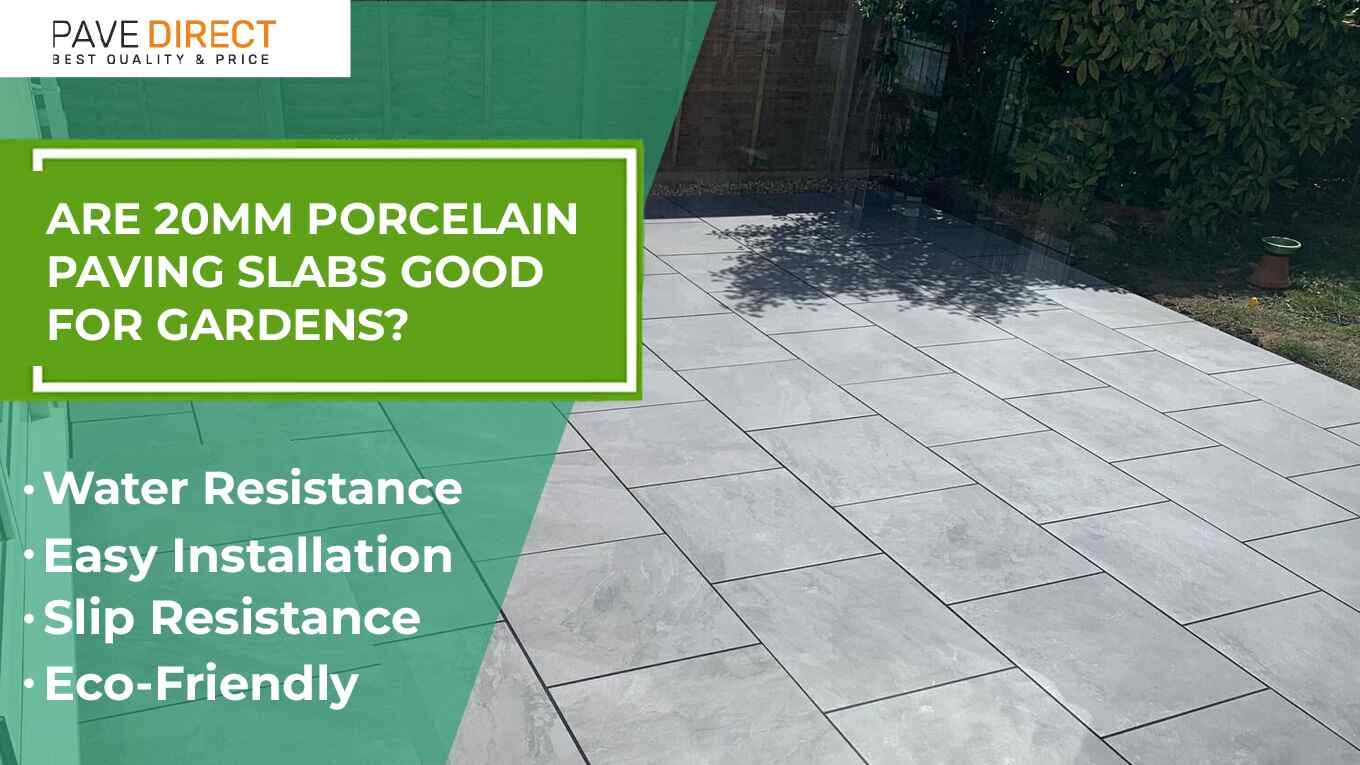
Is redesigning your garden proving to be a challenge? Choosing the right paving can make all the difference. Outdoor Porcelain paving has become one of the most reliable outdoor tile choices for modern British gardens, thanks to its weather resistance, anti-slip texture, and long-lasting finish.
At Pave Direct, we’ve helped countless homeowners find the perfect paving solutions for their patios, paths, and terraces. Among the most popular choices is our 20mm porcelain paving, known for its ideal thickness, strength, and outdoor performance. Whether you’re updating a small patio or transforming a large outdoor space, this guide will help you understand why porcelain paving slabs are a smart choice for UK gardens.
This blog contains information regarding:
1. Natural Stone vs. Porcelain Paving for Garden Patios
2. Preparing Your Garden Base for Porcelain Tiles
3. Key Benefits of Using 20mm Porcelain Paving Slabs
Natural Stones vs Porcelain Paving Slabs - Which to Prefer
While choosing tiles for outdoor spaces like a garden, homeowners mostly get confused between traditional natural stone pavings such as sandstone, granite, and limestone, and porcelain paving slabs. Natural stone paving is valued for its authentic texture, natural coolness underfoot, and eco-friendly composition. In contrast, porcelain paving is non-porous, stain-resistant, and far easier to maintain.
While natural stone needs regular sealing to protect against algae and frost damage, porcelain paving retains its finish and colour for years with minimal upkeep, making it a more practical choice for modern UK gardens..
If you love the earthy charm of natural stone but want something low-maintenance, Travertino Grey Porcelain Paving captures that same natural beauty while resisting moss, stains, and fading. You get the functionality and durability porcelain is known for, without constant upkeep.
7 Steps to Prepare Your Garden for Porcelain Paving Slabs
Preparing your garden for paving slabs involves several key steps to ensure a stable, level, and durable base for your paving. Here's a simple guide:
Clear the Area:

Remove any grass, plants, rocks, or debris from the area where you plan to lay the slabs.
Excavate the Ground:

Dig down to a depth of about 50-100mm (depending on the thickness of your slabs), ensuring you account for both the base layer and the slabs' thickness.
Compact the Subsoil:

Use a compactor to level and compact the soil to create a solid foundation. This helps prevent shifting or settling later.
Add a Base Layer:

Lay a layer of crushed stone or gravel (around 40-50mm), then compact it. This helps with drainage and stability.
Install a Sand or Mortar Bed:

Spread a layer of sharp sand or a mortar mix over the compacted base to create a smooth, level surface for the slabs.
Level the Surface:

Ensure the surface is even using a spirit level. This step is crucial to prevent uneven paving and water pooling.
Mark the Layout:

Before laying the slabs, plan and mark the layout of your paving. This ensures a neat and organized installation.
Benefits of 20mm Porcelain Paving Slabs
Wondering what makes 20mm porcelain paving so special for patios and gardens? Let’s look at how this modern paving solution delivers strength, beauty, and long-term performance outdoors.
Blending Indoor and Outdoor Spaces with Porcelain Paving
Wouldn’t it be wonderful to have garden paving that matches your indoor tiles perfectly? Porcelain tiles are immensely popular for interior decor and are available in a wide range of designs.
If you’re looking to create a seamless transition between indoors and outdoors, light-toned slabs such as Volkas Bianco Porcelain Paving help achieve a bright, cohesive look that flows beautifully from your interior to your patio.
Stylish Design Choices
20mm porcelain paving slabs are available in a wide range of styles to suit different garden looks. Whether you want something bright and elegant or rich and earthy, there is a design that fits every outdoor space.
If you love a natural finish, Rustic Copper Slate and Travertina Gold offer subtle variation and a hint of rustic charm. For a more modern appeal, Dunestone Grey and Anthracite bring a clean, contemporary tone that pairs well with minimalist furniture and garden features. Those looking for a luxurious statement can explore Volkas Bianco or Calacatta Marble Effect, both offering a refined marble-like appearance that feels timeless.
Each design has its own personality. Light shades can make smaller patios feel open and bright, while darker tones create a striking contrast that works beautifully in larger, landscaped areas.
If you’re still exploring creative ways to style your garden, take a look at our Top Garden Flooring Tile Ideas for more inspiration on colours, textures, and layout combinations.
Durability and Easy Maintenance
Porcelain paving is designed to withstand the demands of outdoor living without losing its appearance. Pave Direct’s 20mm porcelain slabs come with an R11 anti-slip rating, ensuring steady footing even in wet conditions. Their dense, non-porous surface makes them resistant to scratches, fading, and water absorption, meaning they don’t need sealing and are simple to clean.
For example, Kandla Grey Porcelain Paving combines a timeless stone look with modern durability. Its clean, contemporary finish suits almost any garden style, while its hard-wearing surface makes it ideal for patios, pathways, and dining areas that stay beautiful through every season.

Frost Proof and Weather Resistant
20mm outdoor porcelain paving is built to handle the British weather. With a water absorption rate below 0.5%, it won’t crack or warp in rain or frost. The Tile Association (TTA) confirms that porcelain tiles within this range are frost-resistant and ideal for outdoor use. Their dense, non-porous surface resists algae growth and keeps the colour bright, so your patio stays clean and beautiful all year round with minimal effort.
Wrapping Things Up
We’ve explored the key features and benefits of 20mm porcelain paving slabs and why they are a smart choice for garden patios compared to other options. With their durability, low maintenance, and stylish designs, these slabs offer a practical and elegant solution for UK gardens.
Ready to transform your outdoor space? Explore our full range of 20mm porcelain paving slabs at Pave Direct to find the perfect fit.
Visit Our Populer Coulors of Porcelain Paving: Beige Porcelain Black Porcelain Grey Porcelain
Frequently Asked Questions!
1. Why do my porcelain tiles keep cracking when I cut them?
Porcelain is a dense and hard material, so improper cutting can lead to cracks. Use a wet tile saw or bridge cutter for clean, precise cuts. Always follow manufacturer recommendations and take safety precautions when cutting 20mm slabs.
2. Can you put porcelain tile directly on concrete?
While it’s technically possible, a stable and level base is essential for long-lasting results. For outdoor spaces, we recommend preparing the ground with a compacted base layer and sand or mortar bed to prevent shifting and water pooling.
3. Does porcelain break easily if dropped?
Porcelain is highly durable but can chip or crack if heavy objects fall on its edges. 20mm outdoor slabs are thicker and more resistant than standard indoor tiles, making them suitable for patios, walkways, and driveways.
4. What thickness do porcelain tiles come in?
Outdoor porcelain paving slabs are available in multiple thicknesses, typically 20mm, 16mm, or 12mm. 20mm slabs are ideal for gardens, patios, and driveways due to their strength and durability.
5. Are 16mm porcelain tiles good for outdoor use?
16mm tiles can work for lighter traffic areas such as garden pathways or patio seating zones. However, for high-traffic areas or driveways, 20mm porcelain slabs are recommended to ensure longevity and structural integrity.
6. What is the 3-4-5 rule for tiling?
The 3-4-5 rule is a simple method to ensure your paving layout is square and aligned. Measure 3 units along one edge, 4 units along the perpendicular edge, and 5 units along the diagonal. This helps avoid uneven or skewed tile placement.
7. Can porcelain tiles be used on sloped surfaces?
Yes, but proper slope design is important for drainage and safety. Ensure the slope is consistent and that anti-slip 20mm porcelain slabs with an R11 rating are used to prevent slipping in wet conditions.
8. What are the environmental impacts of porcelain paving?
Porcelain production requires high temperatures and energy, which increases its carbon footprint compared to natural stone. On the positive side, porcelain is highly durable and low-maintenance, which reduces replacement frequency and long-term environmental impact.
Additional Reading!
Choosing the Best Outdoor Floor Tiles for Home Exterior
Indian Sandstone Vs Porcelain: Which Paving is Right for You?
Work out your exact order in seconds
Our coverage calculator turns your patio size into the precise number of slabs and packs — 10% waste allowance included.
Free delivery, £0.98 samples, breakage guarantee
Every order ships free with no minimum spend. Order a £0.98 sample first, choose your delivery date, and if a slab arrives broken we replace it — no quibbling.