
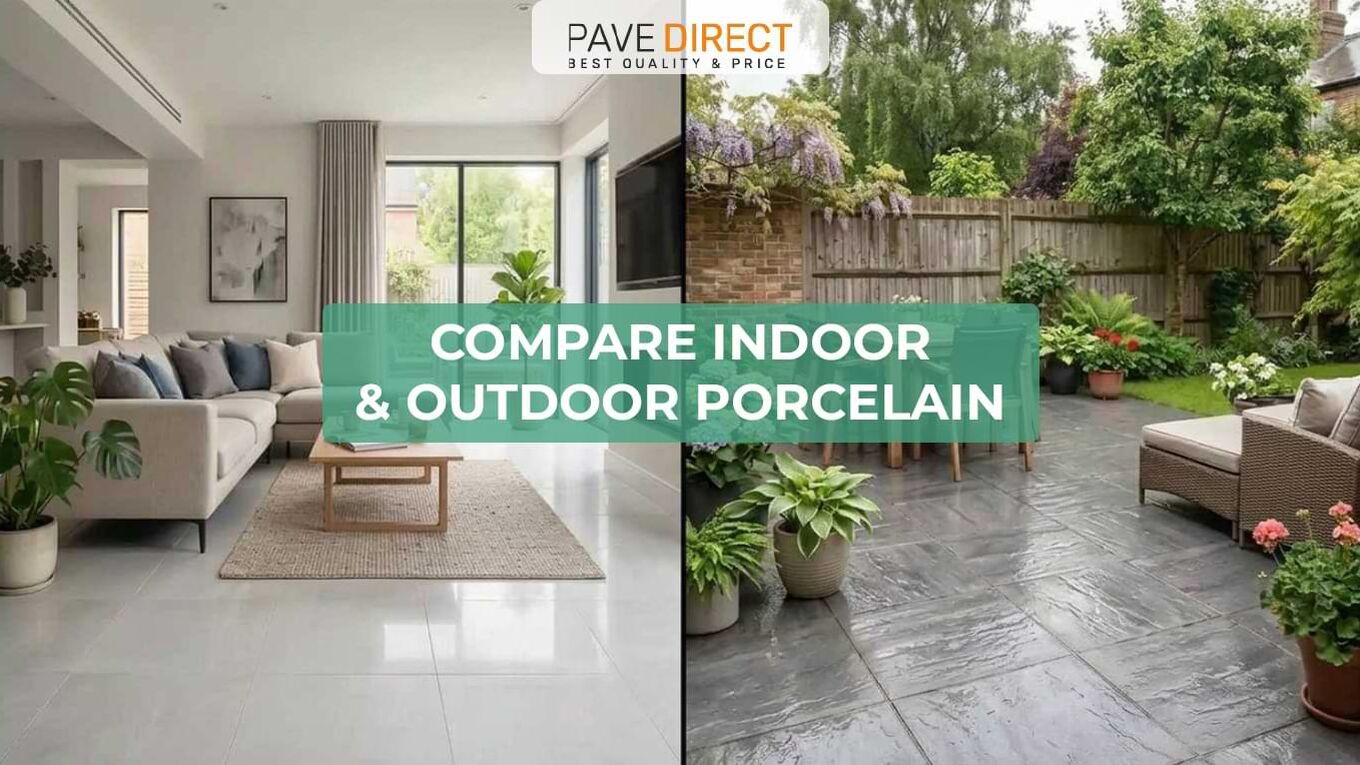
At a glance, indoor and outdoor porcelain tiles can look almost identical. Many UK homeowners assume they’re interchangeable, until problems start appearing outside.
The key difference isn’t the material itself, but how each tile is engineered. Indoor tiles are designed for stable, dry conditions, while outdoor porcelain slabs are built to cope with rain, frost and ground movement.
This distinction matters more in the UK than in warmer climates. As highlighted by Ideal Home, outdoor surfaces here need to handle constant moisture and seasonal temperature swings, which puts extra stress on paving materials.
Key Differences at a Glance
Feature | Indoor Tiles | Outdoor Tiles |
Thickness | 8–10mm | 16–20mm (20mm recommended) |
Finish | Smooth, polished | Textured, matte |
Slip Rating | R9–R10 | R11–R13 |
Frost Resistance | Not rated | Class F2 |
Best For | Kitchens, bathrooms | Patios, paths, driveways |
These differences aren’t just technical,they directly affect safety, durability, and long-term cost.
Thickness of Porcelain Paving : Why It Matters More Than You Think
Thickness is often overlooked, but it’s one of the main reasons outdoor installations fail.
Indoor tiles at 8–10mm work perfectly well inside because the surface beneath them is stable and protected. Outdoors, however, the ground can shift slightly over time, and tiles are exposed to weight, moisture and temperature changes.
That’s why outdoor porcelain is typically 20mm thick. The added depth helps distribute weight evenly and reduces the risk of cracking or movement. For detailed knowledge on porcelain slabs thickness, check out our outdoor porcelain paving thickness guide
From our experience working with UK paving projects over the years, one of the most common issues we see is indoor tiles being used outside to save cost only to need replacing within a few winters.
Slip Ratings: A Practical Safety Consideration
Slip resistance becomes a real concern in UK gardens, especially during autumn and winter.
Porcelain tiles are rated using an R scale:
R9–R10: Suitable for indoor use
R11: Recommended minimum for patios
R12–R13: Higher grip for slopes or commercial areas
An R10 tile may feel fine on a dry summer day, but once rain, algae or frost comes into play, it can quickly become slippery.
Design platforms like Houzz often highlight tile slip ratings for outdoor as one of the top considerations for outdoor flooring,something many homeowners only realise after installation.
Frost Resistance: Why UK Weather Changes Everything
One of the biggest differences between indoor and outdoor porcelain is frost testing.
Outdoor tiles are rated Class F2, meaning they’ve been tested to withstand repeated freeze–thaw cycles. This is essential in the UK, where temperatures frequently drop below zero overnight.
If a tile isn’t designed for this, moisture can freeze inside or beneath it, leading to cracks over time.
In practical terms, this means a tile that performs perfectly in a kitchen for decades may start failing outdoors within a couple of years if it isn’t frost-rated.
Can You Use Indoor Tiles Outside?
In most cases, it’s not recommended.
Indoor tiles typically:
Lack frost resistance
Are too thin for outdoor conditions
Don’t provide enough grip when wet
There are exceptions, such as fully covered areas with minimal exposure to weather, but even then, it’s important to check with your supplier. Most manufacturers won’t guarantee indoor tiles used externally.
For UK homeowners, the safer approach is simple: if it’s going outside, use outdoor-rated porcelain.
Can Outdoor Tiles Be Used Indoors?
Yes,and this is becoming more common in modern homes.
Outdoor porcelain tiles can work well indoors, particularly in spaces that see more wear or moisture, such as:
Hallways and entrances
Kitchens
Bathrooms
Utility rooms
They’re also a popular choice for open-plan layouts where the flooring continues from inside to outside, creating a seamless look.
The trade-off is mainly aesthetic. Outdoor porcelain tiles tend to have a more textured finish and less shine compared to indoor tiles, but many homeowners prefer the practical benefits.
Installation: Where Many Projects Go Wrong
Even high-quality tiles can fail if they’re not installed properly.
A typical outdoor installation in the UK should include:
A solid, well-compacted sub-base
A slight slope for drainage
Full adhesive coverage (not spot fixing)
Exterior-grade grout
Movement joints to allow for expansion
In our experience, installation issues are just as common as product selection mistakes. Cutting corners here often leads to cracking, loose tiles, or drainage problems later on.
Cost: What to Expect in the UK
Porcelain tiles vary in price depending on finish, size and quality.
Typical ranges are:
Indoor tiles: £25–£50 per m²
Outdoor tiles: £30–£65 per m²
Installation: £40–£90 per m²
For a standard 20–30m² patio, most UK homeowners spend between £1,000 and £2,700 installed.
While outdoor porcelain can cost slightly more upfront, it often works out more economical long-term due to its durability and low maintenance.
How to Choose the Right Tile
If you’re unsure where to start, focus on these four factors:
1. Location
Outdoor areas require frost-rated, slip-resistant tiles. Indoor spaces don’t.
2. Traffic
Driveways or heavy-use areas need 20mm porcelain tiles.
3. Exposure
Any UK outdoor setting should be able to handle moisture and freezing temperatures.
4. Finish
Choose based on appearance, but don’t compromise on safety outdoors.
Maintenance: What’s Actually Required?
One reason porcelain is so popular is its low maintenance.
Outdoor tiles only need occasional cleaning to remove dirt and algae, while indoor tiles can be maintained with regular sweeping and mopping.
Unlike natural stone, porcelain doesn’t need sealing, which saves both time and ongoing cost.
The Bottom Line
Indoor and outdoor porcelain tiles may look similar, but they serve different purposes.
For UK homes:
Use 20mm, R11+, frost-rated tiles outdoors
Use 8–10mm tiles indoors
For a continuous indoor-outdoor look, use outdoor tiles throughout
Taking the time to choose the right specification upfront can prevent costly mistakes later on.
FAQs
Are outdoor porcelain tiles waterproof?
They have very low water absorption, but proper installation and grouting are still essential.
Can porcelain tiles be used on driveways?
Yes, but only 20mm outdoor tiles with a suitable base.
Do they get slippery?
Not if you choose the correct slip rating (R11 or above for outdoor use).
Porcelain vs ceramic outdoors?
Ceramic tiles absorb more water and aren’t suitable for UK outdoor conditions.
Work out your exact order in seconds
Our coverage calculator turns your patio size into the precise number of slabs and packs — 10% waste allowance included.
Free delivery, £0.98 samples, breakage guarantee
Every order ships free with no minimum spend. Order a £0.98 sample first, choose your delivery date, and if a slab arrives broken we replace it — no quibbling.