
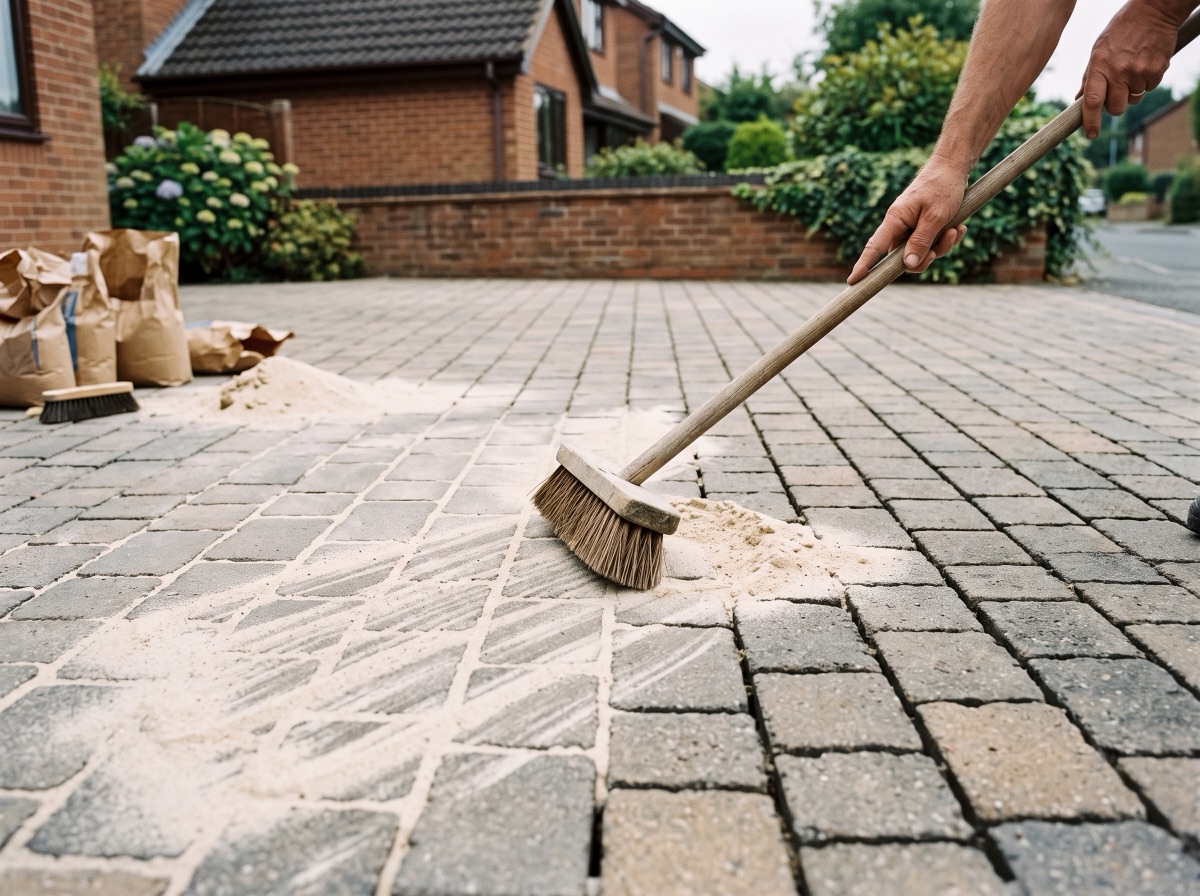
Re-sand block paving with kiln-dried sand on a completely dry surface: clean the joints out, brush the sand in diagonally, compact it down, top up and sweep off the excess. Done every year or two (and after every pressure wash), it keeps blocks locked tight and weeds out.
Block paving is held together by the sand in its joints. That sand — not the blocks — transfers loads between neighbouring blocks and stops them rocking, creeping and chipping. Rain, pressure washing and ants slowly strip it out, so re-sanding every year or two (and after every pressure wash) is the single most valuable maintenance job a block drive gets.
Why kiln-dried sand and nothing else
Kiln-dried sand is fine, bone-dry silica sand that flows to the bottom of a narrow joint like water. Building sand, sharp sand or play sand are damp and coarse — they bridge halfway down the joint, hold moisture against the block edges and feed weed growth. The bags are cheap; there is no worthwhile substitute. (Paving slabs are different: their wider joints want mortar or jointing compound — see the grouting guide.)
What you'll need
- Kiln-dried jointing sand (roughly one 20–25kg bag per 8–12m², more if joints are empty).
- Soft brush for spreading; stiff brush or weeding tool for joint prep.
- Plate compactor with a rubber mat (ideal, hireable) or a heavy broom handle for tamping.
- Optional: joint stabilising sealer for after.
Step 1: Pick a dry day — genuinely dry
The paving, the joints and the forecast all need to be dry. Damp joints stop the sand flowing down, and rain within a few hours undoes the work. After washing the drive, leave at least 24–48 hours of drying before sanding.
Step 2: Clear weeds and old joint material
Pull or scrape out weeds, moss and compacted debris from the joints (a weeding knife or an L-shaped scraper is quickest), ideally down to 20mm or so. If weeds are the underlying problem, deal with them properly first — the weed prevention guide covers it.
Step 3: Clean the surface
Sweep the whole area, or pressure wash if the drive needs it — but remember a pressure wash empties the joints, which is exactly why re-sanding follows it. Wait for full dryness before the next step.
Step 4: Spread and brush the sand in diagonally
Tip small piles of kiln-dried sand across the area and sweep with a soft brush, working diagonally to the joint lines so the bristles push sand across and down into every joint rather than skating along them. Keep brushing until joints stop accepting sand.
Step 5: Compact and top up
Run a plate compactor (rubber-matted) over the area, or tamp along the joints — the vibration settles the sand to the bottom and reveals the air pockets. Brush more sand in, compact again, and repeat until the joints stay full to just below the chamfer of the blocks.
Step 6: Sweep off the excess
Sweep the surplus off the surface (bag it — it's reusable), leaving no sand film on the block faces, especially if you plan to seal.
Optional: seal to lock it in
A joint-stabilising sealer binds the top of the fresh sand, dramatically slowing wash-out, weed seeding and ant mining. Apply only to a fully dry, freshly sanded, clean surface per the product's coverage rates. The trade-off: resealing every few years and a slightly enhanced colour some people don't want.
Ongoing maintenance
- Top up joints annually and after every pressure wash.
- Treat weeds when they're seedlings, not established plants.
- Re-level any blocks that have sunk while you have the sand out — the same joint sand relocks them.
Work out your exact order in seconds
Our coverage calculator turns your patio size into the precise number of slabs and packs — 10% waste allowance included.
Free delivery, £0.98 samples, breakage guarantee
Every order ships free with no minimum spend. Order a £0.98 sample first, choose your delivery date, and if a slab arrives broken we replace it — no quibbling.
Frequently asked questions
What sand do you use for block paving joints?
Kiln-dried sand only — fine, completely dry silica sand that flows to the bottom of the narrow joints. Building sand, sharp sand and play sand are too damp and coarse, hold moisture and encourage weeds.
How much kiln-dried sand do I need for block paving?
As a rule of thumb, one 20–25kg bag covers roughly 8–12m² of standard block paving for a top-up — more if the joints are empty after pressure washing. Buy an extra bag; it keeps indefinitely if dry.
Can I pressure wash block paving after re-sanding?
Not straight away — you'll blast the fresh sand back out. Pressure wash first, let everything dry fully, then re-sand. If you seal the joints, let the sealer cure fully before any washing.
How do I stop sand washing out of block paving?
Compact the sand properly in layers so it's dense to the bottom of the joint, keep joints topped up, and consider a joint-stabilising sealer, which binds the surface of the sand against rain, washing and ants.
How often should block paving be re-sanded?
Check annually and top up every one to two years in normal use — plus every time you pressure wash, which strips the joints.