
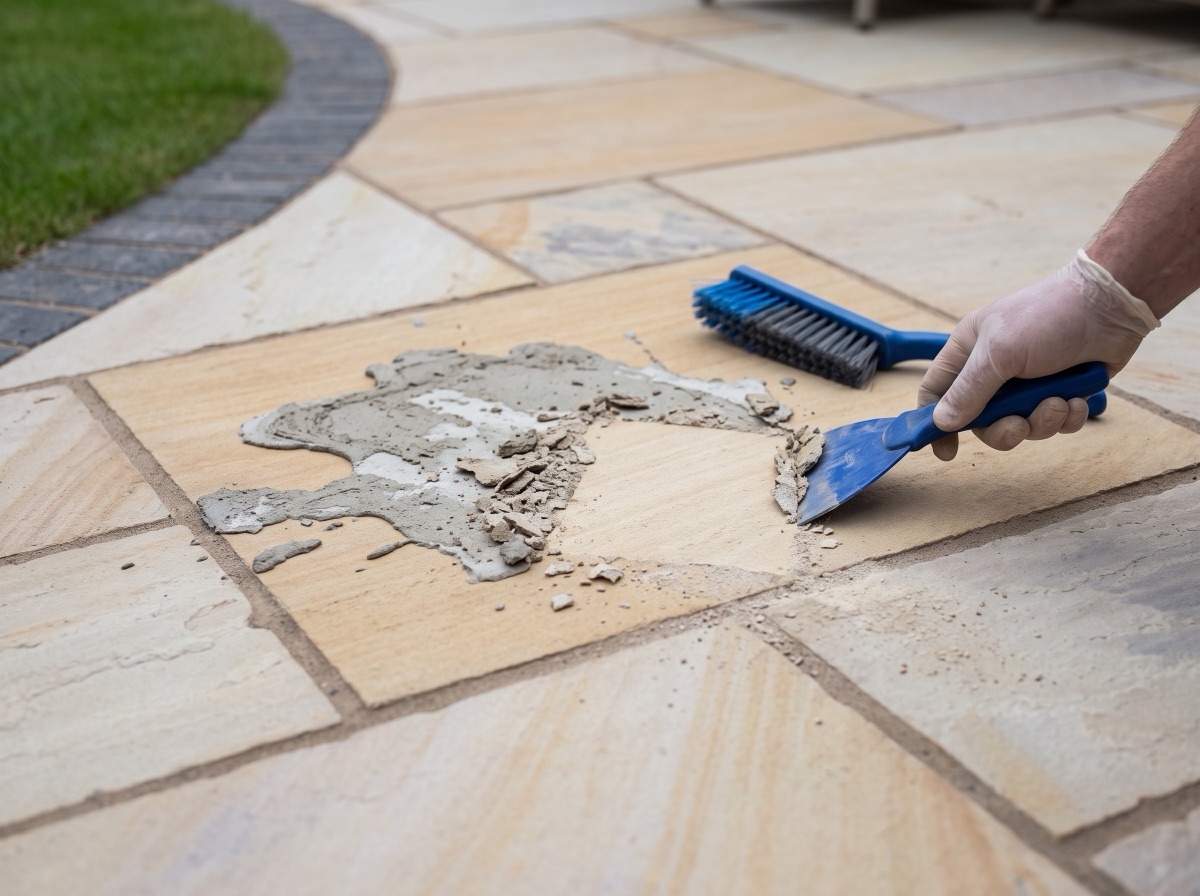
Scrape off the bulk mechanically with a wooden or plastic scraper, then dissolve the residue with a purpose-made cement remover — always test a hidden patch first. Acid-based products work fast on porcelain but can etch or stain natural stone, so match the chemical to the slab.
The safe sequence is mechanical first, chemical second. Scrape away the bulk of the dried cement with a wooden or plastic scraper, soften what's left with warm water, then treat the residue with a purpose-made cement remover matched to your slab material — testing an inconspicuous patch first. The material matters: porcelain shrugs off most cleaners, but acids can etch limestone and pull iron staining out of some sandstones.
Why cement stains happen
Most cement marks come from the laying job itself: mortar smears wiped across the face instead of lifted off, slurry tracked on boots, or jointing washed over the slabs in the rain. Fresh mortar lifts with a wet sponge in minutes — once it has cured for days it bonds hard, and that's when people reach for the wrong tools.
Know your slab before you choose a chemical
- Porcelain — dense and near-non-porous; tolerates acid-based cement removers well. Still test first, and keep the product out of the joints, which acid will attack.
- Sandstone — acid-sensitive in a different way: hydrochloric-acid products ("brick acid") can react with iron minerals and leave permanent rusty-brown staining. Use a cement remover explicitly rated for natural stone.
- Limestone and concrete slabs — both are calcium-based, and acid dissolves the slab surface along with the cement. Only stone-safe (acid-free or buffered) removers should touch them.
Step 1: Scrape off the bulk
Work a wooden scraper, plastic scraper or an offcut of timber under the edge of each lump and lift. On porcelain you can be reasonably assertive; on natural stone work gently and with the grain of the surface. Avoid metal chisels and wire brushes — both scar the face, and steel wool can leave rust spots.
Step 2: Soften with hot water
Soak the residue with hot water and let it dwell for ten minutes. Thin smears sometimes give up entirely at this stage with a stiff (non-wire) brush — the cheapest result you'll get all day.
Step 3: Test your remover on a hidden patch
Apply your chosen cement remover to an offcut or a slab edge that's out of sight, leave it per the label, rinse, and let it dry fully before judging. This one step prevents nearly every horror story — etching, bleaching and iron staining all show up in the test patch.
Step 4: Apply the cement remover
Working on a dry-ish surface, apply the remover to the stain (not the whole patio), let it dwell per the manufacturer's instructions, and agitate with a stiff nylon brush. You'll see cement fizz and soften as it reacts. Heavy deposits may need a second application rather than a stronger mix.
Step 5: Rinse thoroughly and repeat if needed
Rinse the area generously with clean water so no residue is left to dry into a new bloom — and keep runoff away from lawns and borders. Stubborn spots: repeat steps 4–5 rather than escalating to something aggressive.
What not to use
- Brick acid on sandstone, limestone or concrete — etching, bleaching and iron staining risks outweigh the speed.
- Angle grinders or aggressive sanding — they leave a polished or scarred patch that reads worse than the original stain.
- Undiluted vinegar as a strategy — its mild acidity can lighten a thin film on porcelain, but it's too weak for real deposits and still shouldn't be used on calcium-based stone.
Avoiding cement stains next time
Lift mortar crumbs off the face as you lay rather than wiping them across the surface; sponge splashes off before they cure; and joint with a brush-in compound in dry weather — see how to grout paving slabs. Sealing natural sandstone (an impregnating sealer, once the paving is clean and dry) makes future mortar and stain removal far easier. Porcelain doesn't need sealing — one reason it's become the default choice; browse the porcelain range or read the material comparison.
Work out your exact order in seconds
Our coverage calculator turns your patio size into the precise number of slabs and packs — 10% waste allowance included.
Free delivery, £0.98 samples, breakage guarantee
Every order ships free with no minimum spend. Order a £0.98 sample first, choose your delivery date, and if a slab arrives broken we replace it — no quibbling.
Frequently asked questions
How do you remove dried cement from paving slabs?
Scrape off the bulk with a wooden or plastic scraper, soften the residue with hot water, then apply a purpose-made cement remover matched to the slab material — acid-tolerant methods for porcelain, stone-safe removers for sandstone, limestone and concrete. Always test a hidden patch first.
Does vinegar remove cement from slabs?
Only a very thin film, and only really on porcelain — vinegar is a weak acid. It should not be used on limestone or concrete (both calcium-based) and is not worth the risk on sandstone. A proper cement remover is more effective and more predictable.
Can I use brick acid on paving?
On porcelain, cautiously and away from the joints — but never on sandstone, limestone or concrete slabs. Brick acid (hydrochloric acid) etches calcium-based surfaces and can draw permanent iron staining out of sandstone.
How do I clean mortar off natural stone without acid?
Mechanical removal (wood or plastic scrapers), hot water and a stiff nylon brush, then an acid-free or stone-safe cement remover, tested on a hidden patch first and rinsed thoroughly.
Will a pressure washer remove dried cement?
Rarely — cured cement bonds harder than the pressure a domestic washer safely delivers, and concentrating the jet close enough to cut it will also scar the slab surface and blast out jointing. Use it for rinsing, not removal.