
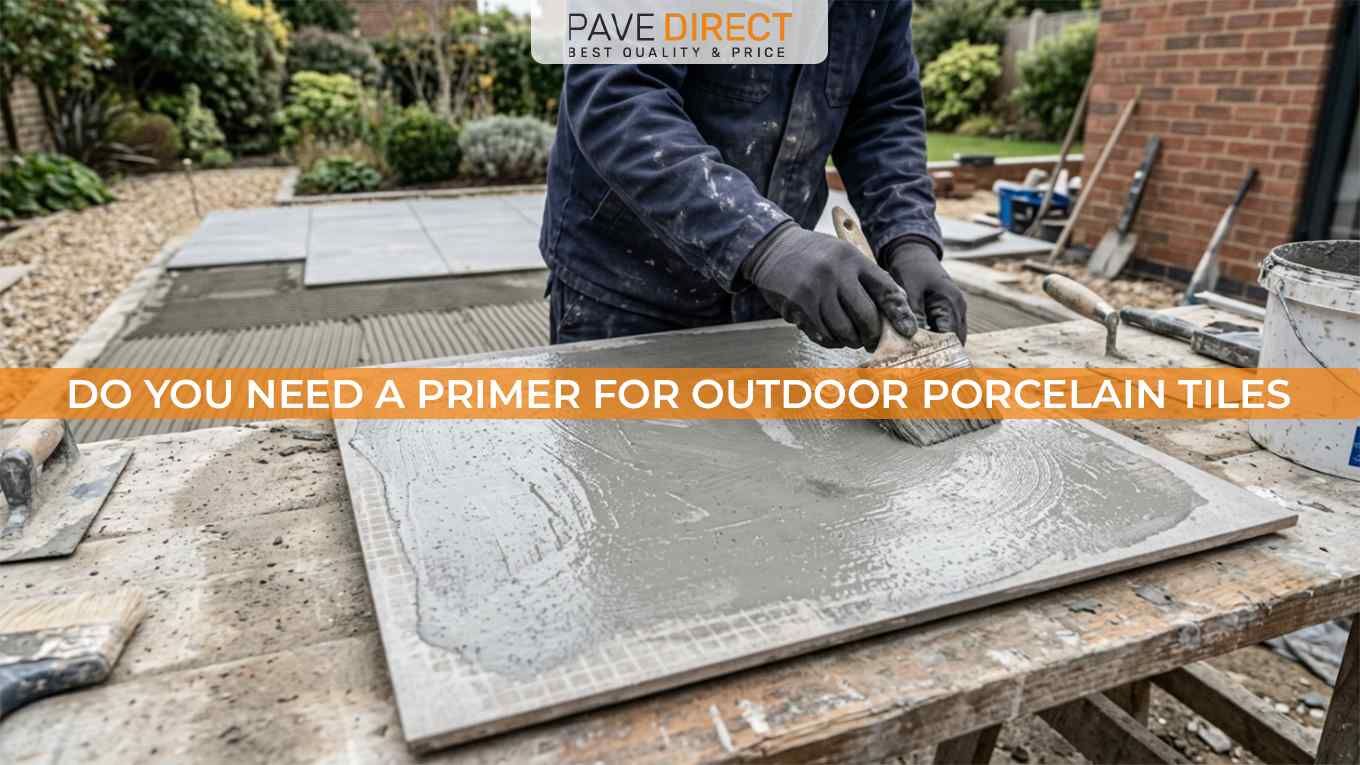
Outdoor porcelain tiles have become one of the most popular choices for patios, pathways, and garden features across the UK. Their sleek finish, low porosity, and resistance to staining make them ideal for modern landscaping. But one question continues to surface among homeowners and even some professional installers:
“Do you really need to use a primer when laying outdoor porcelain tiles?”
At Pave Direct, we’ve been supplying premium porcealin paving products since 1999. Based in Peterborough, we’ve helped thousands of customers, from trade professionals to DIY homeowners, build patios that last. With over 14 years of combined experience, we’ve seen firsthand how skipping primer can lead to costly failures.
This article explains why primer matters, when it’s essential, and how to apply it correctly to ensure your porcelain patio performs beautifully for years to come.
Outdoor Porcelain SlabsDiscover modern, durable and low-maintenance outdoor porcelain tiles perfect for patios and gardens. |  |
What Is Primer and Why Does Porcelain Need It?
Porcelain tiles are manufactured under high pressure and heat, resulting in an extremely dense material with less than 0.5% water absorption. This low porosity makes porcelain highly resistant to moisture, frost, and staining, all excellent qualities for outdoor use. However, it also creates a challenge during installation.
Unlike traditional paving materials like sandstone or concrete, porcelain has:
A smooth, factory‑pressed underside
No natural pores or texture for mortar to grip
Very low surface absorption
Because of this, mortar alone cannot bond securely to the tile. Without primer, the mortar bed and tile never form a strong connection. Over time, this leads to:
Loose or rocking slabs
Hollow‑sounding tiles
Cracks caused by movement
Tiles lifting during freeze–thaw cycles
Primer solves this by creating a bonding bridge between the tile and the mortar. It ensures full adhesion and long‑term stability, especially in the UK’s variable climate.
What Installers Say
Professional landscapers across the UK consistently report that 80–90% of porcelain patio failures they’re called to fix involve unprimed slabs. These failures often appear within the first 12–24 months, especially after winter.
At Pave Direct, we’ve seen this pattern repeatedly. Homeowners invest in high‑quality porcelain, follow most installation steps, but skip primer, often because they weren’t told it was necessary. The result? A patio that looks great for a few months, then starts to shift, crack, or lift.
When Is Primer Required?
Primer is essential in most outdoor installations, including:
1. Standard 20mm Porcelain Paving
This is the most common format for outdoor tiles. Every slab should be primed before laying.
2. Steps, Risers, and Edges
These areas experience more movement and require maximum adhesion.
3. Driveways Using Porcelain Tiles
Porcelain can be used on driveways, but only with a strong bond. Primer is non‑negotiable.
4. Full Mortar‑Bed Installations
If you’re laying slabs on a wet mortar bed, primer is required to ensure proper bonding.
5. Projects Using Porcelain‑Specific Adhesives
Even high‑performance adhesives work best with primer. It enhances grip and reduces the risk of failure.
If you’re planning a full installation, pairing primer with a full‑bed mortar method is the safest and most durable approach. For a complete walkthrough, see our guide:
How to Lay Porcelain Paving Slabs – 7 Step Guide
Are There Any Exceptions?
There are only a few cases where a primer might not be needed:
1. Pedestal or Raised Systems
Tiles sit on pedestals — no mortar, no primer required.
2. Factory‑Textured Backs
Some premium slabs have textured backs designed to improve grip. However, most installers still recommend priming for added security.
3. Indoor Installations
Some flexible adhesives bond well indoors, especially in low‑traffic areas. Outdoors, primer is still recommended due to exposure to moisture and temperature changes.
Even in these exceptions, using a primer is considered best practice. It adds a layer of protection and ensures long‑term performance.
How to Apply Primer (Step‑by‑Step)
Applying primer is quick and straightforward. Here’s how to do it properly:
Step 1: Mix the Primer
Most slurry primers come as a powder. Add clean water according to the manufacturer’s instructions and mix until smooth. The consistency should be similar to single cream.
Step 2: Coat the Back of Each Slab
Use a brush or roller to apply a thin, even layer of primer to the underside of the tile. Make sure the entire surface is covered.
Step 3: Let It Become Tacky
You don’t need the primer to dry completely. Allow it to become tacky; this usually takes a few minutes, depending on temperature and humidity.
Step 4: Lay Onto a Full Mortar Bed
Porcelain requires 100% full‑bed coverage. Spot‑bonding will cause failure. Spread mortar evenly and press the primed tile into place.
Step 5: Tap Into Place
Use a rubber mallet to bed the slab firmly. Check for level and alignment.
This small step adds only seconds per slab but dramatically improves long‑term performance. For more on installation methods, see:
Different Methods of Installing Outdoor Porcelain Paving
What Happens If You Skip Primer?
Skipping primer can lead to a range of problems:
Slabs lifting after winter: Moisture gets underneath and expands during freeze–thaw cycles.
Rocking or unstable tiles: Poor adhesion causes movement.
Cracks from stress: Porcelain doesn’t flex. Movement leads to cracking.
Full patio failure: Entire sections can detach from the mortar bed.
We’ve seen it happen, and it’s avoidable.
Common Problems With Porcelain Paving
Which Primer Should You Use?
Look for a porcelain‑specific slurry primer with:
Polymer‑modified bonding agents
Cement‑based slurry
High‑adhesion additives
Popular UK brands include:
Instarmac UltraScape ProPrime
Larsen Slurry Primer
Nexus ProJoint Primer
BAL Bond SBR (for certain systems)
Always follow the manufacturer’s instructions for mixing and application. If you’re installing Kandla Grey porcelain, check this guide:
Installation Requirements of Kandla Grey Porcelain Paving Slabs
Quality Porcelain PavingDiscover modern, durable and low-maintenance outdoor porcelain tiles perfect for patios and gardens. | |
Final Advice from Pave Direct
Using primer isn’t just good practice; it’s essential for a long‑lasting patio. It ensures:
Strong adhesion
No lifting or rocking
Better performance in the UK weather
A patio that lasts for decades
At Pave Direct, our goal is to help customers build patios that stand the test of time. Whether you’re a DIYer or a professional landscaper, primer is one step you shouldn’t skip.
We’ve combined over 14 years of knowledge, expertise, and experience to support every stage of your paving project. From product selection to installation advice, we’re here to help.
Visit Our Popular Colours of Porcelain Paving: Beige Porcelain Black Porcelain Grey Porcelain
Work out your exact order in seconds
Our coverage calculator turns your patio size into the precise number of slabs and packs — 10% waste allowance included.
Free delivery, £0.98 samples, breakage guarantee
Every order ships free with no minimum spend. Order a £0.98 sample first, choose your delivery date, and if a slab arrives broken we replace it — no quibbling.