
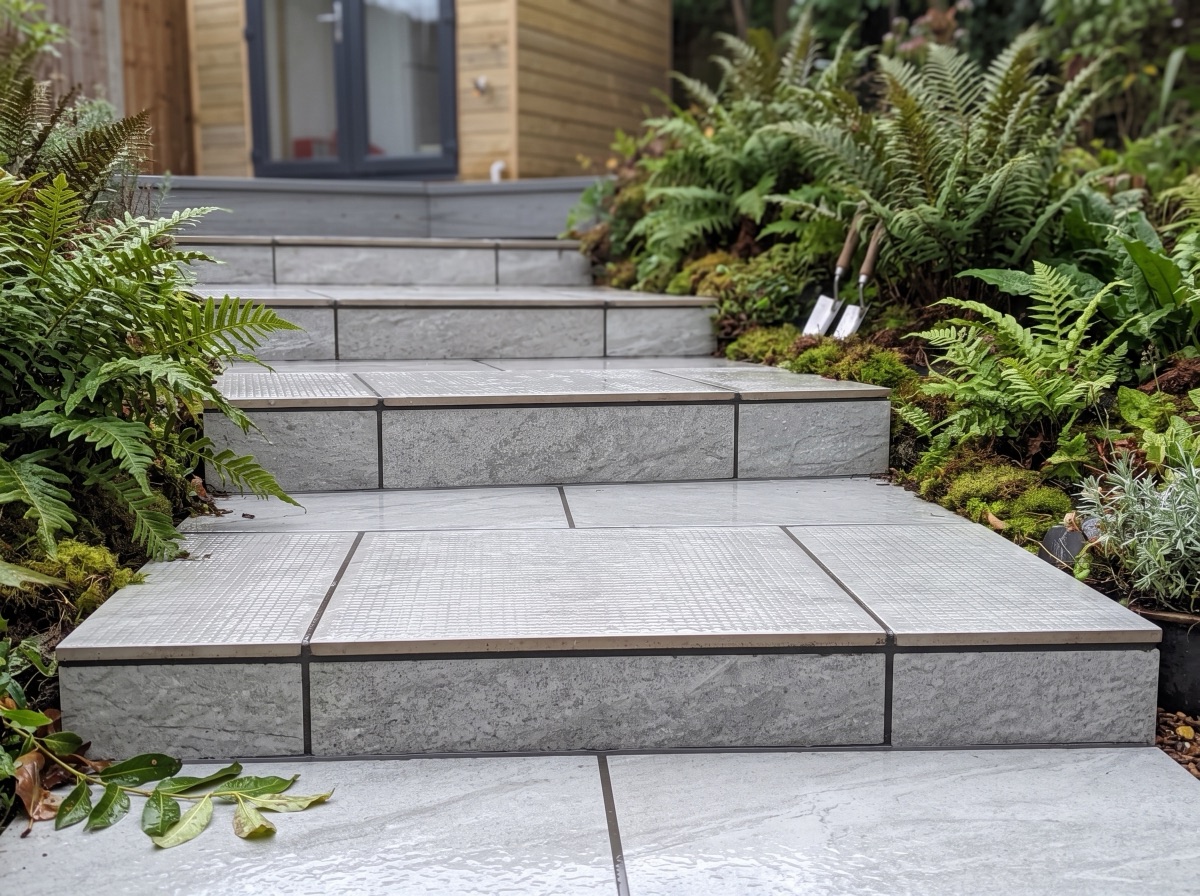
For outdoor steps, choose a textured anti-slip porcelain (check the R-rating on the product page — R11 is the usual outdoor benchmark), in a format that cuts efficiently into treads, with a visible nosing detail. Affordable does not mean compromised: value-tier anti-slip porcelain uses the same finishes.
Steps are the one place slip resistance is non-negotiable. A patio that's occasionally slick is an annoyance; a slick step is a casualty. The good news is that safe doesn't cost extra: textured anti-slip porcelain is the standard outdoor finish across price tiers, so choosing well is about the rating, the tread detail and cutting efficiency — not about spending more.
Start with the slip rating, not the look
Outdoor tiles are commonly slip-rated on the ramp-test R-scale — in practice R10 to R13 for paving, with R11 the usual benchmark for external surfaces and exactly what you want underfoot on steps. The rating is a property of the specific product and finish, not of "porcelain" as a category, so check it on the product page for the exact tile you're buying — our R-ratings explainer decodes the scale in two minutes, and the anti-slip porcelain range gathers the outdoor-rated finishes in one place.
Why porcelain is the steps material
- The texture is fired in — anti-slip porcelain's grip comes from the manufactured surface, not a coating that wears off the nose of the tread within a couple of winters.
- Nothing to seal, little to maintain — steps are awkward to maintain; a surface that only ever needs a wash suits them (the cleaning guide covers the algae film that makes ANY shaded step slick).
- Batch-consistent colour — treads, risers and the adjoining patio can all read as one designed surface.
- Frost-proof by nature — near-zero porosity means no freeze-spalling on the exposed edges steps are made of.
The details that make steps safe (and look expensive)
- Tread depth and overhang: aim for a generous tread (300mm+ where the site allows) with a small, consistent overhang over the riser — it throws a crisp shadow line and sheds water clear of the riser face.
- A fall on every tread: a slight forward fall (about 1:80) so water runs off the step instead of sitting on it. Standing water is the real slip hazard, whatever the R-rating.
- Visible edge definition: a subtle contrast at the nosing — a colour change, a border course, or LED strip under the overhang — helps everyone, and matters most at dusk. Low-level lighting on steps is a safety feature dressed as a design feature.
- Full-bed fixing: treads take point loads at the nose, so slabs must be fully bedded and primed with zero voids — the technique is the same full-mortar-bed discipline as the main patio guide, and the stakes are higher.
Formats that cut affordably into steps
Affordability on steps is mostly a cutting question. A 900×600 slab yields treads efficiently: one cut can give two 450mm-deep treads, or a 600mm-deep tread with a workable offcut for the riser. Plan tread and riser dimensions around the slab format before ordering — it can halve the waste — and count cut pieces properly with the coverage calculator's allowance. Cutting porcelain cleanly needs the right blade and a wet cut; the cutting guide covers technique, and cut edges belong at the back of the tread, never at the nosing.
Doorstep tiles: the small job with the same rules
A single doorstep obeys every rule above in miniature: anti-slip rated finish, a slight fall away from the threshold, full-bed fixing, and finished paving at least 150mm below the damp-proof course. Because a doorstep uses so little material, it's the perfect place to use pack-remainder slabs from a patio project — same batch, same colour, zero extra cost. If you're starting fresh, a £0.98 sample confirms colour and, more importantly on a doorstep, texture underfoot.
Honest budget advice
The affordable route is not a lower-grip tile — it's the value tier of the same anti-slip format. Our cost guide shows real July 2026 catalogue prices: value-tier 900×600 anti-slip porcelain starts around £19/m², and steps use modest quantities. Where people actually waste money on steps: ordering without planning cuts (waste), skipping the priming slurry (loose treads — see porcelain problems), and buying smooth indoor-style tiles that need anti-slip coatings retrofitted. Buy the right surface once.
Quick checklist before you order
- R-rating confirmed on the product page (R11 benchmark outdoors) — explainer here.
- Tread/riser dimensions planned around the slab format.
- Nosing detail and step lighting decided.
- Falls on every tread; DPC clearance at doorways.
- Sample ordered and judged wet as well as dry — grip is a wet-weather property.
Work out your exact order in seconds
Our coverage calculator turns your patio size into the precise number of slabs and packs — 10% waste allowance included.
Free delivery, £0.98 samples, breakage guarantee
Every order ships free with no minimum spend. Order a £0.98 sample first, choose your delivery date, and if a slab arrives broken we replace it — no quibbling.
Frequently asked questions
What are the best non-slip tiles for outdoor steps?
Textured anti-slip porcelain with an outdoor slip rating — R11 on the ramp-test scale is the usual benchmark for external surfaces. Check the rating on the specific product page, since it belongs to the finish, not to porcelain as a category.
What R rating do I need for outdoor steps?
R11 is the widely used benchmark for outdoor paving and steps in the UK; R10 is the minimum you should consider outdoors. Higher ratings (R12–R13) suit ramps and pool surrounds. Always confirm the rating for the exact tile and finish.
Are non-slip outdoor tiles expensive?
No — anti-slip texturing is the standard outdoor porcelain finish, not a premium add-on. Value-tier 900×600 anti-slip porcelain starts around £19/m² in our July 2026 catalogue, and a flight of steps uses a modest quantity, especially when treads are planned around the slab format.
What tiles are best for a front doorstep?
The same anti-slip porcelain as any outdoor step: rated finish, laid on a full bed with a slight fall away from the threshold, and kept at least 150mm below the damp-proof course. Pack remainders from a patio project are ideal — same batch, no extra cost.
How do I make existing outdoor steps less slippery?
First remove the algae film — that is usually the actual hazard — and improve drainage so water doesn't sit on the treads. If the surface itself is smooth and stays slick when clean and dry-weather wet, re-covering the treads with anti-slip rated porcelain is the durable fix; stick-on strips and coatings are short-lived outdoors.