
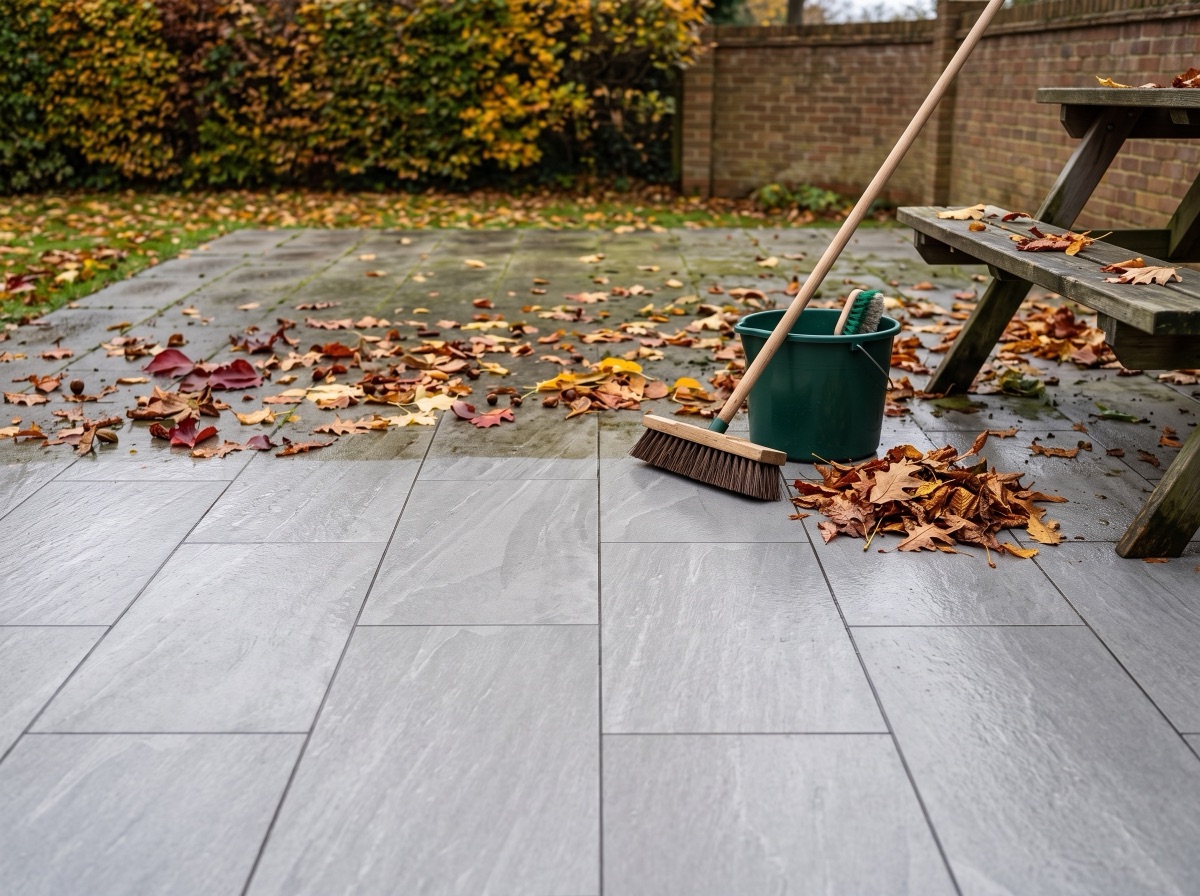
Outdoor porcelain is the easiest paving to clean: sweep, wash with warm water and a pH-neutral cleaner, and rinse. It can be jet-washed on a fan setting from ~30cm. Avoid wax-based "shine" products, wire brushes and strong acid on the joints — and treat algae or black spot with a porcelain-safe treatment.
Porcelain's near-zero porosity means dirt sits on the surface instead of soaking in — so cleaning it is genuinely easy: sweep, wash with warm water and a pH-neutral cleaner, rinse. No sealing, no special regime. The mistakes worth avoiding are the products that leave films (wax cleaners), scratch (wire brushes) or attack the joints (strong acids).
What you need
- Soft broom or leaf blower for dry debris.
- Bucket, warm water and a pH-neutral tile/porcelain cleaner (a squirt of washing-up liquid works for routine washes — rinse it off well, as soap films hold dirt).
- Stiff nylon brush — never wire, which scratches and can leave rust specks.
- Optional: pressure washer with a fan nozzle; porcelain-safe algae/black-spot treatment for shaded areas.
Step 1: Sweep the surface dry
Sweep or blow off leaves, soil and debris while the paving is dry. Do this little and often through autumn — leaf tannins are the main source of surface staining on any patio, and on porcelain they rinse off easily if they don't sit for weeks.
Step 2: Wash with a pH-neutral cleaner
Mop or brush the surface with warm water and a pH-neutral cleaner, working in sections. Let it dwell for a few minutes on grimy areas, agitate with the nylon brush, and you'll lift general dirt, footwear marks and greasy films without touching the joints.
Step 3: Rinse thoroughly
Rinse each section with clean water before the dirty solution dries back on. On a warm day work in smaller sections — the wash-dries-before-rinse cycle is what causes streaky "cleaned but worse" patios.
Step 4: Jet wash seasonally if you like
Porcelain tolerates domestic pressure washers well: use a fan (not pencil/turbo) nozzle, keep the lance about 30cm off the surface, and work at a shallow angle away from the joints. The slab won't care; jointing compound can, so don't hover over the joints — and if you do blast any jointing out, top it up (see the grouting guide).
Step 5: Spot-treat as things appear
- Algae (green film) — common on shaded, north-facing paving: apply a porcelain-safe algaecide or patio cleaner, dwell per the label, brush and rinse.
- Moss — grows in joints and shade: lift the growth mechanically first, then treat the area so it doesn't return.
- Black spot (lichen) — the stubborn one; it anchors into microscopic surface texture. On porcelain it gets far less grip than on natural stone, but established spots still need a dedicated black-spot remover and patience rather than raw pressure.
- Mortar or cement marks — a different job entirely: see removing dried cement from paving.
After winter
A spring wash (steps 1–3) plus a joint inspection is all porcelain needs. Check for any jointing cracked by frost, re-fill where needed, and treat any algae that took hold over the wet months before it walks indoors.
What to avoid on porcelain
- Wax-based or "shine restoring" cleaners — they leave a film porcelain doesn't need, which then holds dirt and can turn slippery.
- Wire brushes and steel wool — scratches and rust marks.
- Strong acids (brick acid) as routine cleaners — the slab may cope, but joints and nearby natural stone won't.
- Sealers "for good measure" — porcelain doesn't need sealing; save the money.
This low-maintenance profile is most of the case for porcelain over natural stone — the comparison guide covers the rest, and the porcelain range shows what's available. Natural sandstone owners: the regime differs (sealing helps, acids are riskier) — treat this guide as porcelain-specific.
Work out your exact order in seconds
Our coverage calculator turns your patio size into the precise number of slabs and packs — 10% waste allowance included.
Free delivery, £0.98 samples, breakage guarantee
Every order ships free with no minimum spend. Order a £0.98 sample first, choose your delivery date, and if a slab arrives broken we replace it — no quibbling.
Frequently asked questions
Can I jet-wash outdoor porcelain tiles?
Yes — porcelain handles domestic pressure washers well. Use a fan nozzle (never a pencil or turbo jet), keep about 30cm of distance, and angle away from the joints so you don't blast out the jointing compound.
How do I clean outdoor porcelain tiles with vinegar?
You generally shouldn't need to — a pH-neutral cleaner does the routine job without risk. Vinegar's mild acid won't hurt the porcelain itself but can degrade cement-based joints and harm nearby natural stone, so if you use it, keep it off the joints and rinse well.
How do I remove algae and black spots from porcelain paving?
Use a porcelain-safe algaecide or black-spot remover: apply, let it dwell per the label, agitate with a stiff nylon brush and rinse. Black spot (lichen) is the most stubborn and may need repeat treatments; on porcelain it anchors far less than on natural stone.
What should I avoid using on porcelain paving?
Wax-based or shine-restoring cleaners (they leave a dirt-holding film), wire brushes and steel wool (scratches and rust specks), and strong acids as routine cleaners (they attack joints). Porcelain also never needs sealing.
How often should outdoor porcelain be cleaned?
Sweep as needed, wash a couple of times a year, and jet-rinse seasonally if you like. Shaded or north-facing areas may need an annual algae treatment; that's the whole regime.