
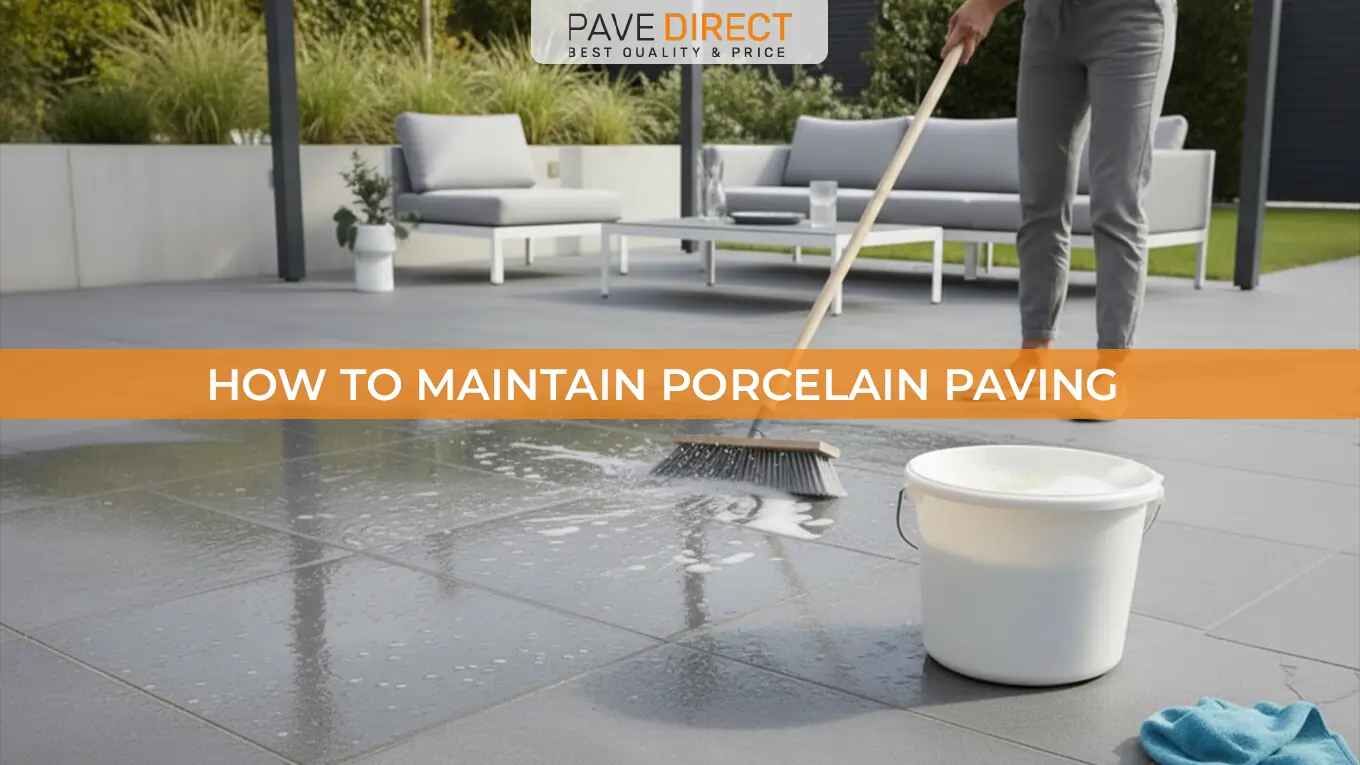
Porcelain paving has been around for a while now, and UK homeowners have shifted from natural stones to it for a reason. Their low porosity, stain, water and slip resistance have made them a favourite for the homeowners who were previously tired of keeping constant checks and spending hours maintaining the perfect garden paving slabs or patio tiles.
But, is it easy to clean porcelain during and after installation and maintain it in the long run? Yes, porcelain paving is low maintenance, but you need to understand the proper way to clean and maintain porcelain paving tiles to get the most out of it.
In this blog, together, we will go through the proper method to clean and maintain in the following order:
- What is Porcelain Paving
- Outdoor Porcelain Paving Usage
- How to Clean Porcelain Tiles
- How to Remove Common Outdoor Stains
- Cleaning Grout Between Outdoor Tiles
- What to Avoid When Cleaning Outdoor Porcelain Tiles
- Maintenance Tips for Long-Term Porcelain Care
Explore Premium Porcelain PavingDiscover modern, durable and low-maintenance outdoor porcelain tiles perfect for patios and gardens. |  |
What is Porcelain Paving
Porcelain paving and ceramic tiles are man-made paving. But when it comes to porcelain vs ceramic tiles, porcelain is much denser and more durable than ceramic options
Outdoor porcelain tiles are made of Kaolin clay, sand, and other materials fired and pressed at a high temperature of 1200 °C to 1400 °C. It results in a very dense, almost non-porous and durable paving slabs and tiles.
Porcelain paving slabs and tiles mimic all-natural elements used as paving and flooring, i.e., natural stone paving, concrete, wood, and more, but with the qualities of porcelain.
Is porcelain paving slippery, you ask? Porcelain paving comes in slip-resistant outdoor finishes rated R10 to R11, which means they offer excellent foot grip and can be walked on safely in wet weather conditions and on poolside.
Outdoor Porcelain Paving Usage
Most landscapers and UK homeowners prefer using porcelain paving from Pave Direct for the following outdoor spaces:
- Patios
- Balcony
- Terrace
- Pool Decks
- Garden Patios
- Driveways
- Outdoor Kitchen and Dining Zones
You see, they are used in almost all outdoor spaces due to their usability. It is because no matter how messy things get outside, like dirt, weather, grease, stains, and algae, they are easily cleaned without spending long hours outside to maintain them. So,
How to Clean Porcelain Tiles
Before you get your hands on cleaning outdoor porcelain tiles, you need to have the following tools and supplies:
Tools and Supplies
For basic cleaning:
- Soft-bristle brush
- Microfiber cloth
- Mop and bucket
For deep cleaning:
- Pressure washer
- Steam cleaning
Cleaning solutions to use:
- Warm water and mild detergent
- Acetic acid (Vinegar, but in controlled and careful quantities)
- Sodium bicarbonate (baking soda for stains)
- Hydrogen peroxide (or organic stains)
- Sodium hypochlorite ( for mould or algae treatment, but use with proper caution)
Cleaning Porcelain Paving After Installation
The first thing you would need to do after laying porcelain paving is cleaning it. Let the paving cure for at least 24 to 48 hours before grouting.
Cleaning Before Grout
After the curing time, start with a pre-grout cleaning. It is important because the dust, grime and dirt accumulate on your freshly laid patio or driveway, and you cannot proceed to grout over that dirt.
Follow the process below if you are wondering how to clean porcelain paving slabs before grouting:
- Use the best porcelain tile cleaner you can find in the UK
- Dilute one part of the porcelain paving cleaner in ten parts of water (or as per instructions of the cleaning solution)
- Apply the solution liberally on the surface of your slabs with the help of a soft-bristle brush
- For stubborn marks, use a stiffer brush
- Wait for 5-10 minutes before rinsing off with clean water thoroughly.
Disclaimer! Before grouting and after cleaning and drying, use a porcelain tile protector to prevent the grout residue from sticking on the textured anti-slip porcelain paving.
Cleaning After Grouting
After you are done grouting using the best grout for porcelain paving, within 10 minutes, start cleaning the slabs in the following manner:
- Take a damp cloth (not soaking) and clean the grout in circular motion to remove excess
- Follow it with a light and diagonal swipe
- After 1-2 hours, remove the dried haze with a microfiber towel or a grout haze remover
Step-by-step Routine Cleaning Process
For routine cleaning of porcelain patio tiles using porcelain slab cleaner, the process is very straightforward and easy. Here is what you have to do:
- Remove the debris and leaves by sweeping the area first
- Pre-rinse the tiles
- Apply your porcelain cleaning solution
- Scrub gently with a soft-bristle brush
- Rinse the floor thoroughly
- Dry the paving area with a microfiber cloth or let it air dry.
Note: Use the instructions given on the back of your cleaning solution. Do not go harsh on the paving slabs and especially on grouts, as they can deteriorate sooner than expected. You do not need porcelain tile sealing, as they come presealed, but porcelain tile sealers do add an extra protective layer.
How to Remove Common Outdoor Stains
When it comes to maintaining paving slabs, there are different types of stains you face that need different cleaning methods. But cleaning differs for natural stone vs porcelain. For instance, cleaning grey porcelain paving slabs is much easier than grey sandstone paving.
Mould & Algae
To remove the green stuff growing due to a high moisture climate, use a specialised algae remover, sodium hypochlorite with proper caution, vinegar/water mix, or warm soapy water.
How to clean porcelain tiles outside if it has algae and moss? Cleaning algae and mould depends on how stubborn they have gotten. Soapy water will do just fine if the algae growth is in its initial stages. For old ones, powerful solutions work better and faster.
Here is how to clean mould and algae from porcelain paving slabs:
- Apply the solution to the area
- Let it sit for 20-30 minutes
- Scrub with a stiff brush or deck broom
- Rinse thoroughly
Disclaimer! If the surface of your porcelain paving slabs is polished and delicate, avoid using acidic patio cleaners.
Rust Stains
Rust stains are caused by placing furniture, decorative pieces or any item that contains iron on the surface of your patio slabs. They cause a brown and yellow mark on the floor that is not so easy to get rid of.
To get rid of rust stains, use a controlled amount of white vinegar or the best rust removal solution you can find, based on the stubbornness of the stains. They dissolve the iron oxide without damaging the surface of your slabs
Here is how to use:
- Apply the cleaner to the rusty area
- Let it sit for 15-30 minutes
- Scrub gently with a soft brush
- Rinse with clean water thoroughly
Grease & Food Stains
The outdoor kitchens and dining spaces face a lot of greasy accidents. Spills and splatters during patio BBQ sessions are very common. Grease stains are also inevitable in driveways and garages.
To clean grease from porcelain paving tiles, use the best grease removers or specialised degreasers to remove deep and ugly stains. For fresh spills and small stains, soapy water does the job just fine. Just apply, scrub with a soft brush and rinse; and voila!
Cleaning Grout Between Outdoor Tiles
Imagine you have freshly cleaned porcelain paving slabs 600x600, but the white grout is no longer white because it hasn't been cleaned properly for a while. For UK homeowners who value a maintained outdoor space, it's a huge turn-off.
To make cleaning easy in the future, it is important that you seal the joints immediately after they are cured. It will protect it from stains and weathering. Reseal the grout every 2 to 3 years to keep it new.
Here is how to clean porcelain paving grout:
- Pour the solution of baking soda and warm water, oxygen bleach (only on the grout, not slabs), or specialised outdoor grout cleaner on the grout.
- Scrub with a stiff brush
- Rinse thoroughly with clean water
For stubborn algae/mould and dark spots, use a pressure washer on a low setting.
What to Avoid When Cleaning Outdoor Porcelain Tiles
If you want to clean your porcelain paving steps and other outdoor areas, avoid using:
- Harsh and abrasive brushes
- Acidic cleaners (Overusing)
- Metal scrapers (may scratch the surface)
- Excessive pressure washing
Maintenance Tips for Long-Term Porcelain Care
Porcelain paving 600x900 and other porcelain paving sizes are very low maintenance; however, it depends on the paving colour that you select. For instance, white porcelain paving requires greater care than black porcelain. For maintaining porcelain slabs properly in the long run, doing the steps below will ensure that you get to enjoy your outdoor spaces more than worry about them:
- Weekly light cleaning and sweeping routine
- Seasonal deep cleaning to maintain the look and neatness
- Preventing water pooling that can weaken the base and grout, affecting the durability
- Sealing the grout every 2-3 years using grout porcelain tile sealer to avoid expensive maintenance in the future
Final Thoughts
Porcelain paving tiles are very forgiving and allow low maintenance in the outdoors. However, for it to do the same in the long run, after installation, occasional and seasonal cleaning routines are necessary.
These routines will ensure that the porcelain slabs remain durable, easy to clean, and maintain in the future so that you can enjoy your outdoor porcelain paving in peace, while avoiding the expensive cost that can be incurred by not having a cleaning and maintenance routine.
Best Porcelain Paving SlabsDiscover modern, durable and low-maintenance outdoor porcelain tiles perfect for patios and gardens. | |
FAQs About Maintaining Porcelain Paving
What should you not use on porcelain tiles?
Acidic cleaners (too much), bleach, ammonia, oil-based soaps, abrasive brushes, and stiff scouring pads must be strictly avoided. They damage the finish of the porcelain surface, degrade the grout, cause scratches, and cause permanent discolouration.
Should you seal outdoor porcelain pavers?
Porcelain paving slabs are presealed during the manufacturing process, are nonporous and stain-resistant, so you do not need to seal them. However, the grouts between the slabs do need to be dealt with every 2-3 years to remain like new.
How to maintain outdoor porcelain tiles?
Sweep regularly, wash with soapy water or pH-neutral porcelain paving cleaners every now and then. Avoid stiff and aggressive cleaning solutions and tools that can discolour and scratch the tile surface.
Is it okay to jet wash porcelain tiles?
Yes. You can use a jet wash or a pressure wash on your porcelain tiles, but at a low to medium pressure of 1500 to 2000 PSI with a wide nozzle. Hold the pressure washer 12 to 18 inches away from the surface at a 45 degree angle to prevent any damage.
What are common mistakes when cleaning porcelain tile?
Using too much water, wrong cleaning products, not doing a patch test, using dirty clothes or water, neglecting grout and not sealing it, and letting spills sit for too long are the common mistakes that can cost you a lot of time and money in the long run.
Where can I buy porcelain paving?
Pave Direct is a reliable place to buy porcelain paving in the UK. Their range includes modern outdoor porcelain slabs designed for strength, style, and low maintenance.
Visit Our Popular Colours of Porcelain Paving: Beige Porcelain Black Porcelain Grey Porcelain
Work out your exact order in seconds
Our coverage calculator turns your patio size into the precise number of slabs and packs — 10% waste allowance included.
Free delivery, £0.98 samples, breakage guarantee
Every order ships free with no minimum spend. Order a £0.98 sample first, choose your delivery date, and if a slab arrives broken we replace it — no quibbling.