
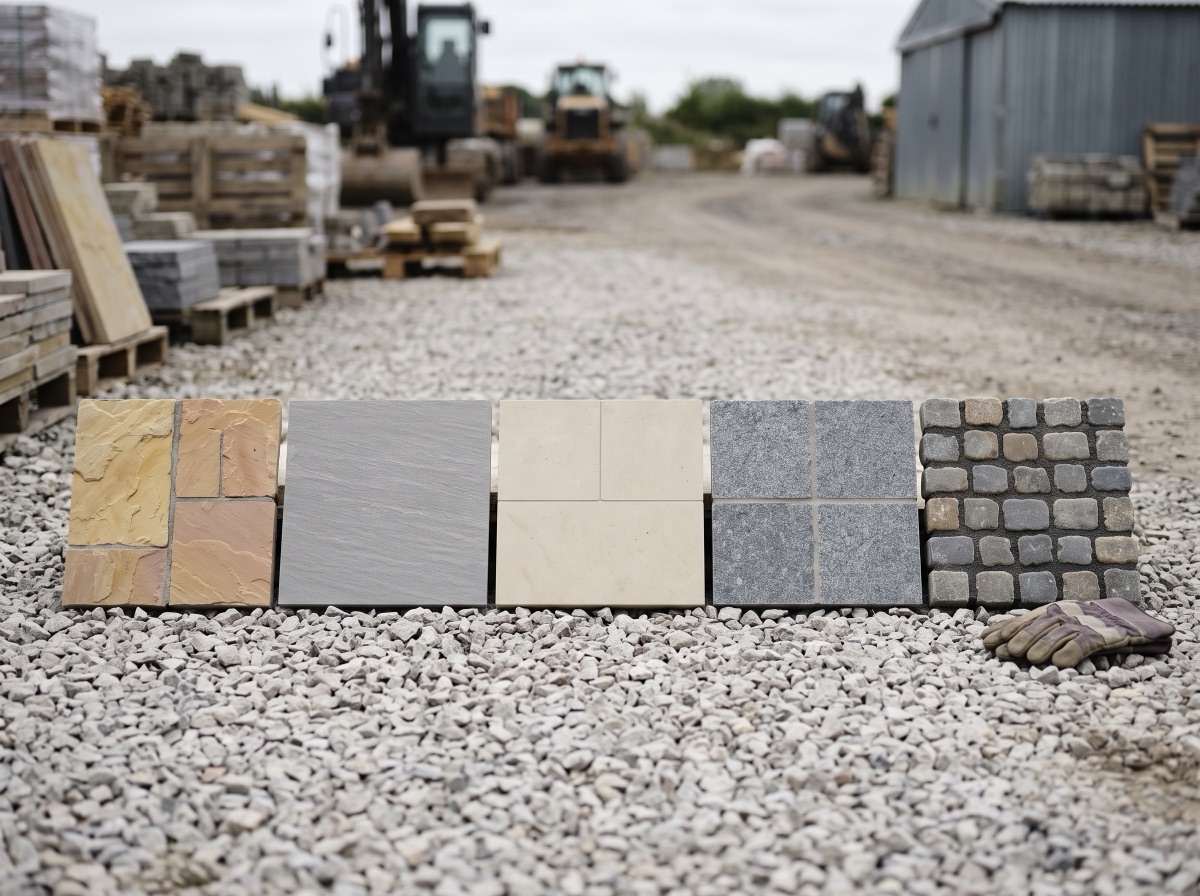
The main paving slab types are porcelain, natural stone (sandstone, limestone, slate, granite) and concrete. Porcelain wins on maintenance and consistency; natural stone on character and heritage; concrete on upfront price. Here are the honest pros and cons of each.
Every paving material is a trade-off between four things: looks, maintenance, durability and price. Porcelain leads on maintenance and consistency, natural stone on character, concrete on upfront cost — and the "best" slab is the one whose downsides you can live with. Here's the honest tour.
Porcelain paving
Manufactured vitrified slabs, typically 20mm thick for outdoor use (thickness guide). Browse the porcelain range.
- Pros: near-zero water absorption (stain- and frost-resistant), never needs sealing, colour doesn't fade, batch-consistent, easy cleaning (guide), anti-slip finishes available (range), wide design choice including stone, slate and marble effects.
- Cons: higher upfront cost than concrete; needs a priming slurry and diamond-blade cutting at installation (bonding guide); the uniformity some buyers love reads "less natural" to others.
Natural stone paving
Quarried slabs — each type its own material with its own habits. Browse sandstone and limestone.
- Indian sandstone — the UK favourite (full guide). Pros: genuine stone character, colourways like Kandla Grey and Raj Green, calibrated 22mm packs, good value for real stone. Cons: porous — benefits from sealing; colour variation is part of the deal; acid cleaners are risky on it.
- Limestone — Pros: fine, even grain and smooth surface; strong dark tones. Cons: acid-sensitive (etches easily), colour range narrower, dark tones can lighten with weathering.
- Slate — Pros: distinctive layered texture, rich blue-grey-black tones, low absorption for a natural stone. Cons: can delaminate (shed layers) in freeze-thaw if quality is poor; scratches show on dark faces.
- Granite — Pros: the hardest common paving stone, extremely durable, crisp modern look. Cons: price, weight, and hard work to cut; limited warm tones.
Concrete paving slabs
Cast slabs, from budget utility grey to textured "riven-effect" mouldings.
- Pros: cheapest upfront, consistent sizing, easy to lay and cut, huge availability.
- Cons: porous — stains and grows algae faster than any option above; surface wears to expose aggregate; colours fade noticeably in UV; "stone-effect" moulding repeats are visible across a patio.
Quick comparison
- Lowest maintenance: porcelain, by a distance.
- Most character: natural stone — sandstone for warmth, slate and granite for drama.
- Lowest upfront cost: concrete, then sandstone, then porcelain/granite.
- Best whole-life cost: usually porcelain or granite — nothing to seal, little to replace.
- Easiest DIY lay: concrete and calibrated sandstone; porcelain demands more discipline (priming, cutting) rather than more skill.
How to choose in practice
- Decide your maintenance appetite first — it eliminates half the options honestly.
- Shortlist two materials and order samples; judge them wet and dry, in your garden's light, against your brickwork.
- Check slip rating for wet areas (R-ratings explained) and thickness for the duty (patio vs driveway).
- Compare per-m² landed cost using the coverage calculator — including the sealing and upkeep the material will ask of you later.
Same colour, different material is often possible — the sandstone vs porcelain guide is the deep-dive on the most common head-to-head.
Work out your exact order in seconds
Our coverage calculator turns your patio size into the precise number of slabs and packs — 10% waste allowance included.
Free delivery, £0.98 samples, breakage guarantee
Every order ships free with no minimum spend. Order a £0.98 sample first, choose your delivery date, and if a slab arrives broken we replace it — no quibbling.
Frequently asked questions
Which type of paving slab is best for low maintenance?
Porcelain — near-zero porosity means it resists stains and algae, never needs sealing, holds its colour and cleans with a wash. Granite is the low-maintenance natural stone.
What are the easiest paving slabs to lay?
Concrete slabs and calibrated sandstone are the most forgiving. Porcelain isn't harder so much as stricter: it must be primed with a bonding slurry, laid on a full bed and cut with a diamond blade.
Are porcelain paving slabs suitable for outdoor use?
Yes — outdoor-rated porcelain (typically 20mm thick) is frost-proof, stain-resistant and available with anti-slip finishes. Indoor porcelain tiles (8–11mm) are not outdoor products.
What are the benefits of natural stone paving?
Genuine, one-off character — tonal variation, natural texture, and a material that weathers rather than wears out. Sandstone offers the best value; granite the most durability; slate and limestone distinctive looks.
How do you cut paving slabs?
With an angle grinder or cut-off saw fitted with a diamond blade — wet cutting for porcelain reduces dust and chipping. Score-and-snap methods only suit softer concrete slabs; always cut outdoors with eye, ear and dust protection.