
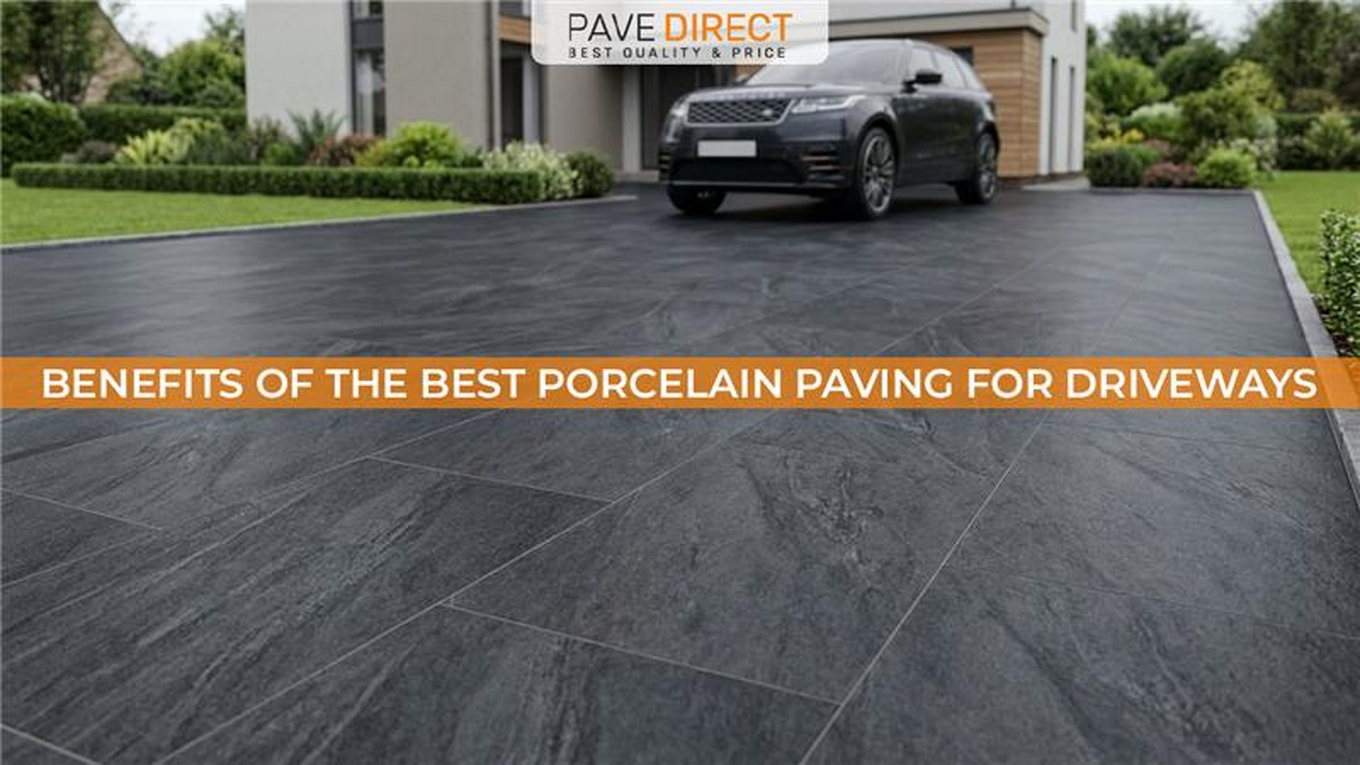
Did you know? Your driveways experience more abuse in a week than your patio does in a year? It tolerates the weight of your car, the constant temperature changes, oil drips, and whatever the British weather throws at it.
Yet when UK homeowners think about upgrading their outdoor spaces, they overlook the driveways, which is a pure necessity rather than only an investment affecting their home value and their daily life.
Porcelain driveway paving represents a significant shift if you are considering a driveway upgrade. It’s not only about the visual appeal (of course, that matters), but also about everyday reality and decades of performance.
Let’s examine the benefits of porcelain driveway paving for your home, what makes it work and just as importantly, what challenges you can face along the way.
Key Factors to Consider While Choosing a Driveway Paving
While choosing your paving option, you need to make sure that it is appropriate and compatible according to the locality you live in and matches your driveway requirements.
Local Climate and Weather
The United Kingdom experiences 150-180 days of rain and frost, with mostly gloomy weather conditions and sometimes sun. Most porous paving materials expand by 9% when frozen, causing cracks, surface spalling and structural failure.
Thus, you need to make sure that your driveway withstands:
Freeze-thaw cycles
Heavy rainfall
UV exposure
Temperature fluctuations without any damage or wear
Maintenance Needs
The choice also depends on your preference for a driveway that needs fewer upkeep requirements or one with original character that needs time to look its best.
Consider the time you are willing to invest in maintaining your driveway. Some UK homeowners enjoy the ritual of seasonal cleaning and periodic sealing, while others want surfaces that they can ignore for years without any consequence.
Aesthetic Appeal
Should your driveway have the natural charm and traditional look of stone paving, or do you prefer your car parking area to have a smooth and contemporary look of porcelain paving?
Your driveway should complement your home’s architectural style. Plus, consider practical aesthetics like using neutral colours in dirt and dusty spaces, textured finishes for safety and visual preferences, and whether or not the material will maintain its long-term appearance.
Budget Constraints
One of the most prominent benefits of porcelain driveway paving is how much you are ready to invest. Think about the initial paving and installation costs, how long the material is going to last, and the ongoing maintenance required throughout the life of the paving area.
Cheap installation doesn’t mean the most economical choice. For instance, a £3,000 concrete block driveway will require £200 to £300 yearly to maintain, while a £6000 porcelain installation needs nothing beyond occasional soapy water cleaning.
When it comes to outdoor porcelain tiles, they have distinct benefits and drawbacks, just like other paving options.
A paving design expert at Ryno Systems says,
“Knowing when to choose one over the other is essential to realising the overall goals and meeting the project’s design specifications.”
But if you are into the modern charm with the least maintenance commitment, porcelain driveways fit your style, budget and lifestyle almost perfectly.
Top 8 Benefits of Porcelain Driveway Paving
UK homeowners have preferred porcelain paving for driveways for decades now, but in reality, is porcelain good for driveways?
Aesthetic Appeal
Porcelain paving, with the newest printing technology, allows manufacturers to create the subtle graining, colour variation, texture details, and surface characters of natural material.
You can find wood-effect porcelain, Kandla Grey porcelain, concrete-effect porcelain, and many others to suit and look cohesive in traditional and modern home designs.
The visual advantages extend beyond imitation. Porcelain offers consistency between slabs that natural stones can't compare to. If you need to replace a slab after 5-10 years, you can find the exact match, which is impossible with natural paving slabs.
High Durability
Kaolin clay, feldspar, and quartz are fired at a high temperature of 1200 °C to 1400 °C. This process of vitrification causes the materials to melt and fuse at the molecular level, creating a permeable structure with no internal voids or weakness.
Presealed Surface
Their manufacturing process with a presealed surface allows them to have an exceptionally low water absorption level of under 0.5%, making them moisture and water-resistant.
Slab Thickness and Strength
A minimum of 20mm porcelain paving slabs for driveways offers a load-bearing capacity of more than 1400kg/slab. Which means it supports a standard family car of 1200 to 1800kg distributed across four wheels.
Mohs Rating
The best porcelain paving for driveways is the one that rates 7-8 on the Mohs scale, making it scratch-resistant to heavy objects and abrasive cleaning, unlike sandstone or limestone, which show traffic patterns and get brittle under heavy traffic.
R11 Anti-Slip Paving
The R-rating system measures slip resistance, running from R9 of a smooth surface to R13 of an extremely slip-resistant surface. Slip ratings of outdoor paving slabs are very important when it comes to driveway paving installation.
R11 Slip-Rating
Most outdoor porcelain paving has textured finishes and an R10-R11 slip rating, making it compatible for rain and snow-prone outdoor areas, including driveways. They remain slip-resistant even when exposed to regular water or contamination from oil drips.
Surface Texture
The surface texture is deliberately created through mechanical and moulding techniques without compromise on ease of cleaning. Non-slip porcelain is engineered to maintain grip while allowing it to be maintained easily.
Smooth/Honed Surfaces & Slip Resistance
However, not all porcelain pavings achieve an R11 antislip rating. Polished surfaces or surfaces designed for indoors may rate R9 or lower, creating hazardous conditions when wet. Thus, always make sure your driveway paving is outdoor-grade porcelain with documented slip-resistant certification.
Low Maintenance
While we say porcelain slabs are low maintenance, it is not just marketing jargon, but a result of the material's non-porous nature. Porcelain does not let moisture get into its structure, unlike natural stone, which absorbs the liquid and deteriorates in the long run.
Cleaning Porcelain Driveway
Routine cleaning of porcelain paving requires nothing more than just a soapy water bucket, a soft brush and clean water. No pH-neutral cleaners, no annual sealing ritual or professional treatment. The stubborn stains of dirt, tyre marks, and organic growth can easily be removed by pressure washing the paving at 1,500-2,000 PSI
Joint Sealing & Care
However, the joints require more care than the slabs. Use a flexible, outdoor-rated jointing compound and check annually for deterioration that can infiltrate through and undermine the sub-base. Seal the joints annually, which is basically the entirety of porcelain driveway maintenance.
Eco-friendliness and Sustainability
You will be surprised to know that the process of manufacturing porcelain paving requires 1200 °C+ temperature energy. However, the longevity of the material offsets the whole initial impact of energy consumption.
Longevity Means Sustainability
How long do porcelain driveways last? Porcelain driveways tend to last 30+ years without replacement, which means they avoid the environmental and transportation costs of multiple replacements during those years (Concrete blog pavings are replaced every 10-20 years). This shifts the equation favourably towards porcelain paving.
Minimal Chemical Usage
Throughout your driveway’s life, porcelain contributes to being eco-friendly. It requires:
No annual sealing containing petrochemical ingredients
No harsh chemical stain removers
No herbicides for joint weed control
Reduced chemical usage means safer local underground water and soil.
Local Sourcing
While porcelain’s manufacturing is energy-intensive, try choosing the best porcelain paving retailer who imports in bulk and distributes efficiently in the UK, as compared to materials requiring multiple shipments or specialist delivery systems.
Excellent Versatility
Porcelain paving adapts to any outdoor and driveway home design vision. You can choose from herringbone patterns to linear standard layouts.
Porcelain Slab Sizes
Some of the standard slab sizes include mixed sizes, 600x600mm, 600x900mm, and 900x600mm porcelain paving slabs with multiple thickness options to accommodate different outdoor applications within the same project.
Mixed Material
Porcelain complements porcelain and other materials in your project. You can combine it with gravel borders, raised plan beds, and decorative features to complete your vision. The material looks minimal with clean lines, looking cohesive with softer landscaping elements rather than competing with them.
Porcelain Paving Colours
Colour coordination of porcelain with existing home features is easy, as you can find consistent shades. Grey porcelain paving matches render or window frames, while Raj Green porcelain echoes brickwork. Black outdoor porcelain paving complements modern and monochromatic home detailing.
Weather Resistance
British weather conditions are mostly unpredictable, thus your driveways should be ready for it all. It should handle frost, heat, and rain extremes without any complaint. Porcelain is suitable for all UK climate challenges.
Frost Resistance
It stems from the low water absorption levels of porcelain. Freeze-thaw cycles crack porous materials as a result of high water absorption (Sandstone water absorption level <12%). On the other hand, research and testing prove that porcelain maintains its structural integrity through more than a hundred freeze-thaw cycles.
Heat Stability
When the temperature swings, it causes some paving materials to expand or contract. With porcelain, this is not the case. It is dense and has a uniform structure, managing the expansion-contraction movements predictably with proper installation and 3-5mm joint spacing.
Water Resistant
When a paving material is water-resistant, the sub-base is protected from moisture infiltration, causing settlement and erosion. When it comes to porcelain vs block paving driveways, we see that a professionally installed porcelain driveway, with a proper drainage system, sheds water and prevents water pooling issues common with block paving.
UV-Resistance
The colour stability of porcelain separates it from the rest of the paving materials. It does not fade, is not ruined by bleach, or develop patina. The colour is ingrained into its structure, and the UV-stable surface resists solar radiation without any degradation.
Long-term Appearance
Porcelain paving colours remain consistent even when your driveway is south-facing, receiving maximum sun exposure. It maintains its original colour and intensity, unlike natural stone, which fades under high UV rays after years of installation.
No Protective Sealant Requirements
Most natural stone paving slabs require protective sealers to preserve their colour under sun exposure, which needs to be renewed periodically. Porcelain, on the contrary, comes presealed and has inherent UV-resistant properties, which means one less maintenance task and cost. A 15-year-old porcelain driveway looks identical to a 2-year-old porcelain driveway.
Master Touch Outdoor Living, outdoor construction and remodelling professionals, backs us by stating:
“Porcelain pavers offer a winning combination of durability, aesthetic appeal, and sustainability, making them the ultimate upgrade choice for homeowners.”
Nevertheless, porcelain, sometimes, is a mixed blessing. With tons of benefits, there are some disadvantages that you have to know and compromise with.
Drawbacks of Porcelain
While we are being honest, it is important to consider the limitations of porcelain too, when it comes to porcelain driveway pros and cons.
Looks Less Natural: Despite impressive replication, porcelain cannot fully match the organic variation of genuine natural stone.
Potential Slipperiness in Smooth Finishes: Not all porcelain is ideal for driveways. Polished/honed porcelain becomes slippery when wet; not safe for vehicular and pedestrian traffic.
Fragility and Brittleness: Porcelain is fragile and cracks when dropped on hard ground, requiring meticulous transportation and installation practices.
Heavy Slabs: A 16mm porcelain slab weighs up to 35kg-37kg per square meter, significantly heavier than natural stone or concrete driveway paving, which increases delivery and installation costs.
High Upfront Cost: High initial costs (more than 30-60% than natural stone and double that of concrete block paving); however, their longevity makes them a long-term investment
Installation and Care Tips for UK Homes
For your porcelain driveway paving to prove to be a potential investment and increase your home value, it is very important that you follow the tips below:
Hire Professional Installation Experts: They ensure correct sub-base, inclusion of proper bonding primer, and bedding mortar, resulting in durable driveway paving for decades.
Seal the Joints Annually: Porcelain does not need sealing; the jointing compound benefits from annual inspection and periodic sealing to avoid undermined subbase and maintenance headaches.
Choose Anti-slip Rated Porcelain in Wet Areas: For driveways incorporated with water features like fountains, or shaded carpark prone to moisture, ensure R11 rated porcelain with maximum slip resistance.
Clean with Mild Detergents: Porcelain tolerates most chemical cleaners, but harsh acids offer no benefit while degrading joint materials.
Consider Adequate Drainage and Strong Sub-base Prep: Even waterproof porcelain fails when the foundation fails. Ensure proper sub-base preparation and 1:80mm drainage to prevent water pooling.
Conclusion
Porcelain paving driveways are a modern approach in traditional homes while providing genuine benefits in durability, maintenance, aesthetic appeal and slip resistance. The initial porcelain driveway paving cost may be higher, but its longevity of 25+ years with the least maintenance makes it all worth it.
The right choice depends on your honest assessment of priorities. Pave Direct suggests choosing porcelain if you want a durable and sophisticated solution with minimal maintenance, but ready to accommodate a higher upfront cost. Choose alternatives if you prefer originality and enjoy hands-on maintenance rituals, and prioritise initial cost saving over lifetime value.
Whatever material you select, make sure that you invest in professional installation and have realistic maintenance planning. Your driveway shall affect your daily life, property value, and home impressions. Make your choice of how you would want to live, not how you imagine you might.
FAQs About Porcelain Driveway Paving
What are the pros and cons of porcelain driveways?
Porcelain driveways are exceptionally durable, highly water, frost, and fade resistant, with the least maintenance requirements. However, they cost more than natural stones and concrete paving initially, require careful handling and installation and professional cutting tools if you do not know how to cut 20mm porcelain tiles.
How long will porcelain slabs last?
30+ years lifespan for porcelain paving slabs, with professional installation, proper drainage, and strong subbase.
Can you jet wash porcelain paving?
Yes, use jet wash at 1500-2000 PSI with a wide-angle nozzle(25° or 40°), maintaining a 12 to 18 inches distance and at a 20° to 45°angle to remove dirt without damaging the porcelain material.
Which is better, Indian sandstone or porcelain?
It depends on your priorities. Choose porcelain if you want minimal maintenance, predictable appearance, stain, water, fade-resistance and are ready to invest higher initially. Choose sandstone if you prefer originality, can take time out for maintenance rituals and want to save cost upfront.
Work out your exact order in seconds
Our coverage calculator turns your patio size into the precise number of slabs and packs — 10% waste allowance included.
Free delivery, £0.98 samples, breakage guarantee
Every order ships free with no minimum spend. Order a £0.98 sample first, choose your delivery date, and if a slab arrives broken we replace it — no quibbling.