
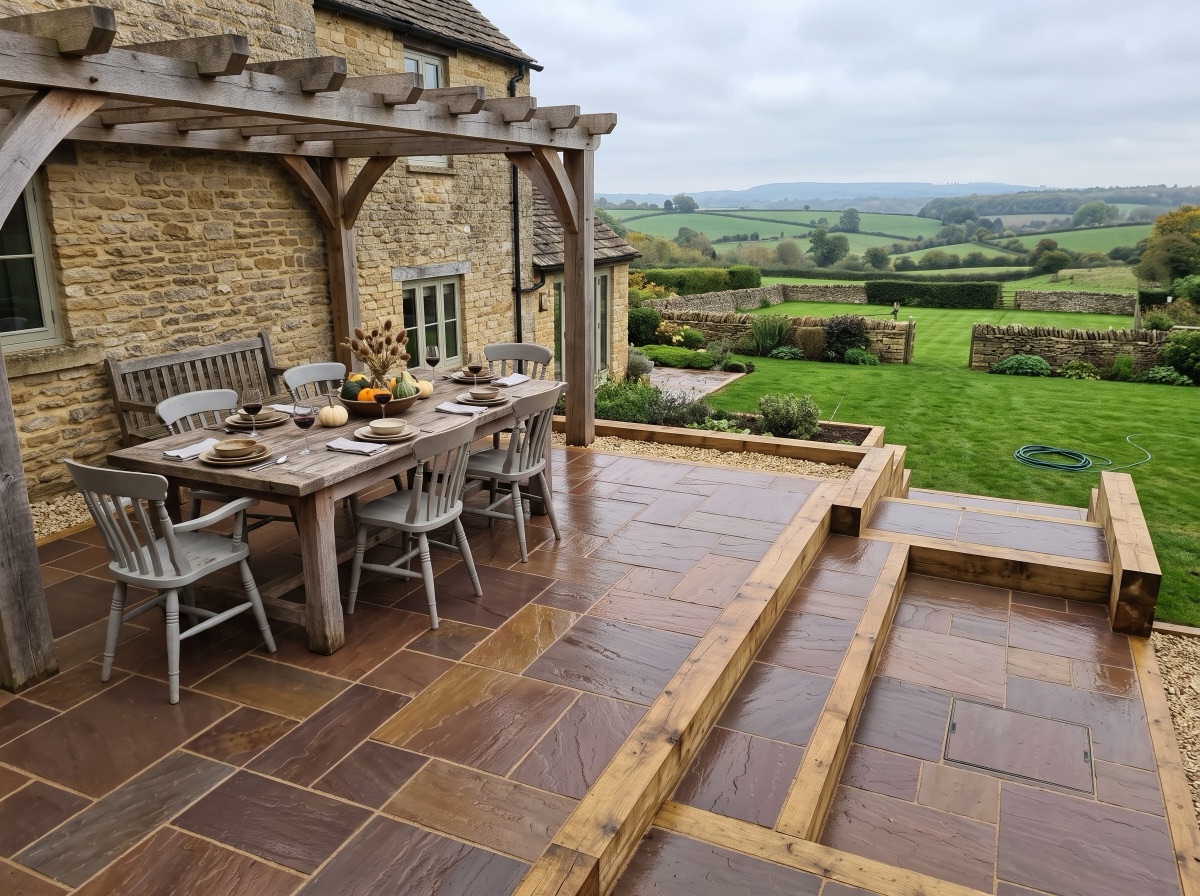
The best terrace designs start with zoning (dining, lounging, cooking), one consistent floor surface to tie it together, and layered lighting. Large-format porcelain in a light tone makes small terraces feel bigger; greenery and privacy screening do the rest.
A terrace works when it's designed as an outdoor room, not a slab with furniture on it. The reliable formula: zone the space by activity, unify it with one well-chosen floor surface, layer the lighting, then add greenery and privacy. Everything else — furniture, fire pits, pizza ovens — slots into that frame.
Zone the space first
Sketch the terrace as rooms: dining near the kitchen door, lounging where the evening sun lands, cooking downwind of both (see outdoor kitchen ideas). Mark circulation routes between zones and keep them 900mm+ wide. On larger terraces, a change in paving orientation or joint colour can mark a zone boundary without a physical divider.
The floor is the design
One surface, laid well, beats a patchwork. Large-format porcelain (900×600 is the workhorse) reads calm and contemporary, takes furniture without staining, and never needs sealing — a light grey like Kandla Grey bounces light around enclosed terraces, while natural sandstone suits period homes and softer planting schemes (the comparison). Wet-area zones — around hot tubs, pools or unsheltered dining — want an anti-slip finish (R-ratings explained). Whatever you choose, insist on proper falls and build-up (ground prep guide): a puddled terrace is a failed terrace.
Lighting in layers
- Ambient — warm-white festoons or a wall light on a dimmer; one circuit that makes the space usable at night.
- Task — brighter, focused light over cooking and dining zones.
- Accent — spike spots up-lighting a tree, recessed step lights, strip lighting under bench lips. Accent light is what makes a terrace photograph like a hotel.
Keep everything warm white (2700–3000K) and IP-rated for outdoors; cool white flattens gardens.
Green the edges (and the walls)
Planting softens hard landscaping instantly: repeated large pots beat many small ones, ornamental grasses give movement and year-round structure, and climbers or green walls turn boundaries into features. Leave planting pockets or raised beds at the terrace edge when you lay the paving — retrofitting them later means cutting finished work.
Privacy and shelter
Slatted timber or composite screens filter sightlines without blocking light; pergolas (with or without adjustable louvres) define the lounge zone and carry lighting and climbers; a sail shade is the budget version. Check the neighbourly sightlines from standing and seated height before you fix anything — and remember shelter from wind extends the terrace season more than shelter from rain.
Small terrace tricks
- Large slabs, fewer joints — counterintuitively, big formats make small spaces feel bigger.
- Run rectangular slabs with their long edge along the terrace's long axis.
- Light surface tones lift enclosed courtyards; keep boundary walls lighter than the floor.
- Built-in bench seating with storage does the work of three pieces of furniture.
- Mirror-effect panels and climbing greenery blur the boundaries.
Furnish for weather, style second
UK-realistic furniture is metal, teak or good synthetic rattan with removable, storable cushions. A rug zone anchors the lounge area (choose a genuine outdoor rug), and a fire pit or bowl extends evenings by two seasons. Everything else is taste.
Build notes before you order
Size the surface with the coverage calculator (it adds the cutting allowance), order samples to judge tones against your walls in daylight, and check delivery access for pallet drops before setting a build date.
Work out your exact order in seconds
Our coverage calculator turns your patio size into the precise number of slabs and packs — 10% waste allowance included.
Free delivery, £0.98 samples, breakage guarantee
Every order ships free with no minimum spend. Order a £0.98 sample first, choose your delivery date, and if a slab arrives broken we replace it — no quibbling.
Frequently asked questions
How do I make my terrace look more expensive?
One consistent large-format floor surface laid dead flat, warm layered lighting, repeated oversized planters and a single furniture finish. Coherence — not any individual purchase — is what reads as expensive.
What is the best flooring for a terrace?
Large-format outdoor porcelain for low maintenance and a contemporary look (anti-slip finish in wet zones), or natural sandstone for period character with sealing as the trade-off. Both need proper falls and a full mortar bed.
How do I organise a small terrace?
Zone even a small space (dining vs lounging), use large slabs in a light tone to visually expand it, build in bench seating with storage, and take greenery vertical with climbers and wall pots rather than crowding the floor.
What colour paving is best for a terrace?
Light greys and warm neutrals are the most forgiving: they bounce light, hide dust between cleans and flatter both planting and furniture. Test samples wet and dry in your own light before committing.
How do I add privacy to a terrace?
Slatted screens filter overlooking without fencing the space in; pergolas define zones and carry planting; positioned trees or tall grasses in large pots soften sightlines. Check what actually overlooks the seating positions before you build.