
Dilute household bleach will not damage a porcelain slab itself — porcelain is chemically inert — but it can bleach jointing, corrode metal, kill plants and leave a slippery residue. Here is what sodium hypochlorite, biocidal patio cleaners and plain soapy water each actually do, and when to use which.
Bleach won't hurt the porcelain — it's everything around the porcelain you need to worry about. A porcelain slab is a vitrified, chemically inert surface: dilute sodium hypochlorite doesn't etch it, stain it or strip its colour. But bleach can lighten coloured jointing compounds, corrode aluminium and mild-steel fittings, kill any planting it runs into, and leave a residue that's both slippery and harmful to the next rain's runoff. So the honest answer is: it's rarely necessary, occasionally useful, and only sensible when applied with the precautions below.
What household bleach actually is
Household bleach is a dilute solution of sodium hypochlorite — the same active chemical sold in stronger concentrations as a patio-cleaning product. It's a powerful oxidiser and biocide: it kills the algae, mould and moss film that makes shaded paving green and slippery. What it does not do is clean dirt — it decolourises and disinfects biology; it doesn't lift soil or grease. That distinction decides when it's the right tool.
What it does to each surface
- Porcelain slabs: no damage at sensible dilutions — porcelain's fired, near-zero-porosity surface doesn't react. Rinse well so no slippery film remains.
- Jointing: the vulnerable part. Strong hypochlorite can lighten pigmented mortar and some resin compounds, and repeated dosing degrades exposed joint surfaces. Test a hidden joint first.
- Natural stone nearby: be careful — porous stone absorbs the solution, and some stones (and their sealers) react badly. Don't let porcelain-patio runoff cross a sandstone path; the cleaning guide and stain-removal hub cover stone-safe approaches.
- Metals, fabrics, planting: hypochlorite corrodes aluminium and mild steel, spots fabrics on contact, and is indiscriminately fatal to plants and pond life. Everything downhill of your bucket is in scope.
If you do use it: the safe method
- Choose a cool, still, dry day — not hot sun (it deactivates fast) and not before rain (runoff).
- Sweep first, and pre-wet planting borders with plain water so splashes dilute.
- Dilute generously — a weak solution repeated beats a strong one once. Never mix bleach with other cleaners: with acids or ammonia it releases genuinely dangerous chlorine-family gases.
- Wear gloves and eye protection; apply with a watering can or stiff brush, not a sprayer.
- Leave it 10–15 minutes to work on the green film. Don't let it dry on.
- Rinse thoroughly, twice, directing runoff to a drain rather than beds or lawn.
Biocidal patio cleaners: the gentler route
The dedicated moss-and-algae products sold for patios (the "Patio Magic"-type treatments) are typically based on benzalkonium chloride — a quaternary-ammonium biocide rather than a chlorine oxidiser. They work more slowly than bleach (days rather than minutes, as the biology dies and weathers off) but are kinder to jointing and metals and carry residual effect that keeps regrowth away for months. On porcelain they're generally the more sensible choice for routine greening — check the specific product's label confirms suitability for your surface, and note that in the UK these are regulated biocides: use them exactly as directed, away from ponds and drains-to-watercourse.
Does bleach kill weeds in block paving?
It kills the tops, not the problem. Bleach scorches the visible growth of weeds in paving joints, but it rarely kills established roots, it strips the joint sand's surface as it goes, and it leaves salt-laden runoff heading for your borders. Pull or hoe the weeds, re-sand the joints, and treat the cause — the weed-prevention guide and re-sanding guide are the proper fix. Save biocides for the algae film, not the dandelions.
What to use for each problem
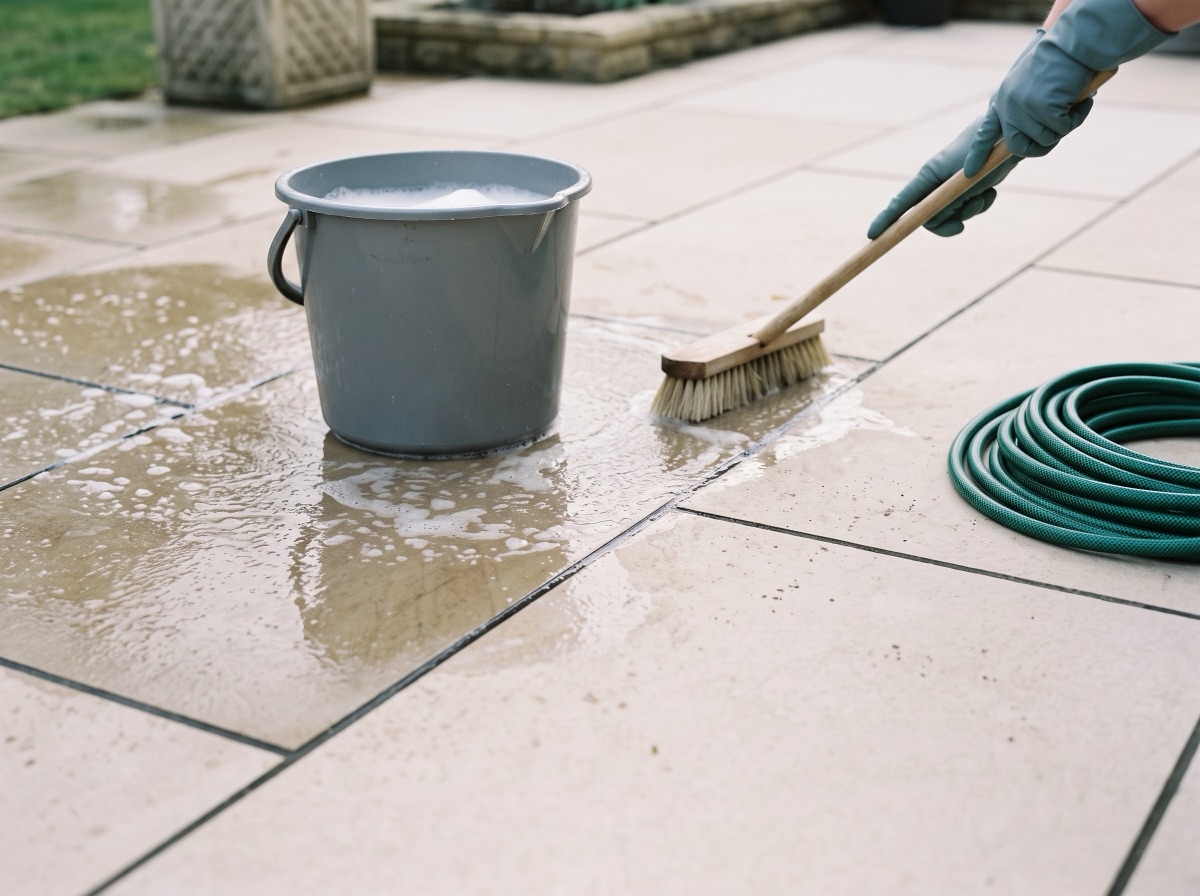
- General dirt and footprints: warm water, a squirt of washing-up liquid or pH-neutral cleaner, stiff brush. This handles 90% of porcelain cleaning.
- Green film in shade: a biocidal patio cleaner per its label, or dilute hypochlorite with the precautions above; then fix the cause (shade, damp, poor falls — see porcelain problems guide).
- Grout haze / cement residue: not a bleach job at all — hypochlorite does nothing to cement. Use the approach in the cement-removal guide.
- Oil and grease: degreaser, not bleach. Bleach disinfects; it doesn't emulsify oil.
- Black spot on natural stone: a specialist lichen treatment — and patience. It's the hardest paving stain there is.
The bottom line
Porcelain's stain resistance is precisely why harsh chemistry is rarely needed on it — soapy water and an annual once-over keep an anti-slip porcelain patio (the range) looking new. Keep bleach as the occasional nuclear option for algae, use purpose-made biocides for routine greening, and never let either become a substitute for the real fixes: good falls, filled joints and a surface specified for its spot in the garden.
Work out your exact order in seconds
Our coverage calculator turns your patio size into the precise number of slabs and packs — 10% waste allowance included.
Free delivery, £0.98 samples, breakage guarantee
Every order ships free with no minimum spend. Order a £0.98 sample first, choose your delivery date, and if a slab arrives broken we replace it — no quibbling.
Frequently asked questions
Will bleach damage porcelain paving?
Dilute household bleach will not damage the porcelain slab itself — the fired surface is chemically inert. The risks are to coloured jointing, nearby metals and planting, and from slippery residue, so dilute well, keep it off everything else and rinse thoroughly.
Can I use sodium hypochlorite on porcelain tiles?
Yes, with care — sodium hypochlorite (the active in household bleach and many patio cleaners) kills algae and mould on porcelain without harming the slab. Test jointing first, never mix it with other cleaners, keep runoff away from plants and drains-to-watercourse, and rinse twice.
Can you use Patio Magic-type cleaners on porcelain paving?
Biocidal moss-and-algae treatments based on benzalkonium chloride are generally suitable for porcelain and gentler on joints than bleach — they work over days rather than minutes. Check the product label confirms your surface type and follow it exactly; they are regulated biocides.
Does bleach kill weeds in block paving?
It scorches the visible tops but rarely kills established roots, and it damages joint sand and harms whatever the runoff reaches. Remove weeds mechanically, re-sand the joints and use the prevention methods in our weed guide instead.
What is the best thing to clean porcelain paving with?
Warm soapy water and a stiff brush for routine cleaning — porcelain's low porosity means dirt sits on the surface. Reserve biocides for algae in shaded areas and degreasers for oil; harsh chemicals are rarely necessary.
Why is my porcelain patio slippery after cleaning with bleach?
Almost certainly residue — unrinsed hypochlorite leaves a film that is slippery underfoot. Rinse the area thoroughly with clean water. On a properly rinsed anti-slip finish, cleaning with bleach does not reduce the slab's slip resistance.